

South Korea pledges $1T by 2028 for memory chips and humanoid robots
The plan aims to lock in “physical AI” leadership, but it also reshapes chip supply, factory automation, and consumer electronics costs.
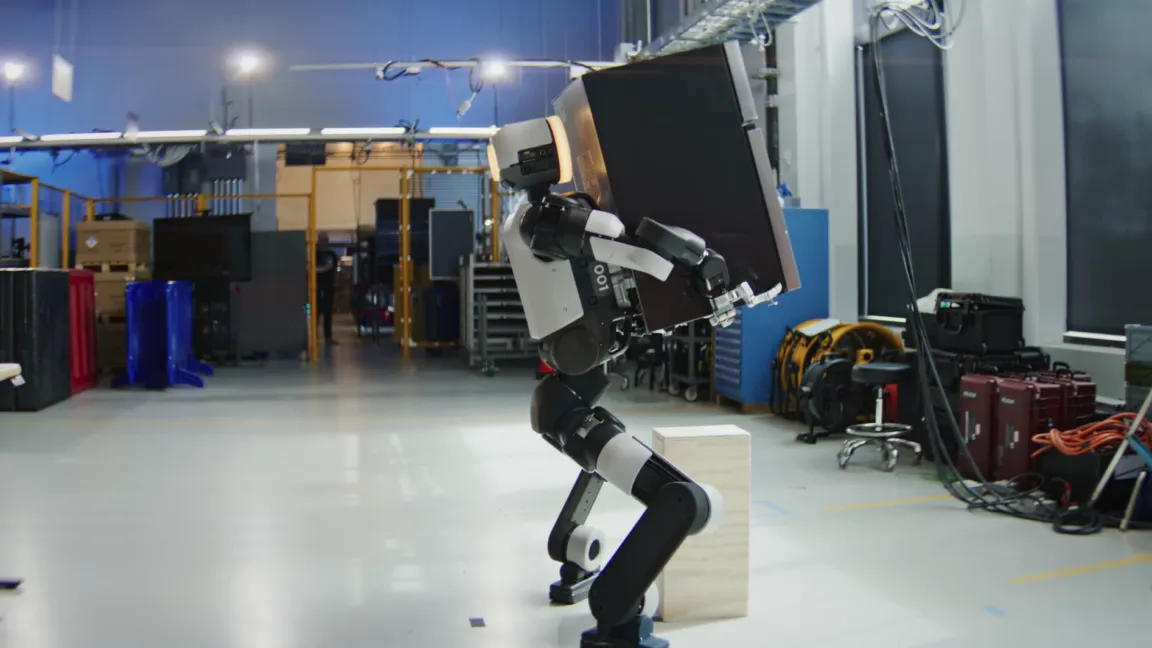
South Korean President Lee Jae Myung said June 29 that South Korea plans to spend $1 trillion on megaprojects spanning semiconductors, physical AI, AI data centers, and commercial humanoid robots. The push involves major players like Samsung and SK Hynix for memory chips and Hyundai Motor Company via its Boston Dynamics subsidiary for humanoid robot manufacturing.
South Korea is putting $1 trillion behind a mashup of goals that usually live in different boardrooms: more memory chip production, faster “physical AI,” AI data centers, and commercial humanoid robots by 2028. The move is anchored in a televised speech on June 29 by South Korean President Lee Jae Myung, reported by BBC News and other media outlets.
This matters because the country is not acting in a vacuum. South Korean companies such as Samsung and SK Hynix have enjoyed record profits and stock valuations as AI demand for memory chips has surged, creating downstream bottlenecks that have contributed to memory chip shortages and higher prices for consumer electronics. In other words, the government and top tech companies are trying to turn a supply squeeze into a durable advantage, before the next cycle of demand stresses the system again.
If you are a CFO or board member, the immediate question is not “will chips and robots be important?” It is “what exactly becomes the binding constraint, and how do we de-risk it?” Memory chips sit at the center of modern AI systems because they are fundamental to storing and moving data and model states. When supply is tight, prices rise and timelines slip, and suddenly companies that thought they were buying compute are also buying scarcity. South Korea’s $1 trillion commitment is essentially a bet that it can expand capacity and infrastructure faster than others, smoothing supply at scale.
The speech frames the strategy with a three-part focus: semiconductors, physical AI, and AI data centers. Lee Jae Myung said, “Semiconductors, physical AI, and AI data centers are the triple axis for a great leap forward.” The “physical AI” phrase is a signal that the plan is not only about training models in servers. It is also about pushing AI into the physical world, where software meets sensors, actuators, robotics, and factories.
That is where the humanoid robots come in. Hyundai Motor Company is racing to mass manufacture humanoid robots developed by its subsidiary, Boston Dynamics, so that robotic workers can start taking over certain laborious tasks in automotive factories and other workplaces. The timeline is commercial and production-oriented, not just research demos. And if robots are going to be deployed broadly, memory supply and data center buildout become more than “AI infrastructure.” They become enablers for scaling robotics operations, whether for simulation, fleet management, or real-time data workflows.
Second-order effects are where the real executive value hides. The $1 trillion spend is likely to increase the urgency for other memory buyers, contract manufacturers, and hardware planners around the world. If South Korea expands memory output and data center capacity, it can ease price pressure over time, but it can also trigger aggressive competition for talent, equipment, and supply chain components used in fabrication and advanced packaging. In plain terms: even if chips get cheaper later, the race to build gets expensive first.
There is also a strategic signaling layer. When governments publicly align with flagship private companies, it changes how risk is priced. Samsung and SK Hynix already benefited from record profits and valuation momentum tied to AI demand. By linking that momentum to national-level megaprojects, the message is that these industries are not just commercial winners. They are policy priorities. That can influence procurement decisions, supplier contracts, and how quickly ecosystems of vendors ramp up capacity.
Finally, the 2028 horizon is a forcing function. It is close enough to demand concrete execution, but far enough to cover multiple investment cycles across chip fabs, AI data center construction, and humanoid robot mass manufacturing. For peers trying to manage similar transitions, the stake is straightforward: if South Korea is building both the compute foundation and the physical deployment pathway, competitors may find their options narrowing, whether in supply negotiations, automation adoption timelines, or the pace at which AI becomes operational in real workplaces.
This story's Key Insights and Take-aways are locked.
Create a free account to unlock Executive Actions for one credit.
Register to UnlockAlways free for Executives Club members. Join the Club
More in Technology

Nvidia's $89B data center quarter: the 9 companies cashing in
The AI buildout is minting fortunes beyond GPUs, and memory, cloud, and cooling suppliers are riding the same wave.

Google quietly links your phone number to every Android account on your SIM
Adding a SIM now ties your phone number to all Google accounts - and future accounts inherit it. Here's the security and privacy stakes.

Hijacker AI 'Skynet mode' runs 100,000 attack steps against exposed models
Symantec caught a criminal AI agent that borrows other models, steals data, and mines crypto; the only relief is no confirmed victims yet.