
SpaceX ignites all 33 Raptor 3 engines on Booster 20 for Starship Flight 13
A successful static fire clears the way for Starship's next test launch, potentially as soon as July 15.
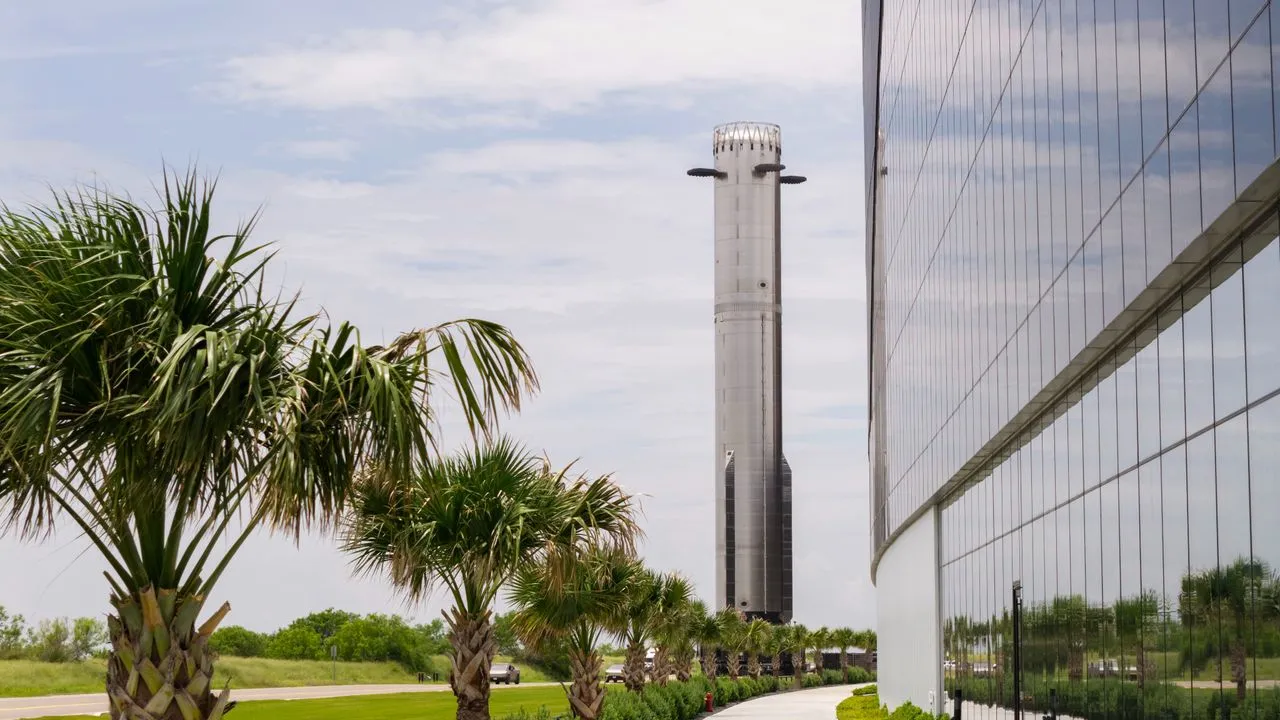
SpaceX completed a static fire of the Starship Super Heavy booster, Booster 20, on July 10, igniting all 33 upgraded Raptor 3 engines. The FAA notice points to Starship Flight 13 launching as early as July 15, tightening the timeline for Starship V3’s next round of engineering and program-critical milestones.
SpaceX just did the kind of test you only run when the next launch is already staring at you from the calendar. On July 10, the company completed a brief static fire of the Starship Super Heavy booster slated for Starship’s 13th test flight. Booster 20 reached the pad at SpaceX’s Starbase, Texas, facility on July 9, was hoisted onto its support stand using the launch tower’s “Mechazilla” chopstick arms, and then, shortly before 11 a.m. EDT (1500 GMT) on Friday, all 33 upgraded Raptor 3 engines ignited for a burn lasting about 25 seconds.
That 33-engine success matters because it is not a random milestone. It is the green light for Starship Flight 13, which a Federal Aviation Administration notice says could launch as early as Wednesday, July 15. In other words, SpaceX is not treating this like a lab experiment that can drift. It is stepping through the next checkpoint quickly, with hardware identified (Booster 20) and the next flight window already set by regulators.
Under the hood, this is Version 3 (V3) Super Heavy work, and the differences from Version 2 (V2) are aimed at performance and payload potential. This booster is equipped with enhanced avionics designed to reduce mass and increase launch capacity, plus a taller fuel tank with a larger volume. SpaceX also added equipment for transferring propellant between spacecraft, which is a capability that will be needed for many of the missions Starship is being designed to carry out. That design direction is why Flight 13 is being watched beyond just “does it lift off.” It is part of a chain of demonstrations: engines, staging, propellant transfer, and recovery all have to move from test objectives to repeatable capability.
Regulatory timing is part of why the pace is so intense here. After Flight 12 in May, which lifted off with mixed success, SpaceX flew a slightly more conservative mission than it had originally been pushing in earlier tests. The source points to two issues from that earlier campaign: Booster 19 failed to maneuver itself for a soft ocean splashdown of its own, and Ship (Ship 39) ran into an engine anomaly that led SpaceX to skip an in-space engine relight demonstration. Flight 13, using Ship 40 and Booster 20, is set up to follow the same basic timeline as Flight 12, but with the objective of shaking out the remaining kinks in Starship V3.
For decision-makers, the most important word in that paragraph is “remaining.” Space is unforgiving about timelines, and Starship is not operating in a vacuum. The source flags NASA’s Artemis program as a major part of the context, including the agency’s plan to return to the moon. Starship is one of two lunar landers contracted to deliver astronauts to the lunar surface, and as those mission timelines shrink, SpaceX’s progress and timely demonstration of needed technologies are coming under a microscope. That doesn’t mean a single static fire decides the Artemis fate. It does mean that every engine test and every “we fixed it” iteration compresses the path between today’s proof points and future operational requirements.
Flight 13 also continues the technical thread of reusability and recovery, but with an added layer of difficulty compared to older SpaceX booster playbooks. SpaceX hopes these missions will pave the way for technology demonstrations needed before reaching full operational status, including the retrieval of both stages back at Starbase for refurbishment and reuse on future flights. The plan is for both Ship and Super Heavy to return to the launch pad to be caught by “Mechazilla” arms on future launches. The company has had success catching V2 Super Heavy boosters during previous flight tests, and it has even launched two recovered boosters on subsequent missions. But the source is explicit: it has not yet attempted to recover and refly a Ship upper stage, because landing Ship is very different than landing Super Heavy.
Super Heavy’s descent problem is described as “less complex” than Ship’s, drawing a comparison to Falcon 9 boosters. Falcon 9 launches several times a month, with boosters routinely recovered, refurbished, and reflown within weeks. Even though Super Heavy lacks Falcon 9’s landing legs, its descent back to Earth is similar to a Falcon 9 booster, making it a more familiar engineering question for SpaceX. Ship is the tougher nut. Ship drops through the atmosphere belly-first, using black, hexagonal heat shield tiles to absorb reentry temperatures, while fins near the spacecraft’s nose and base control orientation and keep it mostly horizontal during freefall.
As altitude drops toward sea level, Ship performs a “flip and burn” maneuver that swings it upright and arrests its descent for a soft touchdown. The big difference is where the source says the touchdown will happen next: for future launches it would target the Starbase pad, but for the upcoming mission it will be back at sea. Flight 13 is therefore a chance to demonstrate that descent profile again using Ship 40, while also working through the booster and engine issues encountered during Flight 12. If all goes according to plan, the flight brings Starship V3 closer to more ambitious tests, including orbital insertion, propellant transfer, and recovery of both stages back at Starbase. For peers watching this program, the message is simple: the work is not just building a rocket that can launch. It is building a system that can be reused, regulated, and scheduled, all at speed.
This story's Key Insights and Take-aways are locked.
Create a free account to unlock Executive Actions for one credit.
Register to UnlockAlways free for Executives Club members. Join the Club
More in Technology

Google quietly links your phone number to every Android account on your SIM
Adding a SIM now ties your phone number to all Google accounts - and future accounts inherit it. Here's the security and privacy stakes.

Hijacker AI 'Skynet mode' runs 100,000 attack steps against exposed models
Symantec caught a criminal AI agent that borrows other models, steals data, and mines crypto; the only relief is no confirmed victims yet.

Nvidia's AI-financier shift faces its first big test as neoclouds stumble
A rout in neocloud stocks is forcing investors to weigh Nvidia's hidden exposure as both supplier and lender to the AI buildout.