
Spain dispatches 25+ firefighting planes as wildfire north of Madrid rages 3 days
Central Spain’s emergency response scales up fast, and the operational risks extend far beyond the flames.
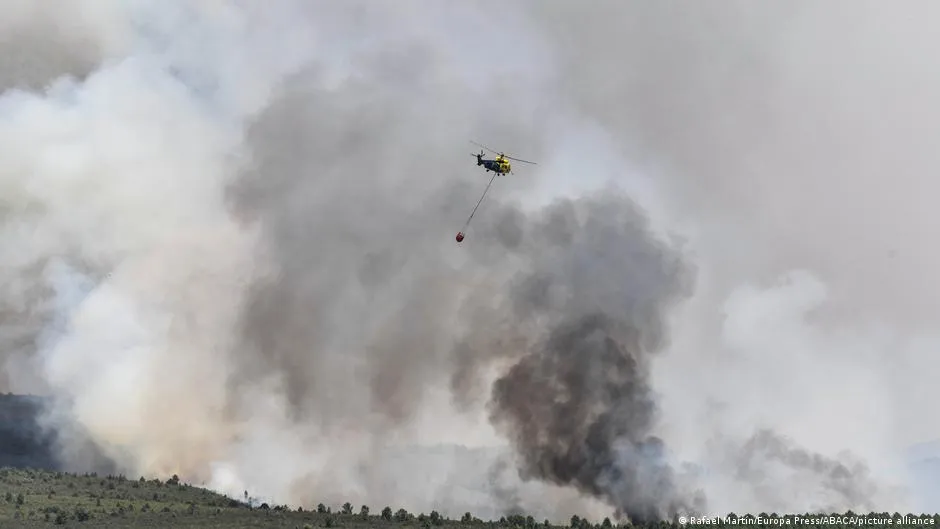
Spanish emergency crews have deployed more than 25 firefighting planes to fight a wildfire in central Spain that has been raging for three days. For decision-makers, this is a real-time stress test of disaster readiness, aviation capacity, and regional coordination.
Spain’s emergency crews have deployed more than 25 firefighting planes to battle a wildfire in central Spain that has been raging for three days. The fact that aircraft have been mobilized at this scale after multiple days is a flashing sign that the fire is not contained yet, and that ground access and fuel conditions are likely still making the situation difficult.
For executives and operators, the headline here is simple but consequential: the response is already in “sustained operations” mode. When a wildfire persists for three days, it stops being a one-off emergency and starts behaving like a continuing systems problem. Aircraft sorties, command-and-control decisions, and resource staging all have to keep running day after day, often under changing weather, smoke, and visibility. The deployment of more than 25 firefighting planes tells you the operational tempo is high and that authorities are aiming to bring down intensity where land-based crews may be stretched or obstructed.
To understand why this matters beyond the immediate fire line, look at how wildfire response typically ripples through an economy. Wildfires affect road networks, power distribution, and logistics routes even before they reach critical infrastructure. Smoke can disrupt aviation schedules and outdoor work, and evacuation decisions can force temporary shutdowns in nearby towns. When emergency services need to coordinate multiple aircraft, they also need reliable communications, airspace management, and clear rules for dispatch and safety. Those dependencies are exactly the kind of “boring plumbing” that boards and risk teams like to assume will hold until reality proves otherwise.
There is also a governance and compliance angle, even if today’s headline is about firefighting planes rather than filings. Emergency responses are usually governed by a mix of national and regional authority. In practice, that means budgets, preparedness plans, and the availability of specialized firefighting assets have to line up across jurisdictions. A multi-day wildfire tests whether those plans are operational, whether there is enough reserve capacity, and whether coordination mechanisms are mature. If aircraft are being dispatched rapidly, it implies decision-makers judged that the cost of escalation is lower than the risk of letting the fire intensify.
The second-order effect for executives is that wildfires can trigger cascading disruptions in industries tied to land and energy. Agriculture, construction, transport, and utilities often face immediate constraints, but the medium-term effects can include insurance claims, environmental compliance work, and remediation planning. These are not abstract concerns. They turn into real workstreams for CFOs and chief risk officers, because emergency spending and operational downtime can quickly collide with budget cycles. Even when companies are not in the fire zone, they may be impacted by supply chain detours, workforce displacement, and customer disruptions.
A three-day wildfire also pressures operational leaders to keep the response coherent as conditions change. Smoke patterns shift. Wind can alter the fire’s direction. Aircraft availability can be influenced by weather elsewhere in the region. All of that forces frequent reassessment of tactics, including where planes can safely and effectively operate. The key point is that the response is not “set and forget.” The deployment of more than 25 firefighting planes suggests authorities are treating this as an active, ongoing campaign, not a short firefighting sprint.
For peers in similar roles, the strategic stakes are the same across industries: can your organization make rapid decisions with incomplete information, scale operations when demand surges, and coordinate across teams when lines of authority are complex? Wildfires are a brutal reminder that emergencies expose weak links. That exposure can show up in continuity plans, in communications, in third-party capacity, and in how quickly people can adapt. As the blaze continues in central Spain after three days, the broader lesson is not just about fire. It is about preparedness under pressure, and how quickly systems must move when nature refuses to cooperate.
This story's Key Insights and Take-aways are locked.
Create a free account to unlock Executive Actions for one credit.
Register to UnlockAlways free for Executives Club members. Join the Club
More in Politics

LA County: DOJ's 20,000 'noncitizen' voter list is 'unreliable,' includes U.S.-born
Preliminary review by Los Angeles County election officials finds errors in the federal list, raising the stakes for voter roll integrity ahead of November.

Trump's $1.5B Pentagon chip investment lands in North Carolina
A $1.5 billion defense infusion for North Carolina chipmaking signals a new era of Pentagon-backed reshoring - here's what it means for the industry.

Nigeria confirms first Ebola case in Abuja, a woman just off a Uganda flight
Health Minister Muhammad Ali Pate says the patient flew in from Uganda, putting Africa's latest outbreak on Nigeria's doorstep.