
Supreme Court lets late-arriving mail ballots count, blocks Trump agency-firing power
A narrow mail-voting win for Democrats meets a separate setback for Trump’s bid to expand control over independent agencies.
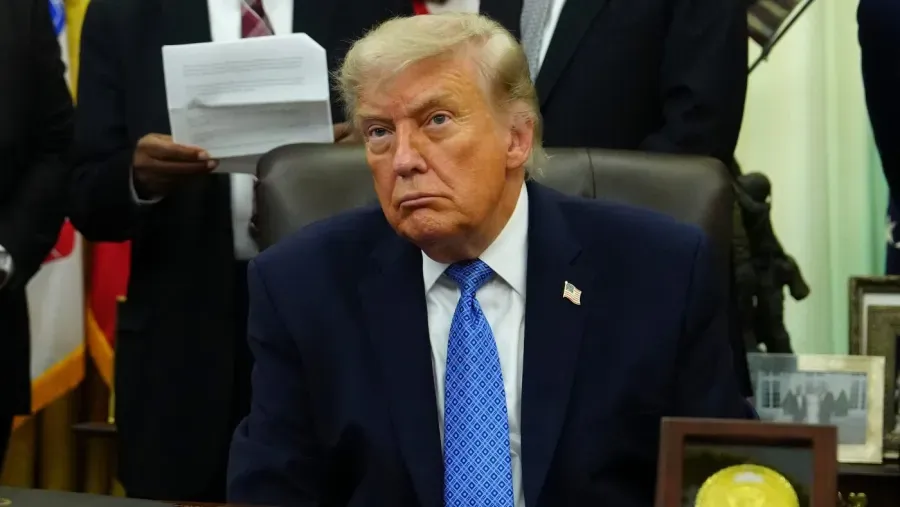
The Supreme Court ruled that mail-in ballots may be counted even if they arrive after Election Day, limiting President Trump’s efforts to tighten mail voting. The same Monday decision also overturned a ruling that would allow a president to fire members of independent agencies.
The Supreme Court ruled Monday morning that mail-in ballots may be counted even if they arrive after Election Day. That is a direct blow to President Trump’s efforts to crack down on mail-in voting, and it matters because the entire post-election fight often turns on what counts, and when.
In the same set of rulings, the Court handed Trump a different kind of win and a key limitation at the same time. While the Court’s mail decision restricts the ability to disqualify ballots based on arrival timing, the Court also overturned a ruling that would have allowed a president to fire members of independent agencies. In other words, the decision simultaneously draws tighter lines around mail ballot rules and sets an important boundary on executive power over the “independent” parts of the government.
To understand why this combination is so consequential, you have to zoom out from the headlines to how elections and agency governance actually get contested. Elections are not just about casting votes. They are about counting them under rules that can shift outcomes, sometimes by tiny margins. When courts say “late but valid” ballots can still be counted, the operational leverage of last-minute administrative tightening drops. That can reduce the odds that a party can win by procedural exclusion rather than persuasion at the ballot box.
On the agency side, the Court’s position hits a different nerve for decision-makers. Independent agencies are designed to reduce direct political control over rulemaking and enforcement. When executive power expands, it can change who sets regulatory priorities, how quickly enforcement ramps, and how predictable compliance timelines become. The source notes that the Court overturned a ruling that would allow a president to fire members of independent agencies, which is a direct constraint on that kind of executive reshaping.
There is also a market implication executives often feel in real time even if they do not follow election-law coverage closely. Regulatory uncertainty tends to be expensive. Companies plan investments, staffing, and product roadmaps based on expected enforcement and rulemaking. When court decisions clarify that mail ballots can count even after Election Day, election logistics and litigation strategies become less about tightening deadlines for exclusion. That can shift the political calculus around who challenges election procedures and when.
At the same time, by limiting a president’s ability to fire members of independent agencies, the Court’s decision can affect regulatory continuity. Independent agency leadership often stabilizes regulatory interpretation across years, especially when administrations change. For boards and C-suite leaders, that continuity can translate into fewer “we woke up and everything changed” moments in the regulatory environment. It also matters for regulated industries where compliance programs, licensing, and reporting burdens are tied to agency discretion.
And because this is the Supreme Court, the second-order effect is not only immediate policy. It is precedent. Monday’s rulings establish legal constraints that can carry into future election cycles and future battles over executive oversight. For executives, that means the direction of travel is clearer: mail ballot counting rules will be harder to restrict through arrival deadlines alone, and the executive’s ability to influence independent agency composition will face legal guardrails.
So even if you are not a political lawyer, the strategic stake is real. Elections determine policy direction, while independent agencies translate policy into compliance requirements. This decision impacts both parts of that pipeline, reducing some levers for cracking down on mail voting while also limiting how far a president can go in reshaping independent agency leadership. For founders scaling in regulated spaces, investors underwriting policy risk, and boards overseeing long-range planning, the message is simple: the rules that move outcomes are being redrawn, and they now constrain both election procedure and agency control.
This story's Key Insights and Take-aways are locked.
Create a free account to unlock Executive Actions for one credit.
Register to UnlockAlways free for Executives Club members. Join the Club
More in Politics

Obama Defends Ilhan Omar After Agents Search Her Home in Trump Inquiry
The former president's intervention raises the stakes in a federal probe into immigration paperwork that has put a prominent progressive lawmaker in the crosshairs.

Blair-era minister: cut welfare to fund youth job support
Alan Milburn's call for welfare cuts to fund employment support opens a Labour fight over benefits and the Neet crisis.

Hot September CPI: energy costs surge, voters feel the squeeze before midterms
The latest inflation print lands as Trump campaigns for GOP control of Congress, putting cost-of-living worries at the center of the midterm fight.