

The 5 best new hotels for 2026: opulence is the whole point
From Venetian palazzos to Kyoto retreats, the year's top openings show luxury travelers what they'll pay for next.

Quartz's ranking of the five best new hotels for 2026 highlights gilded Venetian palazzos, lavish Kyoto retreats, and Alpine hideaways that put opulence at the center of the experience. For hospitality executives and investors, the list signals that high-end travelers are rewarding maximalist design and destination-defining properties over minimalist restraint.
The five best new hotels in the world for 2026 are not subtle. According to Quartz's ranking, the year's standout openings run from gilded Venetian palazzos to lavish Kyoto retreats and Alpine hideaways, and every one of them puts opulence at the heart of the experience. That is the headline: in a travel market that spent years chasing minimalist lobbies and understated luxury, the properties earning global recognition in 2026 are the ones that lean all the way into excess, ornament, and old-world grandeur.
For decision-makers in hospitality, real estate, and travel investment, the message is direct. The properties that make a global best-of list are not competing on price or convenience; they are competing on spectacle and memory. A gilded palazzo in Venice sells a fantasy of aristocratic permanence. A lavish Kyoto retreat sells a fantasy of serene, moneyed privacy. An Alpine hideaway sells a fantasy of remote, weatherproof indulgence. The common thread is that the physical space itself is the product, not just a backdrop for it.
This matters beyond the obvious bragging rights of a ranking. Hotel development is a long-cycle, capital-intensive business, and the properties that open in 2026 were conceived, financed, and built through a period of volatile interest rates, shifting travel demand, and a persistent squeeze on construction costs. That developers still pushed forward with maximalist, high-spec projects - and that critics and tastemakers are rewarding them - suggests the luxury segment is betting that affluent travelers will keep paying a premium for places that feel unreproducible. A standard room in a standard tower can be replicated anywhere; a restored palazzo with original frescoes cannot.
The ranking also reflects a geographic shift in where luxury capital is flowing. Venice, Kyoto, and the Alps are not new destinations, but they are all places where supply is tightly constrained by regulation, preservation rules, and physical geography. That constraint is exactly what makes new openings in those locations scarce and newsworthy. For investors, scarcity is the mechanism that protects pricing power. For operators, it means the barrier to entry is not just money but permission: approvals, heritage oversight, and the patience to execute a project that takes years longer than a greenfield build.
There is a second-order read for the broader travel economy. When the most celebrated new hotels of a given year are defined by opulence, it is a signal about who is traveling and what they value. Business travel remains structurally changed by remote work, and mid-market leisure is increasingly price-sensitive. Luxury, by contrast, has proven resilient, and the 2026 list suggests that the top of the market is not just resilient but expressive: travelers want to be seen in places that make a statement. That dynamic favors brands with strong design identities and owners willing to spend on craftsmanship, art, and historical authenticity.
For hospitality executives planning their own pipelines, the competitive implication is uncomfortable but clear. If the globally recognized openings of 2026 are all opulence-led, then a new property that competes on efficiency, sustainability, or quiet minimalism will have to work harder to earn the same attention. That does not mean every project should pivot to gilding; it means the differentiator has to be legible and dramatic. A hotel that looks like every other hotel, no matter how well run, will not make a global best-of list.
The strategic stakes extend to boards and investors evaluating hospitality portfolios. Assets with a strong sense of place, historical fabric, or architectural distinctiveness are likely to command outsized attention and pricing power in a crowded market. Assets that are interchangeable are more exposed to rate competition and platform-driven discounting. The 2026 ranking is, in effect, a reminder that in luxury hospitality, the building is the brand, and the brand is the moat.
For peers in similar roles, the takeaway is to audit their own pipeline through the lens of memorability. Would a traveler cross an ocean for this property? Would a critic remember it a year later? If the answer is no, the project may be competing in a race to the bottom that the best new hotels of 2026 have already opted out of. Opulence, in this context, is not just a design choice; it is a strategic position that signals confidence, scarcity, and a willingness to invest in the physical experience as the core product.
This story's Key Insights and Take-aways are locked.
Create a free account to unlock Executive Actions for one credit.
Register to UnlockAlways free for Executives Club members. Join the Club
More in Business
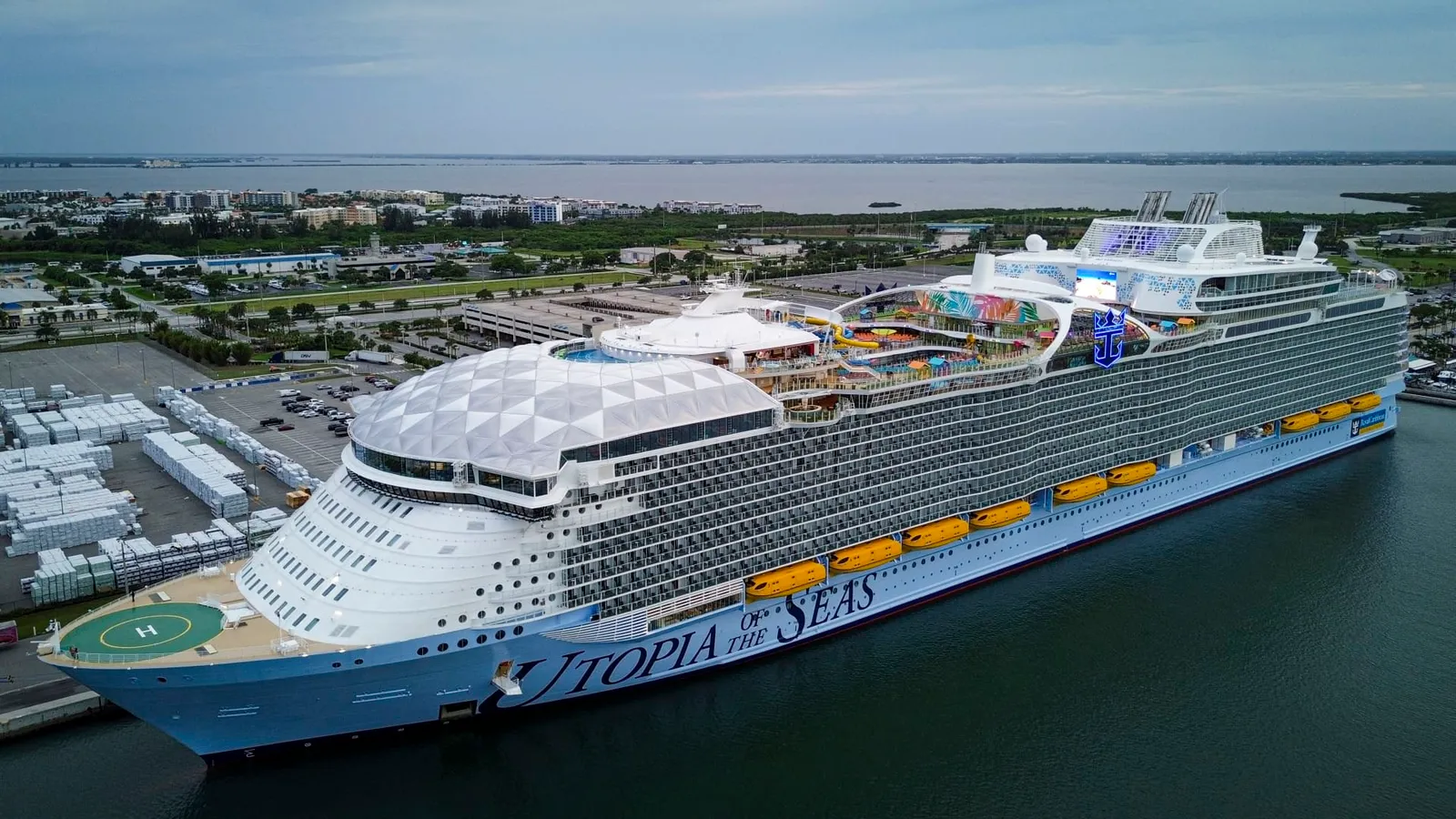
Royal Caribbean just spent $3B to own half of Sandals
The cruise giant is buying a 50% stake in the all-inclusive resort chain for $3 billion, a bet that land-based vacations are the next growth engine.

Paramount's Ellison: Merger Clearance Done, WBD Deal by Oct 1
David Ellison says the Paramount-WBD merger has full clearance after settling with state AGs, clearing the path for an October 1 close.

Paramount settles with 12 states, $110B Warner merger clears final hurdle
David Ellison's studio avoids a March trial and a $7M-a-day ticking fee by settling with state AGs over local job losses.