
Tim Cook calls RAM “unsustainable” and warns Apple will raise prices
Apple says memory shortages have pushed costs beyond what it can absorb, so pricing changes are coming.

Apple CEO Tim Cook told The Wall Street Journal that “price increases are unavoidable” due to ongoing memory shortage pressures. For decision-makers, this is a direct signal that hardware margins and customer upgrade plans may shift through pricing, not just spec changes.
Apple CEO Tim Cook says RAM-related cost pressures have become “unsustainable,” and that “price increases are unavoidable.” In an interview with The Wall Street Journal, Cook acknowledged Apple is trying to cushion customers from the “huge increases” being passed to it, but the situation has now crossed the line where absorbing the shock is no longer realistic.
Cook does not say when Apple will raise prices or which products will be affected, but the direction is already visible in the company’s past moves. Apple stopped selling the Mac Studio with 512GB of RAM in March. It also later raised the starting price of the Mac Mini to $799 after dropping the cheaper $599 option. Put together, the story is less about a single surprise SKU tweak and more about a tightening supply-and-cost environment forcing Apple to reprice the ladder.
To understand why this matters beyond Apple’s own product pages, zoom out to how RAM functions in modern devices. Memory shortages are not just a line item, they are a supply chain timing problem that hits production planning, contract costs, and the mix of configurations manufacturers can practically offer. When a component gets more expensive or harder to source, companies usually face a boring set of options: reduce features, reduce SKUs, switch suppliers, or pass costs through to buyers. Cook’s wording essentially argues Apple has tried the first three levers enough that the remaining lever is pricing.
The most important subtext for executives is that pricing changes are not only a consumer story, they are a revenue, margin, and channel story. When Apple raises prices, it can protect gross margin per unit, but it can also change conversion rates, purchase timing, and the willingness of customers to pay for higher-spec configurations. And because Cook also says Apple has been “trying to shield our customers,” the implication is that the company is balancing competitive optics with cost reality. That is a tough board-level trade: protect profitability, but avoid training customers to wait out the pain.
Apple’s “shielding” strategy shows up in what it did, not just what it said. The Mac Studio 512GB RAM configuration being discontinued is a concrete example of how shortages can force a reset of what customers can buy at a certain price-performance point. Similarly, the Mac Mini’s starting price increase to $799, after eliminating the $599 option, functions like a pricing gate. Customers still get a Mac Mini, but the entry point has moved. That aligns with Cook’s claim that Apple has been doing its best to mitigate what it pays for memory, but ultimately cannot keep every prior price point intact.
One reason the “unsustainable” label lands is that it frames the situation as structural, not temporary. Cook does not offer a countdown, and the source summary emphasizes that he does not provide timing. For investors and operators, that means the default planning assumption should be that this is a continuing input cost pressure until supply normalizes. In a business where hardware demand can be cyclical and upgrades can be lumpy, persistent component pricing pressure can distort demand forecasts, inventory builds, and pricing architecture for months.
There is also a governance and accountability angle. When a CEO explicitly says price increases are unavoidable and that the situation has become unsustainable, it creates clarity across the organization. It tells product teams, procurement, and finance that the company is in pass-through mode. It also signals to the market that the company is not waiting for a quick fix, which can affect how analysts model Apple’s future margin profile during the memory shortage.
Finally, for peers across consumer electronics, the Apple signal is a reference point. If the market’s most pricing-powerful hardware brand is leaning toward higher prices because RAM costs are not absorbing well, other manufacturers and component-heavy product lines should take note. Even if they do not follow Apple’s exact configuration strategy, they can expect similar pressure to either reconfigure offerings or change pricing to maintain financial stability.
In short: Tim Cook’s interview with The Wall Street Journal connects the memory shortage directly to Apple’s pricing posture. Apple has already started reshaping what it sells, including stopping the Mac Studio with 512GB of RAM in March and raising the Mac Mini starting price to $799 after dropping the $599 option. Now Cook is warning that broad price increases are likely coming, because the RAM cost situation has crossed from manageable inconvenience into something Apple says is unsustainable.
This story's Key Insights and Take-aways are locked.
Create a free account to unlock Executive Actions for one credit.
Register to UnlockAlways free for Executives Club members. Join the Club
More in Business

A flaw in PHP just forced governments to pull their own sites offline
European agencies from Belgium to Germany took websites dark to patch a critical weakness in the language behind almost 70% of the web, and the blast radius extends far beyond government portals.

BioWare shuts down, Mass Effect 5 dead after $55B EA buyout
The legendary RPG studio's closure lands months after a $55 billion investment group buyout of EA, raising tough questions for gaming's biggest acquirers.
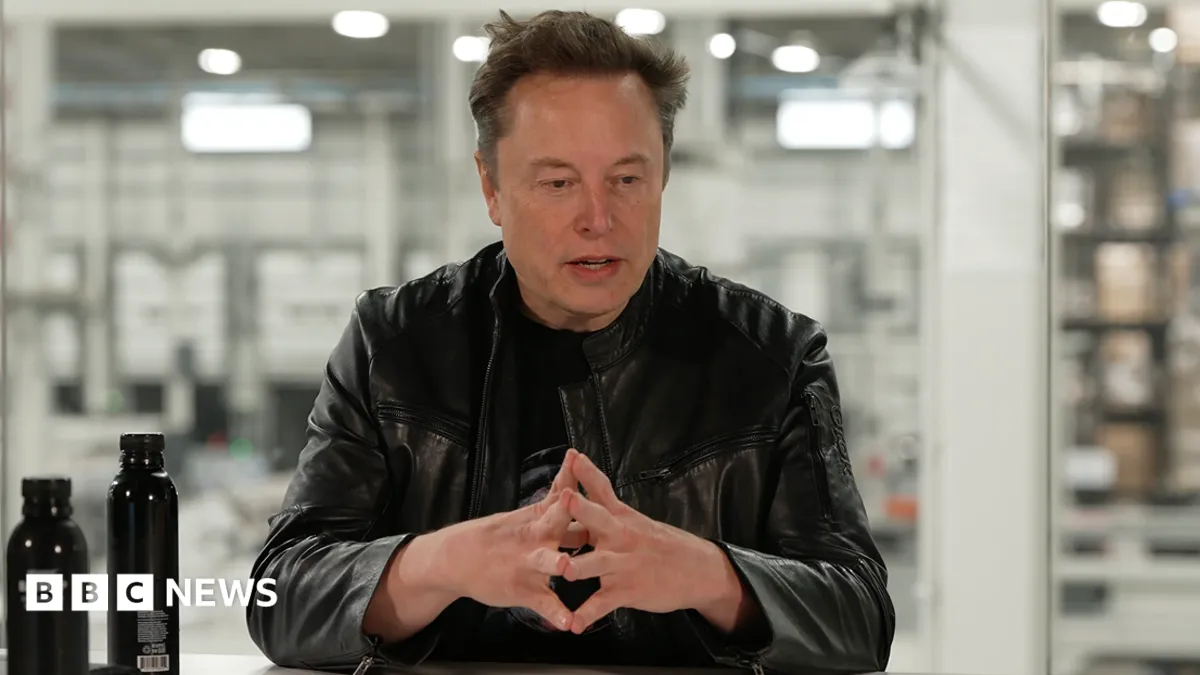
Musk weighs Tesla-SpaceX mega-merger as boards form review panels
Special committees at both companies will examine a tie-up that could fuse electric vehicles and space launch, forcing a fresh look at governance and valuation.