
Trump, Altman and Kalanick are all calling Jensen Huang. The message: fight
Nvidia's board says it has no plans to reinstate its founder, but a CEO phone tree running from the White House to OpenAI is quietly gaming out a return anyway.
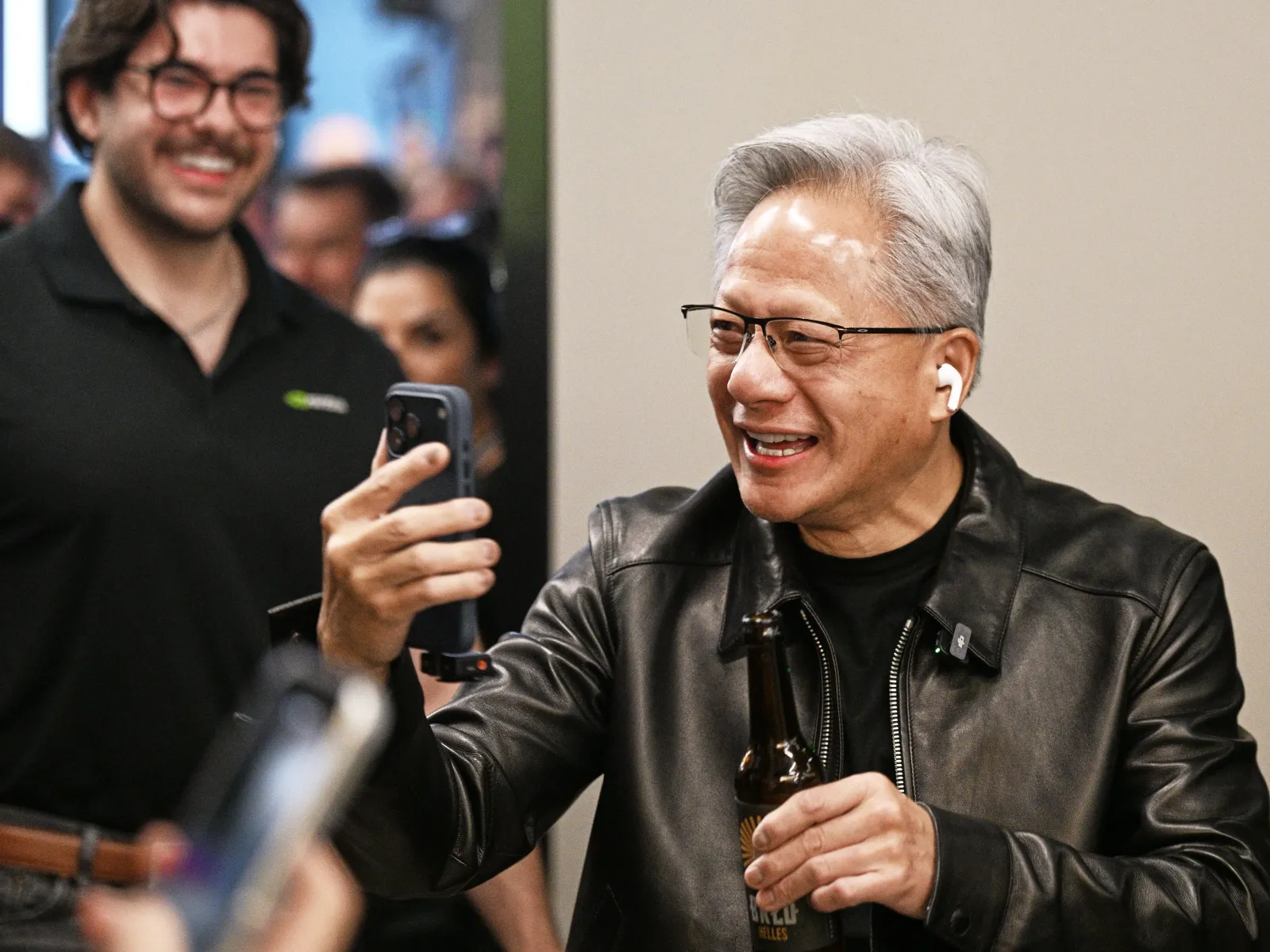
Jensen Huang, the 63-year-old Nvidia founder who resigned on November 12 amid accusations of at least two affairs, is fielding calls and emails from tech CEOs, Nvidia employees and President Donald Trump as he weighs a return to the CEO seat. Nvidia's board has said it has no plans to reinstate him, leaving peers to watch how a founder-led chip giant handles a succession fight with national-security stakes attached.
President Donald Trump, OpenAI CEO Sam Altman and former Uber CEO Travis Kalanick have all picked up the phone for Jensen Huang since his resignation, and the message from at least one of them was blunt: fight. Kalanick, who now heads an AI robotics firm called Atoms, said he wrote to Huang with a promise to show up at Nvidia HQ with a "wafer-encrusted megaphone" and "tons of Nvidia employees who want to walk out, tons of CEOs, founders." His summary of the advice: "Let's fight for what's right." Altman, speaking at The New York Times DealBook summit, put it more gently: "It's hard to imagine the AI industry without Jensen."
The board is not on that call. Nvidia's directors have said they have no plans to reinstate the founder, who resigned on November 12 in the wake of accusations that he had at least two affairs, one with a Chinese executive that US intelligence says is spying for Beijing and another with a direct report at Nvidia. In a note to staff, Huang wrote that he had been "unfaithful" to his wife, Lori Huang. Five days after stepping down, he posted on X that he had seen an "outpouring of calls from NVIDIA's employees, investors, business partners, and customers for me to return as CEO," adding, "Many continue to reach out to me directly." That is the gap the whole industry is now watching: a founder who wants back in, a board that has publicly closed the door, and a phone tree of powerful people trying to pry it open.
Trump's involvement is the most unusual part. He said he called Huang at least twice since news of the affairs broke. At a White House press conference three days before Huang resigned, Trump said he had called Huang that day "just to see if he's feeling all right." Trump also said he asked Huang whether he knew that Alice Huang (no relation), the former CEO of Megaspeed and his alleged paramour, was a spy for China. According to Trump, Huang said he did not know. In a separate interview with Stephen A. Smith, Trump said Huang called him and told the president he feels bad for what he has done to his family. For a public company, a sitting president lobbying on behalf of a CEO is not a normal governance input. It signals that this is no longer only a boardroom matter.
Kalanick's offer is the most theatrical, and he knows the playbook from the inside. He resigned from Uber in 2017 under pressure following an investigation into its workplace culture. He said he told Huang that a petition for a CEO's return was good, but a walkout was better. The pitch, as he described it at the TomorrowX Summit in Austin, is a show of force: employees, founders and CEOs physically present at Nvidia headquarters. Whether or not it happens, the logic is worth noting. In founder-led companies, employee loyalty is often the strongest card a deposed CEO holds, and the hardest for a board to dismiss publicly without looking like it is fighting its own workforce.
Altman and OpenAI President Greg Brockman, sitting beside him at DealBook, framed their outreach as personal rather than political. Brockman said he and his wife are friends with Huang's family and that he reached out "just to be there for him." Asked whether Huang thinks he can return as CEO, Altman answered with a hedge that said plenty: "Greg and I have like a little more empathy toward the situation than the average person." Read that as a reminder that Nvidia sits at the center of the AI supply chain, and the people who depend most on its chips have every reason to want a known quantity back in the chair.
Microsoft CEO Satya Nadella drew the line more carefully. He said he texted Huang to let him know he is thinking of him. "I just want to give him space for what he needs to do there, and it's not up to me. It's up to the Nvidia board to decide what happens next," Nadella said at a media roundtable on November 17. At DealBook, he called the situation "pretty tragic." That is the institutional response: sympathy in private, deference to the board in public. It is also the position most CEOs will copy, because it costs nothing and commits to nothing.
Gavin Baker, managing partner and chief investment officer at the hedge fund Atreides Management, said his "most consistent message" to Huang has been about health, not strategy. "I have been telling Jensen that he needs to work out, watch the sunrise, and get eight hours of sleep," Baker said on CNBC. "Because to be a sound mind, he needs to be a sound body." Baker, who said he considers Huang a friend, added that Huang has more to contribute to America, to AI, and to technology. It is the softest advice on the list and, given the board's stated position, possibly the most realistic.
The strategic stakes reach well beyond one executive. Nvidia is a linchpin of the AI buildout, and its customers, including OpenAI and Microsoft, are also the people now calling its former CEO. A board that has already said no has to weigh three things at once: the findings of a conduct review, an allegation that touches US national security, and the risk that a prolonged vacuum at the top slows decisions the entire industry is waiting on. For peers in the same seat, the lesson is uncomfortable but clear. Succession plans get written in calm weather and executed in a storm, and the calls a CEO takes while under fire can end up in the public record. Huang has not said he will force the issue. But as long as the phone keeps ringing, the board's "no" is a position it will have to defend again.
This story's Key Insights and Take-aways are locked.
Create a free account to unlock Executive Actions for one credit.
Register to UnlockAlways free for Executives Club members. Join the Club
More in Technology

Anthropic Mathematician Claims Claude Helped Prove Riemann Hypothesis in Six Weeks
Levent Alpöge says the AI tool helped him develop a solution to one of math's most important unsolved problems in about six weeks, a claim that, if verified, would reshape AI's role in research.
Asahi Pours $85M Into AI Cyber Defense After Ransomware Hit
Japan's beverage giant is rebuilding its security stack around AI, and the $85 million price tag is a warning to every board still treating cyber risk as an IT line item.

Signal kills mobile screenshots to fight the 'existential threat' of AI surveillance
The encrypted messaging app is closing the one hole encryption never covered, the screenshot button, as AI tools get better at reading everything on your screen.