
Trump nominates acting Labor Secretary Keith Sonderling for permanent role
The administration turns an acting appointment into a full-time nomination, tightening momentum on labor policy and enforcement.

President Trump nominated acting U.S. Labor Secretary Keith E. Sonderling to be permanent. Decision-makers should watch what this signals for Labor Department priorities, enforcement posture, and agency stability.
President Trump on Monday nominated acting Labor Secretary Keith E. Sonderling to the full-time post. In a Truth Social post, Trump wrote, “It is my Great Honor to announce that I am nominating Keith E. Sonderling, the outstanding Acting United States Secretary of Labor, to be permanent.” Sonderling responded by saying he was “deeply grateful” for the nomination.
For employers, worker advocates, and anyone who lives in the regulatory blast radius, this is more than a personnel update. Turning an acting head into a full-time nominee changes how quickly the Department of Labor can lock in priorities, staffing, and enforcement tempo, because a permanent leader typically has more room to set a longer runway than an acting official who may be waiting on the calendar.
Here is the basic context executives should keep in mind. In the U.S. system, an acting head often has to manage continuity: keep ongoing rulemaking and enforcement moving, avoid major pivots that could look temporary, and prepare the organization for whatever comes next. A permanent appointment, by contrast, tends to invite decisions that take months or years to show up, especially where labor policy intersects with budgeting, hiring, and interagency coordination. Even when the underlying political direction is similar, leadership permanence can matter operationally.
Sonderling’s move is also a signal about how the administration wants to run the Department of Labor right now. When a president nominates an acting official to the full-time post, it usually reflects a choice to avoid prolonged leadership uncertainty. For an agency that touches high-stakes issues like workplace safety and labor rights, that kind of continuity can be felt in day-to-day interactions. Regulated companies often read leadership stability as a proxy for enforcement consistency: are agencies likely to change standards quickly, or keep applying current frameworks while they finalize new rules?
At the same time, the nomination does not instantly eliminate the procedural layer that comes with a full-time confirmation process. The Department of Labor is not a standalone island. It operates within the broader regulatory ecosystem, where labor rulemaking can overlap with other agencies and where legal challenges are common. Even a well-aligned nominee still has to navigate the normal checks and balances of nominations. So while the nomination can reduce internal wobble, it does not instantly guarantee a new policy order on day one.
For boards and senior leadership teams, the practical second-order question is what kind of “settling” this nomination enables. Acting officials can be constrained by the logic of “we are holding the line until the transition finishes.” A nominee who becomes permanent can be more comfortable committing resources to specific initiatives, because the leadership horizon is clearer. That can influence everything from compliance planning to how quickly guidance evolves, because companies tend to calibrate their operational risk based on how confident regulators look.
There is also the stakeholder angle. In labor policy, the Department’s posture affects a wide set of groups: workers, unions, employers, staffing firms, and compliance professionals. Leadership continuity can reduce uncertainty for these stakeholders, but it can also intensify expectations. When an acting leader is nominated as permanent, supporters may interpret it as an endorsement of a direction they want to see accelerated, while critics may watch for signs of a stronger enforcement push. That tug-of-war can show up in rulemaking timelines, investigation priorities, and the level of aggressiveness in interpreting existing standards.
The strategic stakes are straightforward: the Labor Department is one of the federal agencies most likely to produce tangible operational consequences for businesses, from compliance audits to regulatory interpretations. If Sonderling’s nomination advances, executives in heavily regulated labor markets will likely need to treat labor policy momentum as something to plan for, not just monitor. In other words, this is a leadership story with compliance implications.
Bottom line: President Trump’s nomination of acting Labor Secretary Keith E. Sonderling to the permanent role, paired with Sonderling’s “deeply grateful” response, is a move toward closing the acting chapter and turning it into a full-time mandate. The near-term reality is procedural, but the signal is already clear. Organizations should be ready for a Department of Labor that can plan farther ahead and execute with less internal ambiguity, which is exactly when regulatory pressure tends to feel the most real.
This story's Key Insights and Take-aways are locked.
Create a free account to unlock Executive Actions for one credit.
Register to UnlockAlways free for Executives Club members. Join the Club
More in Politics

Obama Defends Ilhan Omar After Agents Search Her Home in Trump Inquiry
The former president's intervention raises the stakes in a federal probe into immigration paperwork that has put a prominent progressive lawmaker in the crosshairs.

Blair-era minister: cut welfare to fund youth job support
Alan Milburn's call for welfare cuts to fund employment support opens a Labour fight over benefits and the Neet crisis.
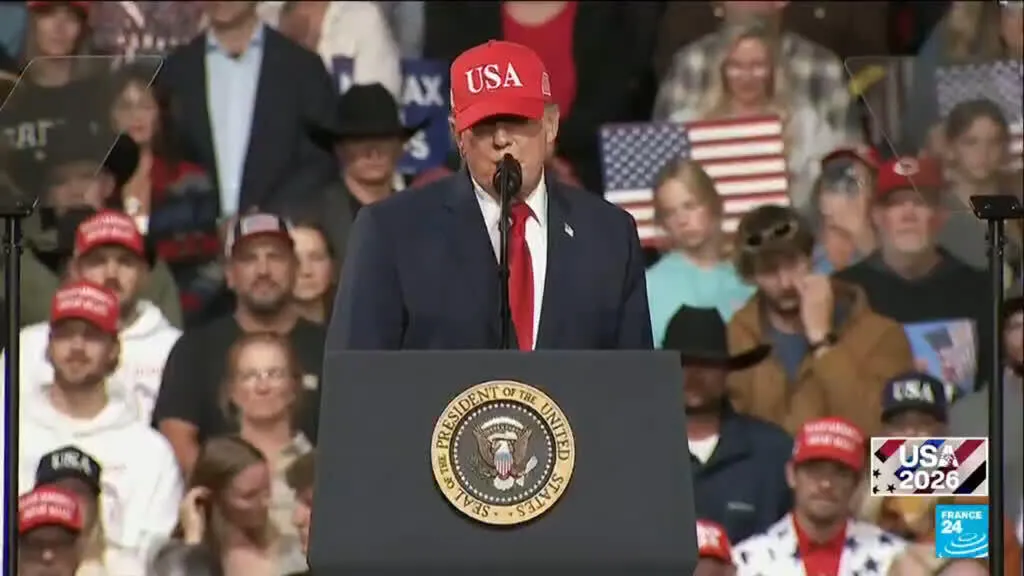
Hot September CPI: energy costs surge, voters feel the squeeze before midterms
The latest inflation print lands as Trump campaigns for GOP control of Congress, putting cost-of-living worries at the center of the midterm fight.