

Trump opens Patriot missile production for Ukraine, but analysts warn it takes years
A US signal of support could translate into domestic Patriot manufacturing, yet timelines and supply-chain reality still dominate the story.
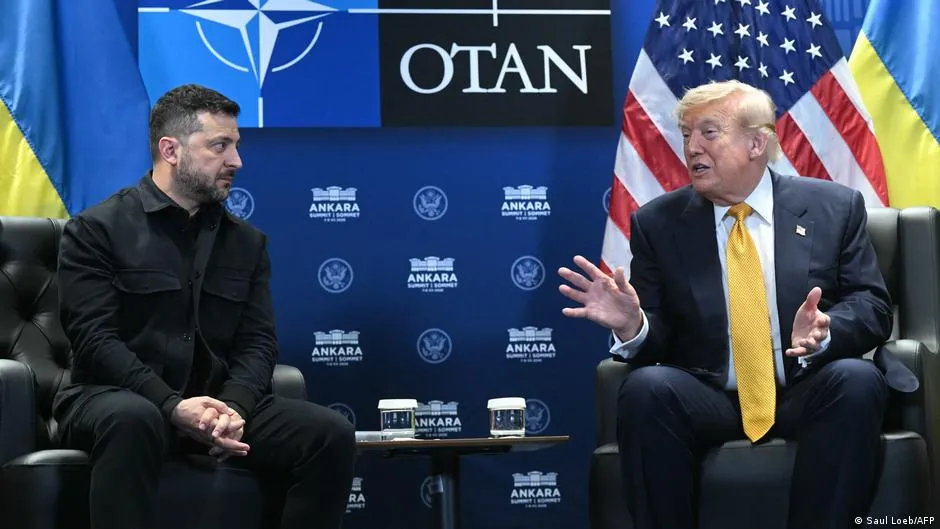
US President Donald Trump says he may let Ukraine produce Patriot air defense missiles. For decision-makers, the move signals political backing, but analysts caution that actual production could be years away.
US President Donald Trump says he may allow Ukraine to produce Patriot air defense missiles. Analysts say the signal matters because Patriot manufacturing in Ukraine would look like more than speeches or supply shipments. It would mean Ukraine could move toward building key parts of its own air defense capacity, at a time when the battlefield demands are relentless.
The catch is just as important as the support. Analysts welcome the move as a sign of support for the country, but they warn it could take years before production begins. That means the headline decision is not an instant boost for air defense coverage. It is more like a long-term pivot point that could reshape procurement, industrial planning, and bargaining dynamics. In other words, it changes the direction of travel, not the next few weeks.
To understand why “may let” still has a long runway, it helps to remember how Patriot is treated in the defense industrial world. Major defense systems are rarely a simple “build it locally” exercise. They involve tightly controlled components, complex supply chains, specialized manufacturing know-how, and licensing and export frameworks that dictate what can be transferred, to whom, and under what conditions. So even if the political will shows up quickly, the operational build-out usually takes time.
This is where analysts’ warning about “years” becomes a board-level issue, not just a timeline note. When a government signals support for domestic production, it can trigger a chain reaction: long lead-time procurement decisions, new industrial partnerships, and contract structures that cover ramp-up risk. The uncertainty matters. If production starts later than hoped, the gap has to be filled by existing procurement channels. That means budgets and stockpile strategies remain central even if the long-term industrial plan is suddenly more plausible.
There is also a regulatory and coordination angle. Defense production is political by nature, but it is also constrained by rules that govern technology, production access, and end-use. Trump’s statement, as reported, frames the policy direction as conditional, not immediate. That leaves room for negotiations on details, including what exactly Ukraine would produce, how components would be sourced, and what oversight mechanisms would apply. Even when support is real, the legal and administrative steps can slow translation from announcement to factory output.
For executives watching from adjacent sectors, the second-order implication is about supply and demand signaling. If Ukraine gets a clearer path toward producing Patriot air defense missiles, the market will pay attention to capacity constraints, component availability, and where the “bottlenecks” typically sit in defense manufacturing ecosystems. That attention can move capital, staffing, and partner interest. It can also shift how companies think about resilience and localization in a world where geopolitical shocks increasingly shape industrial strategy.
For peers in governments and defense-industrial leadership, the strategic stakes are straightforward. Trump’s possible support suggests the US is at least entertaining a deeper industrial commitment than resupply alone. But analysts’ warning that production could take years is the reality check that keeps planning honest. Leaders need to assume a dual track: immediate defense needs continue through procurement and allied support, while longer-term manufacturing plans are built with conservative timelines. The decision is not whether Ukraine will seek more self-sufficiency in air defense. It is whether institutions can turn conditional permission into real manufacturing before the operational window narrows.
This story's Key Insights and Take-aways are locked.
Create a free account to unlock Executive Actions for one credit.
Register to UnlockAlways free for Executives Club members. Join the Club
More in Politics

Glacial collapse, not rain, killed 180 in Nepal's Himalayan flood
The Himalaya's extreme geography hid the true cause of Nepal's catastrophic flood, a glacial collapse that turned a geological battleground into a mass-casualty zone.
Iran’s Esmail Baghaei says Oman talks start shipping via Hormuz, not US talks yet
Temporary route plans with Oman aim to restart commerce while Tehran says Washington dialogue is not on the table.

Standards watchdog opens probe into Reform UK deputy leader Richard Tice over interests
The parliamentary standards commissioner says it began an investigation on 28 July into a possible undeclared interest.