
Trump risks escalation with Iran by swinging back to all-out war
The Hill lays out how renewed “all-out” pressure on Iran could spiral fast, with high costs for U.S. decision-makers.
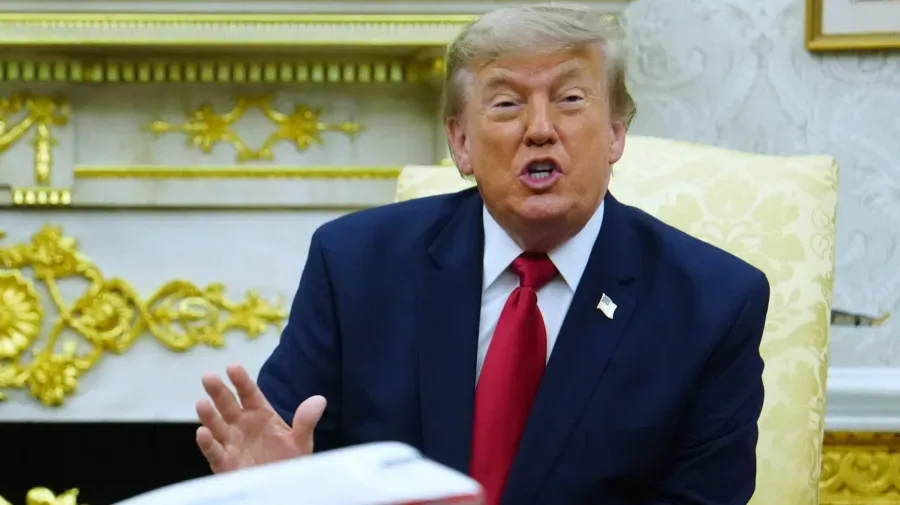
The Hill’s newsletter frames President Trump’s renewed posture toward Iran as a return to “all-out war,” highlighting the biggest risks of escalation. For decision-makers, the central consequence is that a fast-moving conflict path can compress options and raise costs across defense, markets, and diplomacy.
President Trump’s push toward “all-out war” with Iran is not just another item on a national security agenda. The Hill’s Defense & NatSec briefing focuses on the big risks in renewing a posture that can make diplomacy harder, tighten the window for restraint, and accelerate decision timelines. In other words, the story is less about intent and more about dynamics. Once you signal you are prepared for maximum force, every subsequent step tends to become more costly, faster, and harder to reverse.
That is the core stake for leaders: escalation risk. The Hill’s framing is that President Trump renews the posture of maximum confrontation, and that shift carries dangers that reach beyond immediate military events. These include political and operational pressures that can lock in choices, turning “limited” actions into something broader. When leaders manage crises in real time, they are not only responding to threats, they are also responding to signals, timelines, and second-order effects. The Hill’s newsletter emphasizes those risks as President Trump renews this approach.
To understand why “all-out war” posture matters, it helps to recall how deterrence and signaling work in practice. In foreign policy, words and posture often act like levers. They can deter, but they can also provoke. If the other side reads a stronger U.S. stance as a near-term risk of attack, it may respond by moving assets, accelerating its own actions, or preparing for worst-case scenarios. That does not guarantee conflict, but it changes the tempo. In a crisis, tempo is power: the side that feels it must act first often takes actions that narrow the range of “off ramps.”
There is also a domestic dimension that matters for executives and boards, even if their day jobs are not defense policy. National security decisions increasingly spill into budgeting, procurement planning, and market confidence. Defense and intelligence communities plan around threat assumptions. If U.S. posture shifts toward all-out confrontation, the demand for readiness can intensify, and procurement priorities can move. That can influence the pipeline for defense suppliers and logistics providers. At the same time, investors tend to price headline risk quickly. Escalation headlines can move expectations for energy, shipping, and overall risk appetite, even when policy details remain fluid.
Then there is the regulatory and institutional backdrop. In the U.S., major foreign policy moves interact with legal authorities, oversight, and congressional processes. Even without getting into specific statutes in this source excerpt, the practical reality is that leaders have to operate inside a system that is not purely executive-controlled. When posture hardens, oversight scrutiny often increases, and bureaucracy does not disappear. That mismatch between urgency on the ground and process in Washington can become a risk multiplier. Leaders may face pressure to act quickly, while still needing to manage the steps required to sustain those actions over time.
From a governance standpoint, boards also have to think about what happens when uncertainty rises. In national security environments, uncertainties rarely stay single-variable. An escalation pathway can affect supply chains, employee safety planning, and customer demand in adjacent sectors. Even companies not directly tied to defense sometimes face knock-on impacts when conflict increases volatility. For decision-makers, that means risk management is not only about compliance or contracting. It is about scenario planning: what if the crisis accelerates and timelines compress? What if partners and counterparties move to protect their own interests?
The Hill’s choice to highlight “Trump’s big risks” in returning to all-out war with Iran is ultimately a reminder of a hard pattern. Maximum pressure can produce outcomes quickly, but it also raises the odds of losing control of the next step. Leaders in the U.S. and abroad will be watching each move for intent. That is why the strategic stakes are not confined to battlefield considerations. They include the political feasibility of de-escalation later, the room to negotiate under stress, and the likelihood that domestic and international actors interpret restraint as weakness.
For peers in similar leadership roles, the lesson is not to debate strategy in the abstract. It is to recognize the decision environment created by posture. When leaders signal maximal confrontation, they may gain leverage, but they also compress time and increase the cost of mistakes. The Hill’s newsletter, focused on President Trump and the risks of returning to all-out war with Iran, points to exactly that tradeoff: higher potential upside in deterrence, paired with escalation dynamics that can become self-reinforcing and difficult to unwind.
This story's Key Insights and Take-aways are locked.
Create a free account to unlock Executive Actions for one credit.
Register to UnlockAlways free for Executives Club members. Join the Club
More in Politics

LA County: DOJ's 20,000 'noncitizen' voter list is 'unreliable,' includes U.S.-born
Preliminary review by Los Angeles County election officials finds errors in the federal list, raising the stakes for voter roll integrity ahead of November.

Trump's $1.5B Pentagon chip investment lands in North Carolina
A $1.5 billion defense infusion for North Carolina chipmaking signals a new era of Pentagon-backed reshoring - here's what it means for the industry.

Nigeria confirms first Ebola case in Abuja, a woman just off a Uganda flight
Health Minister Muhammad Ali Pate says the patient flew in from Uganda, putting Africa's latest outbreak on Nigeria's doorstep.