

Trump’s ambiguity on Iran turns policy into a blank check for escalation
Foreign Affairs explains how unclear signals can intensify risk, squeeze diplomats, and corner leaders into bad options.

Foreign Affairs argues that President Trump’s lack of clarity on Iran contributes to escalation by creating space for miscalculation. For decision-makers, the consequence is a policy environment where ambiguity raises the probability of costly, irreversible outcomes.
Foreign Affairs frames a familiar but still dangerous pattern: when U.S. leaders communicate with ambiguity on Iran, escalation becomes more likely, not less. The publication’s core claim is direct, and it matters because the difference between clarity and vagueness is not semantic. It changes what other actors believe is “safe” behavior, and it shifts timing pressures onto the people tasked with preventing a worst-case outcome.
In other words, Trump’s “lack of clarity” is not just a communications flaw. It becomes a strategic variable. When leaders do not clearly signal red lines, objectives, or enforcement intent, other parties fill the gaps based on their own interests, constraints, and internal timelines. That is how uncertainty turns into momentum. For executives and investors watching geopolitics, this is the part that shows up as volatility, delayed approvals, and sudden policy risk premia. For policymakers, it is the part that turns a manageable disagreement into an escalating crisis spiral.
To understand why this matters, it helps to see how ambiguity behaves in high-stakes negotiations. Iran and the United States operate under layered incentives, including domestic political pressures, bureaucratic friction, and the need to project strength to domestic audiences. In that environment, vague signaling can be interpreted in multiple ways, and those interpretations can diverge rapidly. One side might see ambiguity as room to test; another might see it as hesitation that invites escalation. Each interpretation can then be “proven” through actions, because in crises, people rarely get the time or information to verify intent.
There is also a regulatory and compliance dimension that executives feel even when they are not directly involved. Iran-related sanctions and countermeasures shape trade, payments, shipping, insurance, and financing decisions across global markets. When policy direction is unclear, compliance teams cannot confidently calibrate their risk assumptions. That tends to produce two second-order effects: first, conservative behavior that slows or stops legitimate activity; second, a scramble for guidance, which can create operational bottlenecks and market dislocations. Ambiguity does not just raise tail risk in the geopolitical sense. It raises day-to-day transaction friction, which can ripple into supply chains and cash flows.
Ambiguity can also distort negotiation dynamics. Diplomacy depends on credible commitments and the ability to measure progress. If signals are inconsistent, counterparties may hedge by taking actions that preserve leverage, even if those actions increase short-term danger. Meanwhile, internal U.S. coordination can suffer. Different agencies, advisors, and political stakeholders often pursue partially overlapping goals. Without clarity, their messaging can come across as incoherent, which encourages the other side to treat the situation as fluid. Fluid situations are where escalation often hides, because leaders can later claim they did not “mean” what the other side feared.
The escalation spiral Foreign Affairs emphasizes is essentially a feedback loop. Ambiguity leads to misread signals. Misreads lead to actions meant to gain advantage or compensate for uncertainty. Those actions then raise pressure on the original sender, who may respond with yet more signaling that is, again, not fully precise. Each step amplifies the stakes, because the longer the crisis continues, the more each actor has to protect credibility. In corporate terms, it is like running a high-risk project under unclear governance: the longer decisions stay unstructured, the harder it becomes to correct course without making it worse.
For decision-makers, the strategic takeaway is not “be cautious” in the generic sense. It is to recognize how clarity affects outcomes across an ecosystem of incentives. If your organizations are exposed to sanctions regimes, cross-border finance, energy logistics, or defense supply chains, policy ambiguity should be treated as a risk factor with measurable implications. Board-level oversight, treasury planning, scenario analysis, and compliance readiness all need to assume that unclear policy can accelerate escalation risk.
Foreign Affairs’ point about Trump’s lack of clarity on Iran ultimately comes down to control. In crises, leaders do not just manage events. They also manage expectations, interpretations, and the “space” for dangerous experimentation. When that space exists, escalation can become the rational path for actors acting under uncertainty. And when escalation arrives, it does not wait for committees, filings, or explanations.
This story's Key Insights and Take-aways are locked.
Create a free account to unlock Executive Actions for one credit.
Register to UnlockAlways free for Executives Club members. Join the Club
More in Politics
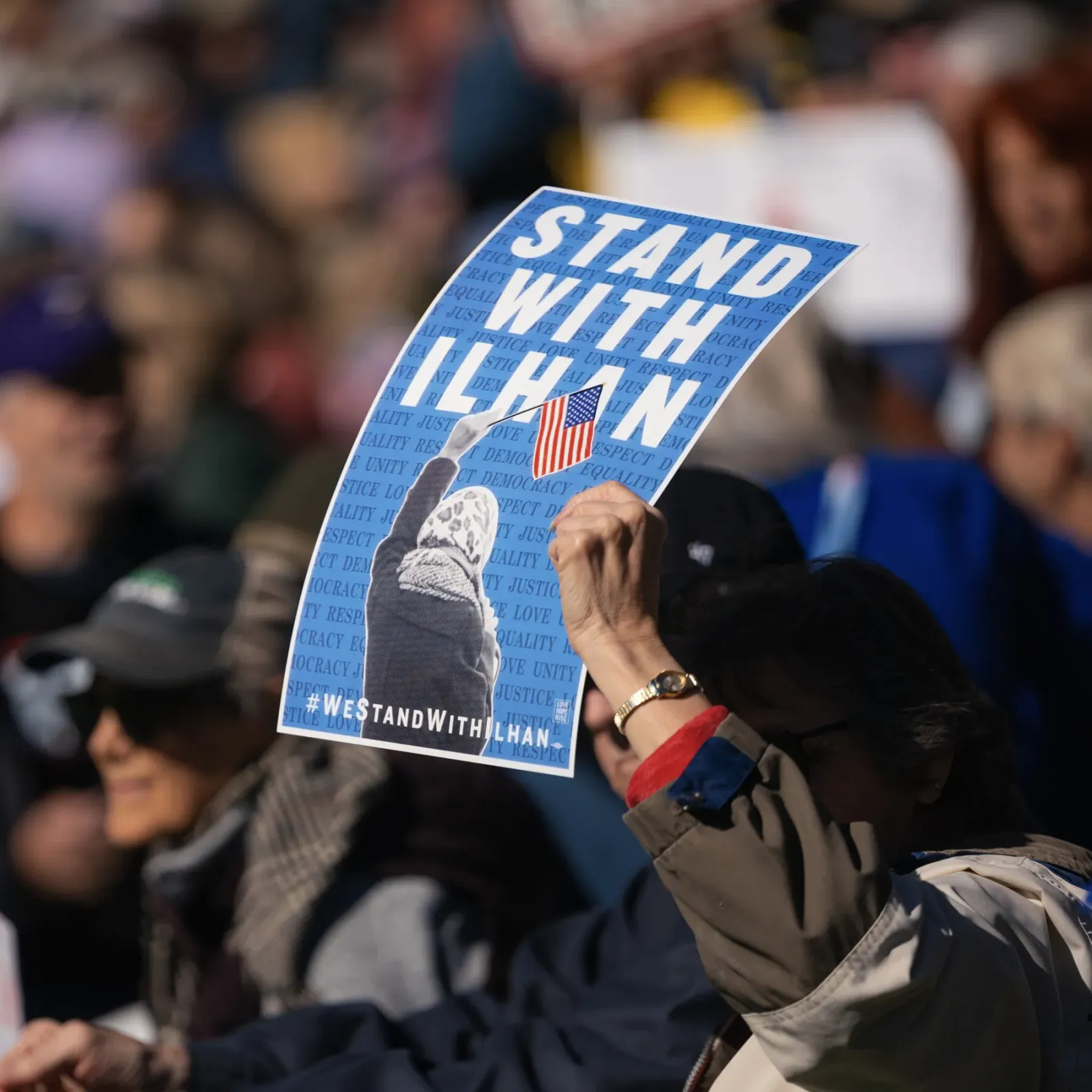
Obama Defends Ilhan Omar After Agents Search Her Home in Trump Inquiry
The former president's intervention raises the stakes in a federal probe into immigration paperwork that has put a prominent progressive lawmaker in the crosshairs.

Blair-era minister: cut welfare to fund youth job support
Alan Milburn's call for welfare cuts to fund employment support opens a Labour fight over benefits and the Neet crisis.
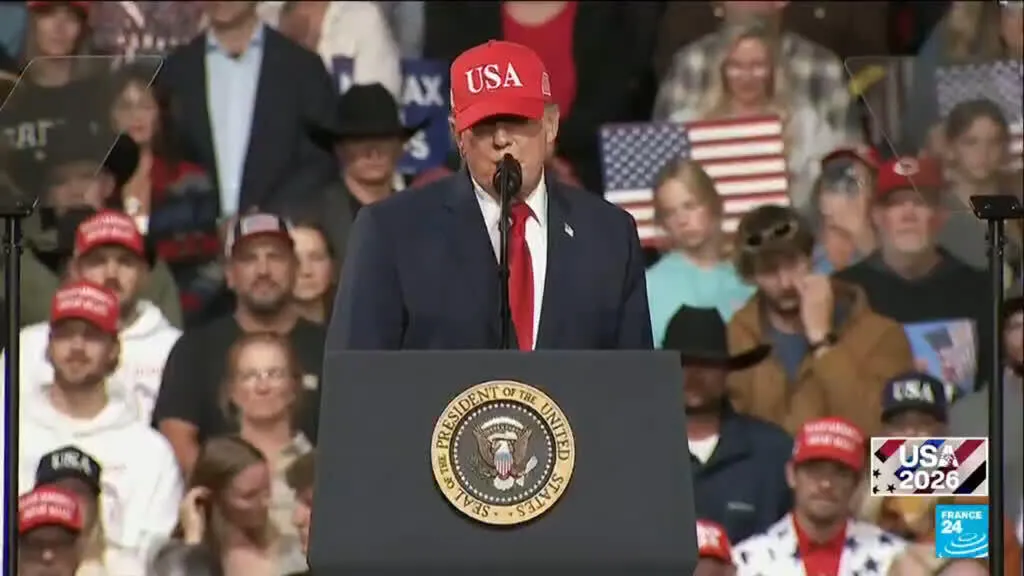
Hot September CPI: energy costs surge, voters feel the squeeze before midterms
The latest inflation print lands as Trump campaigns for GOP control of Congress, putting cost-of-living worries at the center of the midterm fight.