
Trump’s firing tested independence, but Supreme Court protected the Federal Reserve’s “unique role”
The justices preserved a carve-out for the Fed while scrutinizing the precedent meant to insulate independent regulators.

The Supreme Court rulings addressed the precedent that had insulated independent regulators after President Trump’s firing tested it. The consequence is a new, more nuanced boundary for regulator independence, with the Federal Reserve explicitly treated as distinct.
President Trump’s firing tested a precedent that had insulated independent regulators. In the end, the Supreme Court did not simply affirm the insulation across the board. Instead, the justices carved out the “unique role” of the Federal Reserve, leaving a clear signal that not every regulator gets the same constitutional comfort.
That distinction matters because independent regulators are not just bureaucracies. They are the levers that shape rules in sectors where the economic stakes are permanently on the table: finance, consumer protection, and markets that never stop trading. When the Court frames the Fed as structurally different, it is telling executives, boards, and investors that the legal terrain for regulatory independence is uneven, not uniform. The headline version of the story is simple: the Court accepted the Fed as different. The practical version is harder to ignore: the next regulatory fight may turn on whether the regulator looks like the Fed.
To understand why this shakes people up, it helps to recall what “independent regulator” independence is supposed to do. In theory, it shields major rulemaking and enforcement from direct political pressure, so decisions are made on a longer time horizon than election cycles. In practice, independence is also the foundation for market trust. If regulated entities believe leadership can be replaced for political reasons, expectations shift. Investors price uncertainty. Boards spend more time managing regulatory risk than product risk. Even when the rule itself does not change immediately, the perceived stability of the regulatory system changes behavior.
President Trump’s firing tested that precedent precisely because the Court had to decide how far insulation goes when a president wants to remove a key player tied to oversight. The source is specific about the Court’s move: it protected the idea with a carve-out for the Federal Reserve. That carve-out is the “unique role” the justices emphasized, and it is not a throwaway line. The Federal Reserve’s status is different in the way markets interact with it. Monetary policy and financial stability are not just another regulatory function. They can reshape liquidity, interest rate expectations, and risk pricing across the economy.
So the Court’s reasoning implies a hierarchy of sorts. Some regulatory decisions are more intertwined with systemic stability and macroeconomic transmission than others. If a regulator is seen as embedded in that “unique role,” it may receive additional legal protection from removal dynamics. If it is not, independence may be more contestable. That is the big operational consequence for executives: you cannot treat all regulatory independence as one package deal. You must think regulator by regulator.
Now zoom out to the second-order implications for corporate strategy. Companies do not merely comply with rules. They also plan around them. Compliance teams build operating assumptions. Treasury teams build hedging and funding assumptions. Boards monitor how stable the oversight environment is, because stability affects both cost of capital and the timing of investments. When independence is treated as conditional, companies tend to widen their risk buffers and diversify their regulatory engagement. They may also spend more time documenting how rules affect stakeholders, since legal uncertainty can raise the odds of future challenges.
For peers with exposure to regulated industries, the rulings raise a tactical question boards will ask in their risk committees: which institutions are insulated, and which are vulnerable? The source does not provide additional details beyond the core framing, but it still gives decision-makers something actionable: the Supreme Court’s carve-out for the Federal Reserve is a precedent-shaped map for what may come next. If you are building a regulatory strategy, you should assume the Court is willing to preserve independence where the “unique role” logic applies, while leaving other regulators open to tighter scrutiny under similar removal challenges.
In other words, President Trump’s firing became a stress test for regulatory insulation. The Court’s answer was not an all-clear. It was a line-drawing exercise. The “unique role” of the Federal Reserve is now a legal anchor, and it is likely to be cited whenever independence is challenged again. That is the strategic stake: executives who understand where independence is protected will move faster, invest smarter, and negotiate with a clearer sense of what can be changed and what will be harder to touch.
This story's Key Insights and Take-aways are locked.
Create a free account to unlock Executive Actions for one credit.
Register to UnlockAlways free for Executives Club members. Join the Club
More in Politics
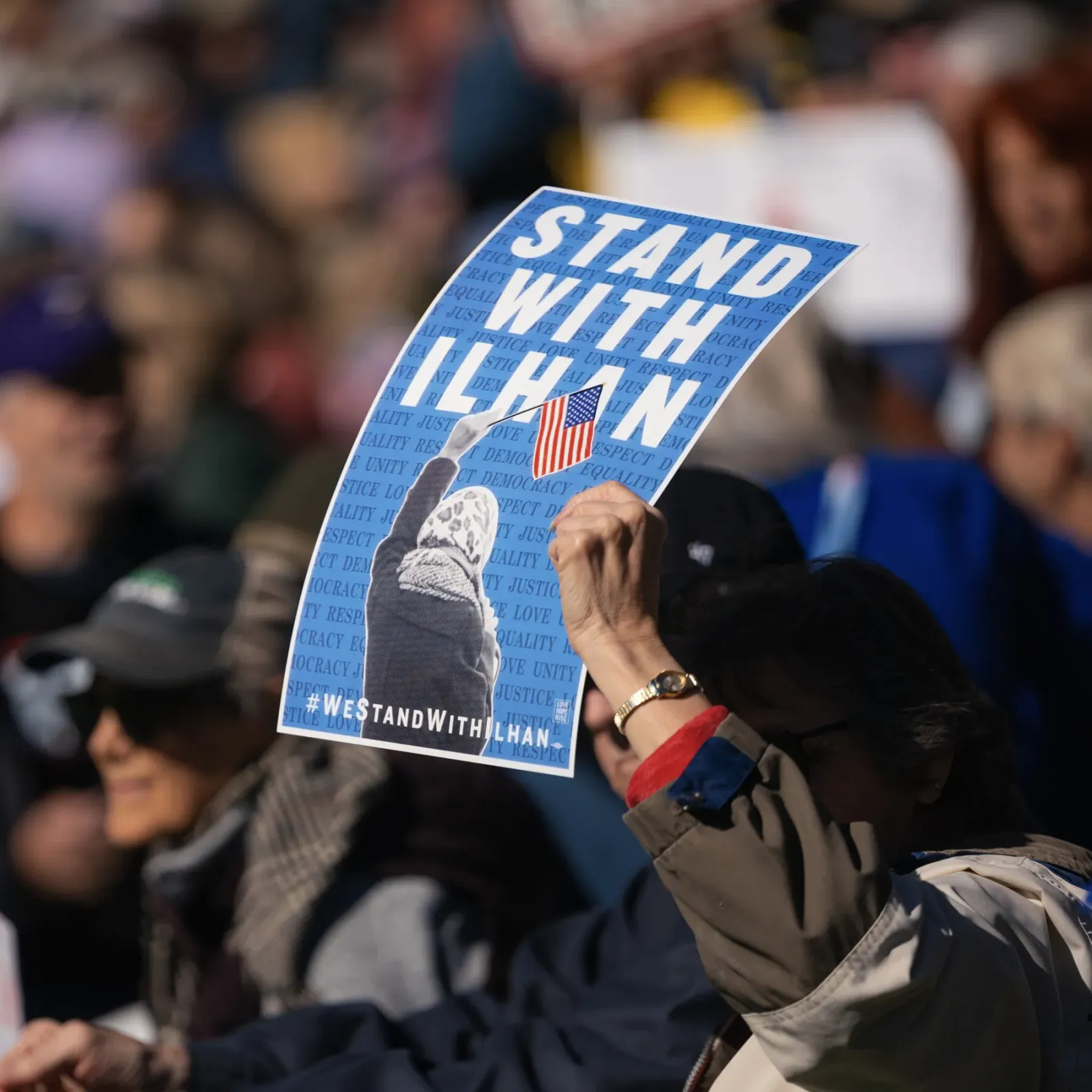
Obama Defends Ilhan Omar After Agents Search Her Home in Trump Inquiry
The former president's intervention raises the stakes in a federal probe into immigration paperwork that has put a prominent progressive lawmaker in the crosshairs.

Blair-era minister: cut welfare to fund youth job support
Alan Milburn's call for welfare cuts to fund employment support opens a Labour fight over benefits and the Neet crisis.
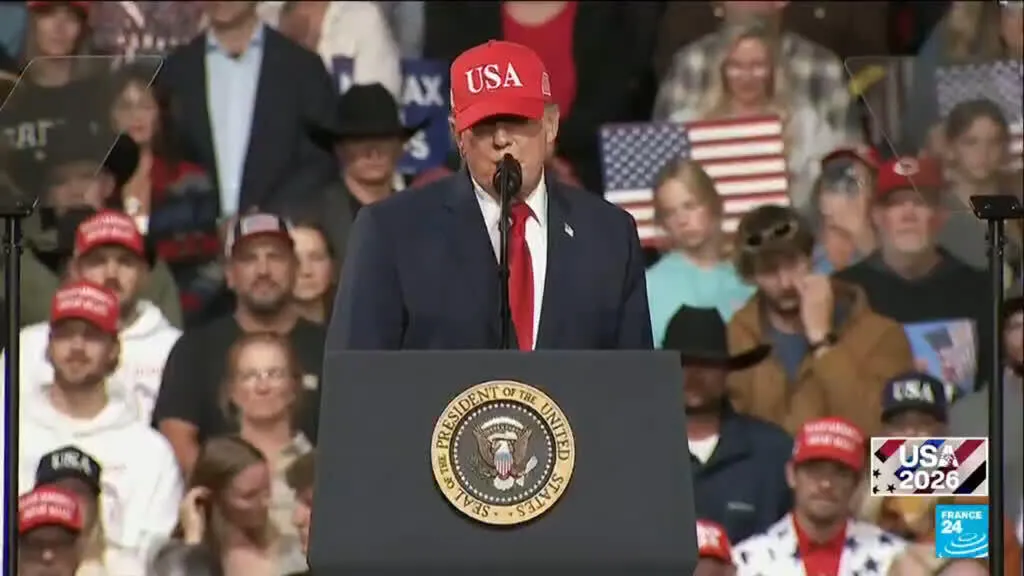
Hot September CPI: energy costs surge, voters feel the squeeze before midterms
The latest inflation print lands as Trump campaigns for GOP control of Congress, putting cost-of-living worries at the center of the midterm fight.