

Trump signs 50% tariffs on Canadian goods after White House cites “discriminatory treatment”
New 50% duties hit some Canadian alcohol, autos, and dairy in 30 days, with key exemptions for energy and potash.
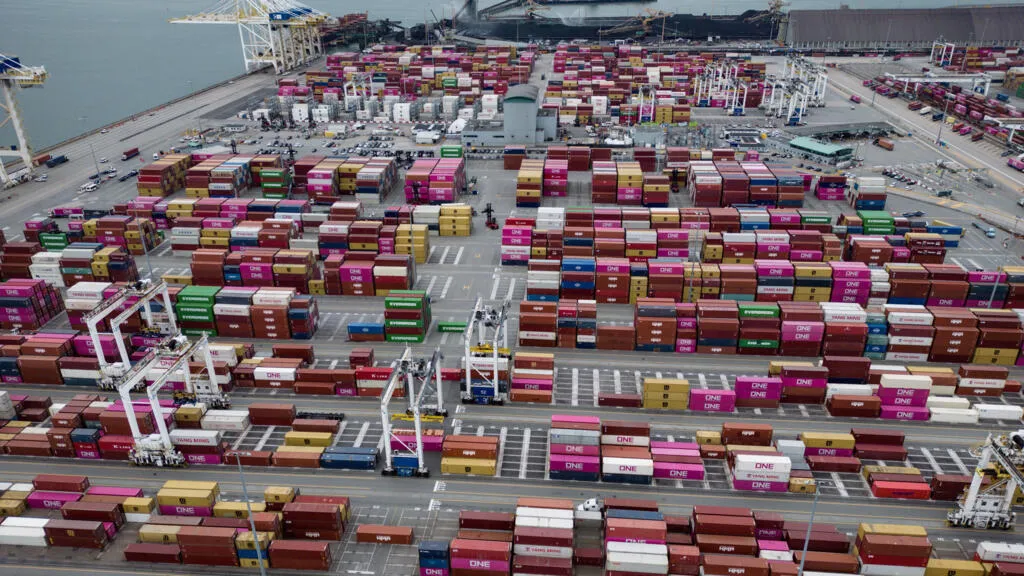
US President Donald Trump signed orders on Monday imposing new 50% tariffs on some Canadian goods. The move, justified by the White House as retaliation for Canada's “discriminatory treatment” of US alcohol, automobiles, and dairy, starts after a 30-day window.
US President Donald Trump signed orders on Monday imposing new 50% tariffs on some Canadian goods. The White House justified the action by pointing to what it called Canada's “discriminatory treatment” of US alcohol, automobiles, and dairy products.
The tariffs take effect in 30 days, meaning companies that trade across the US-Canada border have a short runway to model costs, renegotiate terms, and revisit sourcing. The White House also said the measure includes exemptions for energy, potash, and certain sector-specific imports, which adds a complication: the pain will be uneven, not uniform.
On paper, tariffs look like a blunt instrument. In practice, they are a tool for tightening leverage between governments while signaling to domestic industries that the administration is willing to escalate. Here, the administration framed the tariffs as a response to alleged discrimination against specific US product categories. The targeted list matters because alcohol, automobiles, and dairy are not “one-size-fits-all” categories. They have different supply chains, different regulatory regimes, different seasonality, and different ways to route around friction through contracts, pricing structures, or alternative sourcing.
For executives, the immediate question is who absorbs the 30-day shock. Tariffs typically land on the importer of record at the border. That means a US distributor or manufacturer bringing Canadian inputs may face higher landed costs quickly, but the impact depends on contract language, pricing adjustments, and how quickly customers accept changes. Some firms may try to pass costs through to buyers. Others may absorb margins to defend market share. Either approach can create short-term earnings pressure while procurement teams scramble for workable substitutes.
The exemptions the White House highlighted, like energy and potash, also matter because they reveal where the administration expects the economic stress to concentrate. Energy is often a strategic input in industrial planning, and potash can be tied to agriculture supply chains. By carving those out and also exempting “sector-specific imports,” the policy implicitly acknowledges that a broader tariff wall could ripple into areas the government may not want to destabilize. For boards and CFOs, that unevenness is a risk to manage: the tradeoffs are political and economic at the same time.
There is also a timing effect. A 30-day implementation window is long enough for some operational adjustments, but short enough that it can still disrupt budgeting cycles. Finance teams typically need time to update scenarios for gross margin, inventory valuation, and working capital. Legal teams need time to review customs documentation and consider whether tariff liability can be mitigated under applicable rules. Commercial teams need time to renegotiate pricing, delivery schedules, and volume commitments with partners on both sides of the border.
Second-order implications can show up in unexpected places. For example, tariff-driven cost increases can change sourcing decisions even where exemptions exist, because companies optimize their overall supply network rather than only single categories. If Canadian goods in alcohol, automotive, or dairy become more expensive overnight, buyers may re-balance toward other origins or adjust product mix. That can influence demand forecasts and manufacturing run rates in the near term, which then feeds back into capacity planning and inventory strategy.
The strategic stake for executives beyond the immediate categories is straightforward: this is a policy signal about how trade disputes may escalate, and about how quickly cross-border trade assumptions can break. For boards at companies with US-Canada exposure, the main takeaway is not just “tariffs are coming.” It is that tariff schedules, exemptions, and product scope can change the economics of entire supply chains on a tight timeline. In roles where you manage risk, margins, and resilience, that means you need a live playbook for trade actions, not a static one.
This story's Key Insights and Take-aways are locked.
Create a free account to unlock Executive Actions for one credit.
Register to UnlockAlways free for Executives Club members. Join the Club
More in Politics

LA County: DOJ's 20,000 'noncitizen' voter list is 'unreliable,' includes U.S.-born
Preliminary review by Los Angeles County election officials finds errors in the federal list, raising the stakes for voter roll integrity ahead of November.

Trump's $1.5B Pentagon chip investment lands in North Carolina
A $1.5 billion defense infusion for North Carolina chipmaking signals a new era of Pentagon-backed reshoring - here's what it means for the industry.

Nigeria confirms first Ebola case in Abuja, a woman just off a Uganda flight
Health Minister Muhammad Ali Pate says the patient flew in from Uganda, putting Africa's latest outbreak on Nigeria's doorstep.