

Two Hormuz ship attacks force scrutiny of Omani detour plan to dodge mines
Iran and Oman agreed to talks, but recent incidents show how hard it is to keep “safe” passage safe.

A plan to divert shipping through an alternative corridor off the Omani coast to avoid mines in the Strait of Hormuz has come under scrutiny after two attacks on ships in recent days. The incidents land as Iran and Oman plan to engage in talks on Monday on strait management, highlighting navigation complexity amid the Tehran-Washington standoff.
A plan to divert shipping through an alternative corridor off the Omani coast to avoid the threat of mines in the Strait of Hormuz has come under scrutiny after two attacks on ships in recent days. The core issue is brutally simple: if a waterway is “safe” only in theory, real-world uncertainty can still find you, especially in a chokepoint where many plans depend on everyone behaving exactly as expected.
What makes this week’s developments matter is the mismatch between intent and outcome. The detour concept is meant to reduce exposure to mines in the Strait of Hormuz, but the fact that two attacks have occurred “in recent days” is enough to force operators, insurers, and traders to ask whether rerouting actually changes the risk profile, or just moves it. Even when authorities signal pathways and procedures, the shipping system is a chain of decisions made at different speeds by different actors. One weak link can turn a theoretical mitigation into a headline.
Zoom out and the stakes become clearer. The Strait of Hormuz remains at the forefront of the standoff between Tehran and Washington, according to the story. That matters because when geopolitics heats up, maritime risk does not behave like a normal operational hazard. It becomes harder to model, harder to price, and harder to treat as a temporary anomaly. For shipping companies, charterers, and the broader energy logistics ecosystem, this standoff context means every “avoidance” plan competes against a moving threat environment. Mines are not like storms. They do not blow over once forecasts are updated.
Now consider the decision-making mechanics behind rerouting. A detour off the Omani coast is not just a navigation tweak. It changes routes, schedules, fuel consumption, port calls, and the paperwork that ties ships to contractual obligations. It also changes how crews interpret local instructions and how compliance teams document adherence to safety procedures. And in a chokepoint crisis, compliance is not only about doing the right thing. It is also about proving, after the fact, that the company took reasonable steps.
That is why the story’s mention of talks is more than diplomatic housekeeping. Though Iran and Oman agreed to engage in talks on Monday on the strait's management, the recent incidents illustrate the complexity of maintaining navigation through the crucial waterway. “Management” sounds orderly, but in practice it can include coordination around transit protocols, monitoring, and responses to hazards. When an incident occurs, it creates pressure for tighter governance. But it also forces everyone to grapple with a uncomfortable reality: navigation is a shared system. If one party’s enforcement, signaling, or hazard assumptions are misaligned, the “safe” passage can fail.
For executives, the second-order risk is how quickly these events propagate through operational and financial channels. Even without new details beyond “two attacks” and a mine avoidance corridor plan, the direction is the same: uncertainty increases. That can influence insurance terms, claims behavior, and even who is willing to charter vessels through the corridor. It can also affect pricing for energy shipments because delivery timelines become less predictable. In a market already sensitive to geopolitical headlines, operational disruptions are not just costs. They are catalysts.
There is also an internal governance angle. Boards and senior management teams do not just ask “What happened?” They ask “What is our risk control system doing when conditions change?” A rerouting plan can become a stress test for everything from voyage planning processes to incident reporting and vendor oversight. If a mitigation plan is in place to avoid mines, the organization must be able to demonstrate that the plan was implemented correctly and that decision-makers updated their risk assumptions when the situation escalated.
Finally, this is a briefing about a specific corridor, but it is really about a repeating pattern. Strait of Hormuz is a global artery, and when the standoff between Tehran and Washington keeps it “at the forefront,” operational decisions become strategic decisions. The companies that handle this moment well will be the ones that treat routing not as a one-time choice, but as a live system that responds to incidents in real time. The lesson for peers is immediate: a “safe” passage plan can be undermined quickly by events on the water, so contingency planning and governance speed are not optional when the threat environment shifts.
This story's Key Insights and Take-aways are locked.
Create a free account to unlock Executive Actions for one credit.
Register to UnlockAlways free for Executives Club members. Join the Club
More in Politics
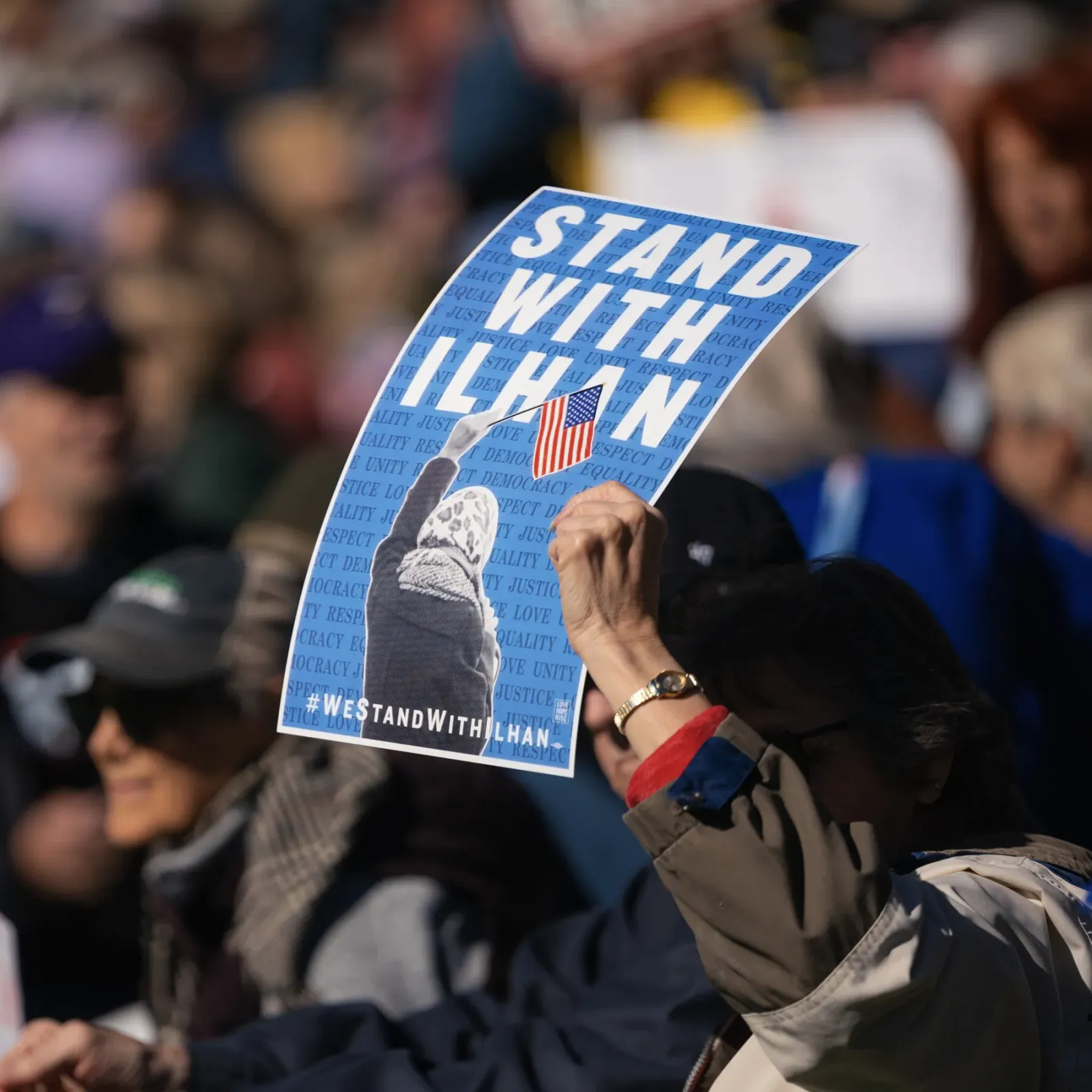
Obama Defends Ilhan Omar After Agents Search Her Home in Trump Inquiry
The former president's intervention raises the stakes in a federal probe into immigration paperwork that has put a prominent progressive lawmaker in the crosshairs.

Blair-era minister: cut welfare to fund youth job support
Alan Milburn's call for welfare cuts to fund employment support opens a Labour fight over benefits and the Neet crisis.

Hot September CPI: energy costs surge, voters feel the squeeze before midterms
The latest inflation print lands as Trump campaigns for GOP control of Congress, putting cost-of-living worries at the center of the midterm fight.