
Two Nvidias: an earnings report, and execs calling for Jensen Huang's return
The company's numbers and the industry's loudest voices are telling different stories, and the gap between them is what boards should be pricing right now.
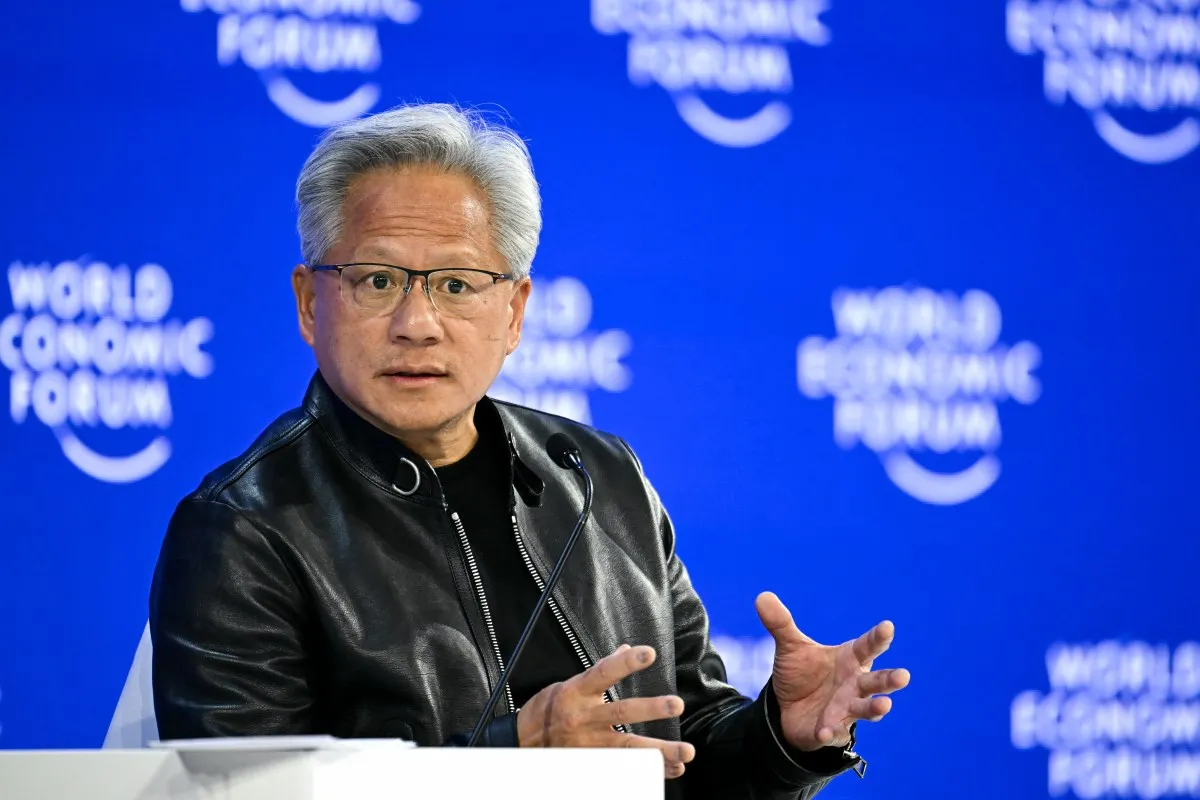
Nvidia's latest earnings report and a chorus of tech executives publicly calling for Jensen Huang's return have produced two conflicting portraits of the same company, according to TechCrunch. For decision-makers, the divergence matters because sentiment about leadership is now moving separately from the financials that supposedly define the business.
Two pictures of Nvidia arrived at roughly the same moment, and they do not match. The first came from the company's latest earnings report, the quarterly document that compresses a sprawling chip empire into a set of numbers Wall Street can argue about. The second came from tech executives who, per TechCrunch, were loudly calling for Jensen Huang's return. One picture is a report. The other is a public demand made by people who run other companies. Placed side by side, they describe a single tension: the most consequential supplier in the AI economy is being measured two ways at once, by what it reports and by how badly the industry wants the person running it to be somewhere specific.
Start with what the source actually establishes. Huang co-founded Nvidia and has led it as CEO through the GPUs that became the default engine of the AI buildout. TechCrunch does not name the executives in its account, and it does not spell out what kind of return they are pressing for. That ambiguity is worth naming rather than papering over. What is clear is the shape of the signal: a group of operators with real budgets and real deployment timelines decided the loudest useful thing they could say was that they want Huang back in the frame. When executives who do not work at Nvidia start publicly lobbying over Nvidia's leadership, that is not a product review. It is sentiment, leverage, and a hint about who the industry believes is holding the map.
The two pictures are generated by two different instruments, which is why they can diverge without either being wrong. A quarterly earnings report is a rear-view mirror. It scores the quarter that just closed, under accounting rules, against guidance set months earlier, and it is designed to be auditable rather than exciting. A public chorus from tech executives is the opposite: forward-looking, ungoverned by disclosure rules, and priced by whoever hears it. Historically, the loudest voices in a platform shift have often moved ahead of the reported numbers, and the numbers have eventually caught up, or the voices have been embarrassed. Knowing which of those two outcomes is coming is the actual job for anyone allocating capital or headcount against this story.
There is a governance angle that boards in every sector should sit with. Founder-CEOs of companies that sit at the center of an infrastructure cycle accumulate a specific kind of power: they become the interface between the technology, the customer, and the capital markets at the same time. Public calls for that person's return, whatever they mean in practice, function as an external validation of that concentration. For Nvidia's board, that is favorable noise. For peers running companies where the founder has already stepped back or been pushed out, it is a reminder that operator credibility is scarce and hard to manufacture internally once it has left the building.
For context on why the stakes are this high: Nvidia's chips sit underneath the training and inference of large AI models, which means its earnings report is read as a proxy for the entire AI capital expenditure cycle. That is an unusually heavy interpretive load for one company's quarterly disclosure. It also explains why sentiment about Nvidia's leadership travels so far. If the buyers of AI infrastructure believe the company's direction depends on one person, they will say so loudly, because their own roadmaps and board decks depend on that supplier shipping on time. Major cloud providers have for years been designing their own AI accelerators as a hedge against exactly this kind of single-supplier dependency, so the noise is not purely admiration; it is risk management expressed out loud.
Washington adds a second layer that earnings reports can only partially capture. Historically, export rules on advanced chips have shaped what Nvidia can sell where, which means a portion of the company's future is set by policy decisions made far from its Santa Clara headquarters. That reality tends to make the market more sensitive to narrative, not less, because guidance has to absorb variables that no CFO controls. In that environment, executive sentiment functions partly as a proxy for confidence that the company's leadership can navigate non-market forces. It is an imprecise proxy, but it is one that customers, partners, and investors all watch.
So what should a decision-maker take from two Nvidias? First, treat customer-side commentary about a supplier's leadership as a real signal about dependency, not as flattery, and audit your own exposure accordingly. Second, notice that the earnings report and the industry chorus will eventually have to reconcile, and position for whichever direction that reconciliation runs. Third, if you run a company whose value is tied to a single founder or a single platform, assume your customers are already talking publicly about it. The safest posture is to make sure your reported numbers and your reputation are telling the same story, on purpose, this quarter rather than next.
This story's Key Insights and Take-aways are locked.
Create a free account to unlock Executive Actions for one credit.
Register to UnlockAlways free for Executives Club members. Join the Club
More in Business

Anthropic's record IPO lands a day before Nvidia's longest losing streak since 2008
Anthropic's record Nasdaq debut and Nvidia's longest weekly losing streak since 2008 landed within 24 hours of each other, and the contrast shows how fast the market is re-pricing the AI trade.
New World's HK$24.9B rights issue triggers 41% plunge as HK$50B debt target looms
New World Development has three levers left to erase up to HK$50 billion in borrowings by 2031, and shareholders just told the market what they think of the first one.

Chip supply chain warns new US export controls will spread beyond the target list
Suppliers, distributors and equipment makers say the latest US restrictions will not stay contained to the firms named on paper, putting orders, inventory and delivery timelines at risk across the global chip chain.