
U.S. Attorney Jeanine Pirro drops Reflecting Pool case against David Hearn
A 19-page filing says “botched installation” matches damage better than vandals, after six weeks of claims.
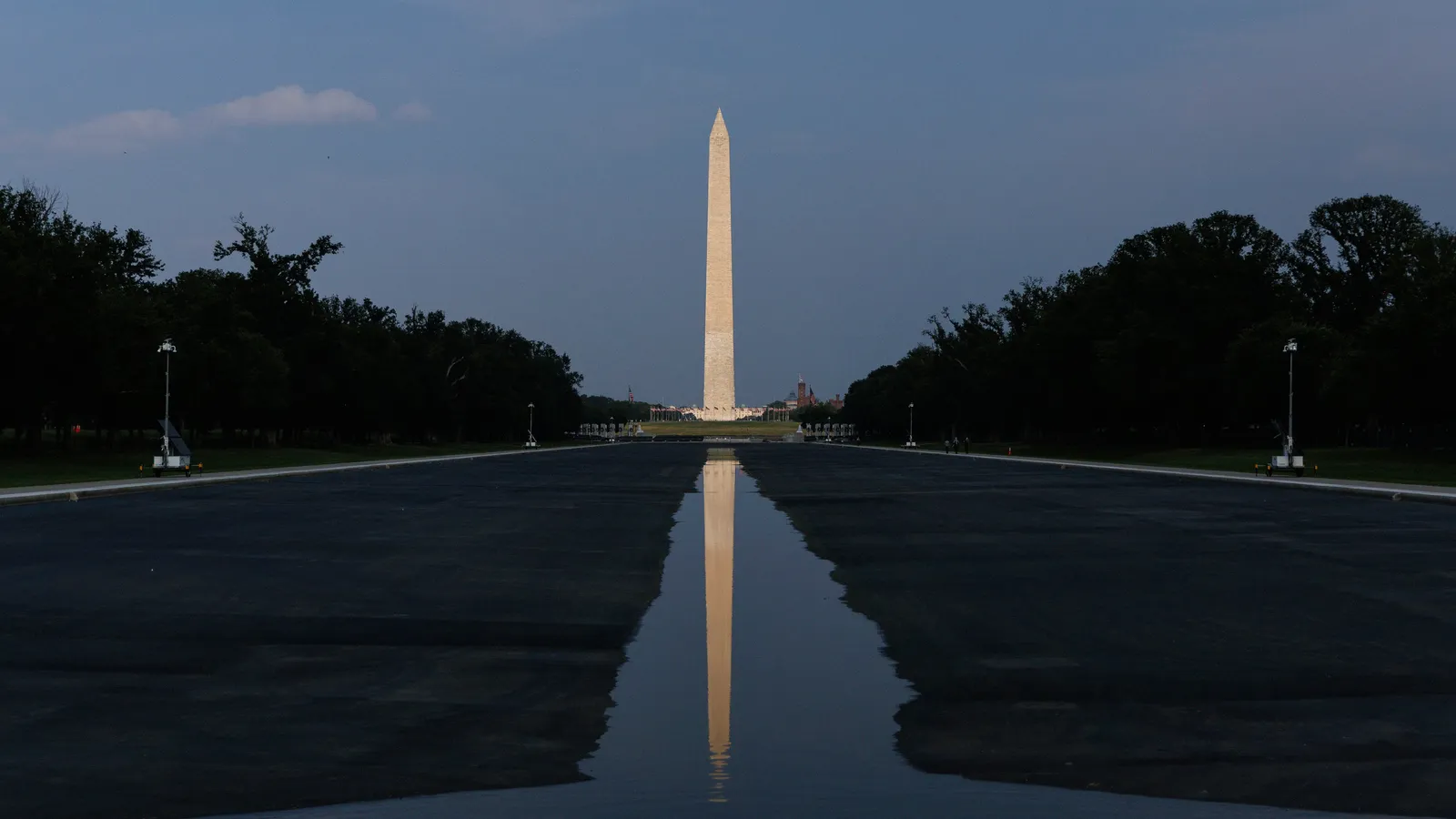
U.S. Attorney Jeanine Pirro asked to drop charges against David Hearn, a three-time Olympic canoeist indicted 29 days earlier, saying the Reflecting Pool damage stemmed from “a botched installation.” The decision forces decision-makers to re-evaluate how fast narratives, evidence, and agency coordination can turn into a public case.
Federal prosecutors investigating the Reflecting Pool case against David Hearn ran into a problem big enough to undo the whole thing. Damage was consistent all around the pool, including in the middle, in an area “where a vandal would not likely attempt to peel the lining.” Based on that match, U.S. Attorney Jeanine Pirro’s office asked to drop the case against Hearn in a motion filed late this afternoon.
In a striking 19-page legal document, Pirro’s office said the damage was “the result of a botched installation and not vandalism,” directly undercutting what President Trump had been saying for the past six weeks. That includes claims that vandals had used a box cutter to slash the floor of the pool. The motion frames the case as an evidentiary misread: prosecutors now acknowledge a pattern they say aligns with installation failures, not targeted vandalism.
The timeline matters because the Reflecting Pool was a highly visible, politically charged project with a deadline that never stopped moving. The pool reopened in June, and almost immediately it filled with green algae that the expensive renovation was supposed to prevent. As park workers scrambled to combat algae, the pool’s sealant began to peel away in chunks. In other words, the very failure the government later prosecuted was also visible in real time, with officials working through defects as the project deteriorated in public view.
Pirro’s office portrays the filing as a kind of legal reckoning with what it says went wrong procedurally and informationally. Rather than continuing with evidence it now says should not have been used, the office moved to dismiss. In response, Hearn’s legal team, Norm Eisen, Mary Dohrmann, and Steve Levin, said in a statement that the dismissal “does not erase the abuse of government power in arresting and charging a patriotic American who did nothing wrong.” They added, “The government’s approach was ready, fire, aim. The administration owes Mr. Hearn an apology.” The White House did not immediately respond to a request for comment, and Pirro’s office declined to comment beyond the filing.
The motion lays much of the blame for the evidentiary posture on Department of the Interior officials. It says those officials supplied information that was used before a grand jury to obtain an indictment. Only afterward, Pirro’s office says prosecutors realized they had been misled, noting that Interior officials “provided less than fulsome information.” The filing says later-received documents “strongly suggest that a rushed and botched installation” caused the damage. It also points to “repeated failures of the lining during the installation process,” along with “extensive peeling of the lining throughout the Reflecting Pool.” For leaders watching this, the second-order story is not just about a single case. It is about how agency information flows can harden into sworn evidence, and how that hardening can outpace reality.
Those installation details are where the economics and operations show through. The renovation project was paid to Eddie Wood, an owner of Atlantic Industrial Coatings, at $14.7 million to line the pool. Weather delays hampered installation, the filing states, and rain meant more delays. Internal notes described the project as “significantly behind schedule,” which created urgency to finish before the president’s promised deadline of July 4. There was also a quality-control inspector noting blistering in the finished portions of the liner that required further repairs. A final inspection was done on June 9 with crews cleaning the site. But just two days later, on June 11, an engineer at the National Park Service was alerted to peeling in the lining. That gap, eight days before Hearn was arrested, is the kind of operational red flag that typically haunts later legal timelines: if officials are already scrambling over peeling, it can undermine a vandalism theory that depends on damage behaving like a targeted act.
The pool has since been drained, and the latest legal filing indicates uncertainty about why the lining failed and whether problems will emerge again when water is pumped back in. That uncertainty is where decision-makers should pay attention, because it means the story is not finished at the business level, even if the criminal case is. A high-profile, publicly funded project is still exposed if the technical root cause is unresolved.
Meanwhile, the human and political sides keep colliding. The charges often drew a crowd of supporters at Hearn’s court hearings. Some dressed as canoeists; others held signs, and on one occasion four people wore inflatable-frog costumes. Hearn told the writer he felt the case was harming his ability to sleep at night, and that he was now worried about being the center of a political firestorm. “It’s unsettling,” Hearn said, “to feel like I’m being targeted by my government.” Whether you care about the Reflecting Pool itself or not, that line is a reminder of the stakes when public narratives harden into enforcement actions.
For executives, boards, and operators, the lesson is uncomfortably transferable. When pressure and deadlines distort timelines, installation teams can end up fighting the clock while regulators and prosecutors decide what story the evidence supports. If evidence collection starts from a thesis, not from the physical pattern of damage, you risk building an indictment on a theory that operations later refute. Pirro’s office dismissal effectively tells the market something broader than one case: when the evidence points to “botched installation,” legal strategy and public messaging can’t lag behind the underlying failure mode. The strategic stake for peers is simple: the faster you move, the more you have to be right about how you know what you know.
This story's Key Insights and Take-aways are locked.
Create a free account to unlock Executive Actions for one credit.
Register to UnlockAlways free for Executives Club members. Join the Club
More in Politics

Obama Defends Ilhan Omar After Agents Search Her Home in Trump Inquiry
The former president's intervention raises the stakes in a federal probe into immigration paperwork that has put a prominent progressive lawmaker in the crosshairs.

Blair-era minister: cut welfare to fund youth job support
Alan Milburn's call for welfare cuts to fund employment support opens a Labour fight over benefits and the Neet crisis.

Hot September CPI: energy costs surge, voters feel the squeeze before midterms
The latest inflation print lands as Trump campaigns for GOP control of Congress, putting cost-of-living worries at the center of the midterm fight.