
UK’s long-delayed defence spending plan hits Tuesday, detailing billions for Armed Forces
Decision-makers get the missing piece Tuesday: how the UK intends to spend billions to equip its Armed Forces.
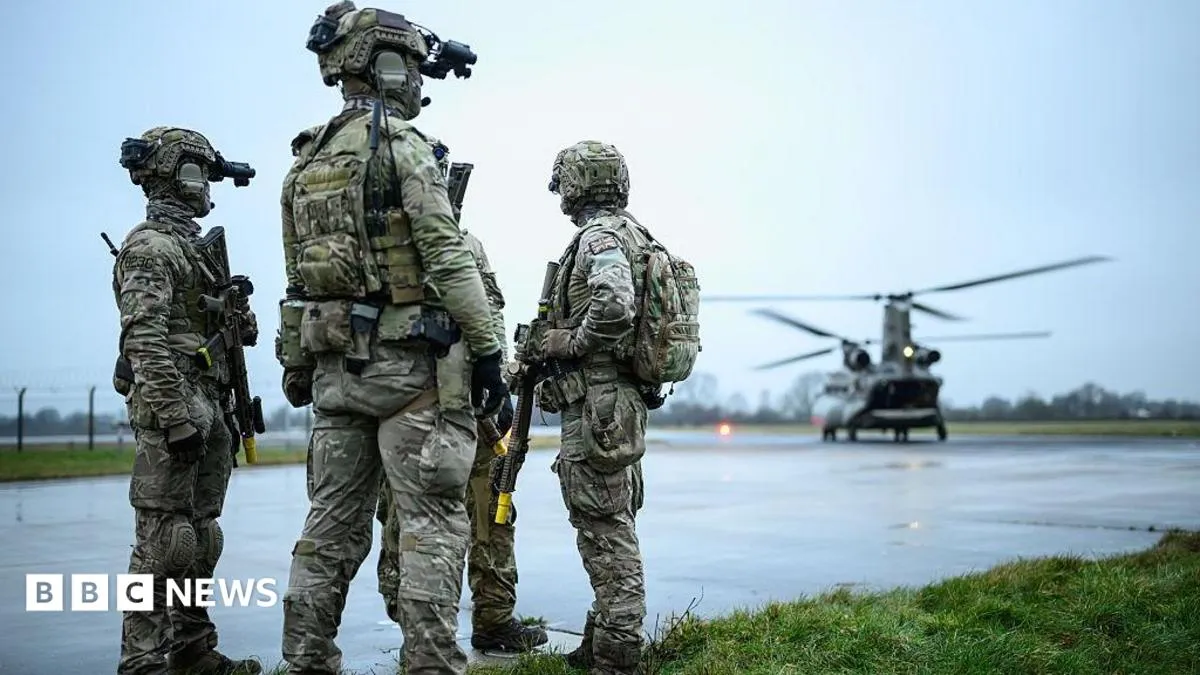
The UK defence investment plan will be published on Tuesday, setting out how billions will be spent on equipping the UK Armed Forces. For leaders watching procurement and budgeting, the delay’s end matters because it signals when funding decisions move from paperwork to contracts.
A long-delayed defence investment plan is finally set to be published on Tuesday. The plan is expected to spell out how billions will be spent on equipping the UK Armed Forces, turning stalled intent into a concrete spending roadmap.
The stakes are straightforward. Equipping a modern force is not a “buy it this quarter” exercise. It is a chain reaction that starts with strategy, then runs through procurement choices, industrial capacity, and timelines that can stretch for years. Until the investment plan appears, budgets, supplier planning, and internal programme approvals all sit in limbo. Tuesday matters because it is the point where the discussion becomes specific: what the money is for, and how it will be allocated to equip the services.
For executives and boards, the most important thing about defence spending plans is not the headline number, it is what the structure of the plan implies about execution. Defence investment plans typically influence which categories get priority, which contracts get prepped, and which parts of the supply chain get asked to scale. In practical terms, that can affect everything from manufacturing lead times to staffing needs among contractors, subcontractors, and logistics providers. Even when the details are only partially visible at first, publication tends to unlock planning cycles that were previously blocked by uncertainty.
There is also a governance angle. Large public spending initiatives are political and bureaucratic by nature, which means timing can hinge on decisions that have nothing to do with the technical readiness of a programme. A delay does not automatically mean a worse outcome, but it does change the internal dynamics. Programme sponsors have less time to align assumptions, finance teams have less certainty to build funding profiles, and procurement teams may have to reset schedules to meet the new publication date. When a plan finally arrives, those reset moments often become visible as shifts in procurement sequencing and contract preparation.
From a capital and market perspective, defence investment plans are one of the few government documents that can quickly change how companies model demand. Suppliers do not just wait for orders, they forecast production, inventory, and hiring based on credible signals about future procurement. A long-delayed plan creates a stretch where companies either hold back investment or overcorrect by planning under uncertainty. When publication finally happens on Tuesday, that uncertainty should drop, at least at the level where the plan provides direction on spending priorities.
The timing itself matters for the broader procurement calendar. Government spending processes often follow annual and multi-year rhythms, and defence budgets can be constrained by wider fiscal decisions. When a plan arrives later than expected, it can compress timelines for approvals and readiness checks. That can mean programmes move faster once the plan is official, or it can mean some spending is staged differently to fit the government’s administrative and procurement windows. Either way, Tuesday is a trigger date for anyone who tracks when policy turns into contracts.
Strategically, the plan’s purpose is to equip the UK Armed Forces. That phrasing is doing real work. Equipping a force includes procurement of platforms and systems, but it also tends to run alongside the supporting elements that make those systems usable: training, sustainment, upgrades, and related capabilities. The second-order effect for decision-makers in connected industries is that spending for “equipment” rarely stays limited to purchasing hardware. It can ripple into services and lifecycle support, which is where a lot of the longer-term value sits for the ecosystem.
For peers in similar roles, the Tuesday publication is a reminder that defence spending is not static. It evolves through planning documents that can move the entire market from a hypothetical future to an actionable plan. When that switch flips, the leaders who stay sharp are the ones who treat the investment plan as a signal about timing, priority, and execution discipline, not just as a list of numbers. Tuesday is when the UK’s intention turns into a published roadmap, and the companies and institutions watching procurement cycles will finally be able to plan with something closer to certainty.
This story's Key Insights and Take-aways are locked.
Create a free account to unlock Executive Actions for one credit.
Register to UnlockAlways free for Executives Club members. Join the Club
More in Politics

Obama Defends Ilhan Omar After Agents Search Her Home in Trump Inquiry
The former president's intervention raises the stakes in a federal probe into immigration paperwork that has put a prominent progressive lawmaker in the crosshairs.

Blair-era minister: cut welfare to fund youth job support
Alan Milburn's call for welfare cuts to fund employment support opens a Labour fight over benefits and the Neet crisis.

Hot September CPI: energy costs surge, voters feel the squeeze before midterms
The latest inflation print lands as Trump campaigns for GOP control of Congress, putting cost-of-living worries at the center of the midterm fight.