

Ulta signs a $400M, 15-year Times Square flagship bet to outgun Sephora
Kecia Steelman’s four-level megastore is a marketing lab, not just a bigger shop.
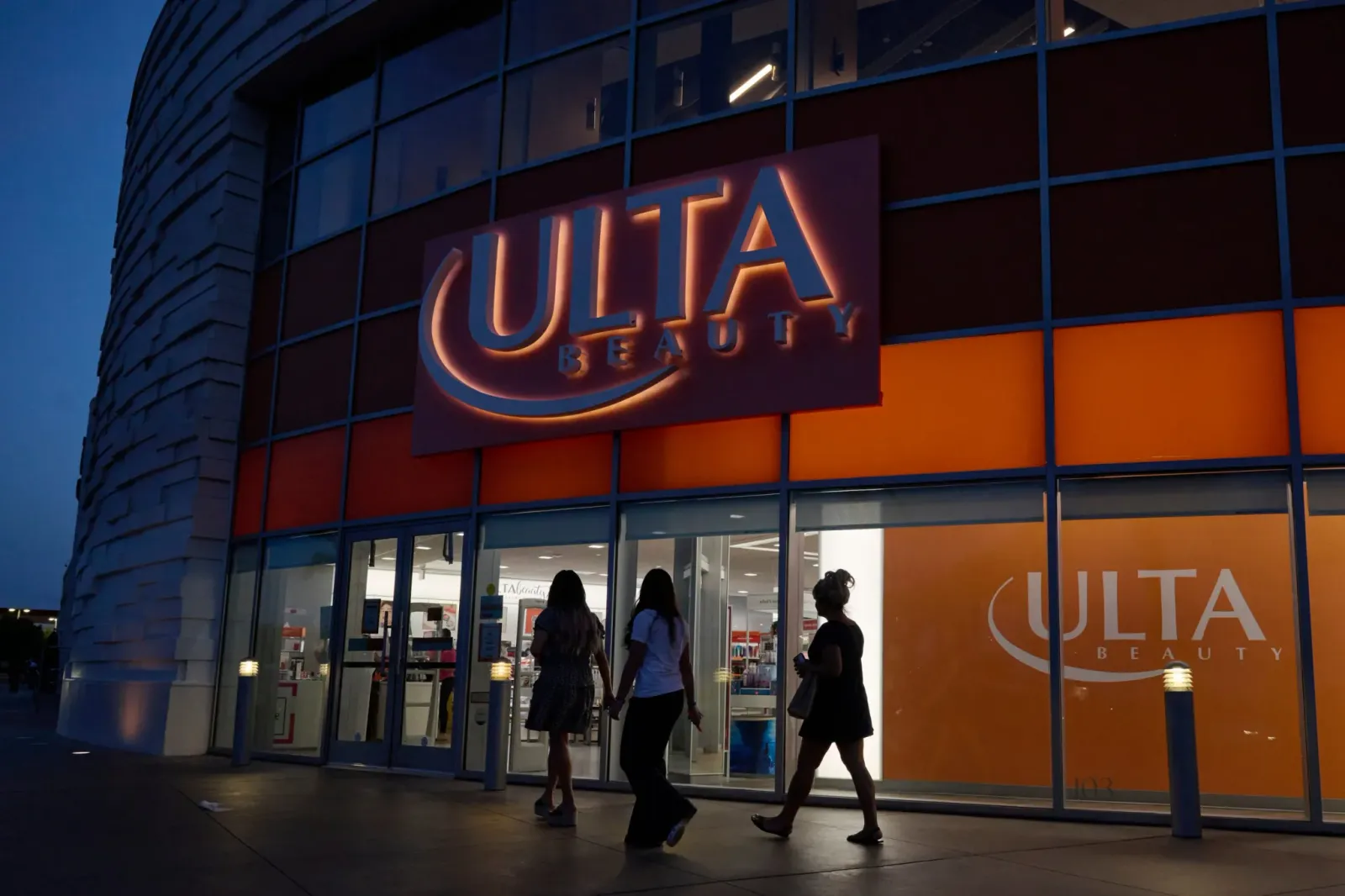
Ulta Beauty is opening its first-ever flagship, a four-level megastore in New York’s Times Square late next year, under a reported $400 million, 15-year lease. Executives say it is designed to create a differentiated, experiential retail “halo effect” as Ulta expands in the U.S. and abroad and competes with Sephora.
Ulta is putting serious money behind a pretty audacious idea: that a flagship store can still matter. The retailer is reportedly paying $400 million for a 15-year lease for a four-level megastore in New York’s Times Square, a tourist-heavy, billboard-loud slice of Midtown, late next year. This is not a casual expansion. It is an all-in attempt to make Ulta feel less like a convenient stop in strip malls and more like the place beauty culture gathers.
The stakes are immediate. Ulta CEO Kecia Steelman told investors last month that the flagship “will showcase next-level brand building and storytelling capabilities, unlock high-impact marketing” and include LED-billboards and other flashy touches not seen at its other 1,500 U.S. locations. Meanwhile, Ulta already has real momentum to protect: it hit annual revenue of $12.4 billion last year, and it posted 11% revenue growth in the first quarter this year. So the question for decision-makers is not “can Ulta build a store.” It is whether Ulta can use a Times Square megastore to create something that Sephora and other competitors cannot easily replicate: a differentiated, modern shopping experience that drives loyalty, not just transactions.
Why Times Square, specifically? Ulta’s pitch, per its chief retail officer Amiee Bayer-Thomas, is that the location is a global stage. “Times Square is a bit different. It's a global stage. It is an opportunity as we are expanding,” she told Fortune during a panel at the CommerceNext conference in New York last month. Ulta, long solely a U.S. retailer, has expanded abroad to Mexico and the Middle East, and the flagship is meant to be the next evolution of that expansion translated into retail theater. Bayer-Thomas also frames the store as the future of experiential retail in beauty, arguing it should not merely sell products, but “showcase next evolution” in how brands are built and experienced in person.
This matters because beauty retail is not just about shelves anymore. Shoppers want to touch and feel products, and influencers can make or break launches. In that environment, Sephora has long been a heavyweight with international presence and a strong draw for Gen Z. Ulta is the counterweight, but it has to keep updating its story. The flagship is reportedly set at 27,000 square feet, and it is described as a new experiment for a fast-growing retailer that is otherwise widely seen as a strip-mall fixture. The design is “tight-lipped” for now, but the intended effect is clear: make Ulta’s in-store experience feel more like a destination than a default option.
The retail industry context behind this bet is more complicated than “flagships are back.” In recent years, flagships have lost popularity because they are expensive to lease and operate, and the stakes are ultra-high. The story points out a string of brand pullbacks: in the last few years, companies including Abercrombie & Fitch, The Gap, and Victoria’s Secret have closed down some flagships, saying they can be a financial drain while offering shoppers little more than what they can get elsewhere. A&F CEO Fran Horowitz said in 2024, “Our customer has told us time and time again that that's not how they're shopping with us. Our stores are smaller. They're more efficient.” Ulta is clearly aware of that critique.
And it has to answer a sharper one: “oversized stores in cool locations” can become, in the words of Steve Dennis, a former Neiman Marcus executive and president of SageBerry Consulting, “just a billboard.” Dennis argues a flagship cannot simply be an expanded version of the existing portfolio. It needs to do something meaningfully different. Looking at examples helps explain the bar. The story cites American Eagle and Aerie’s flagship in New York’s Soho district, which includes a rotating art installation and photo booths designed to pull in young shoppers. It also points to Levi’s Manhattan flagship, which sells premium products and “only-in-New-York merchandise.” The unspoken lesson: a flagship must offer something experiential, exclusive, or brand-building that the average store cannot.
Ulta’s executives are effectively proposing to build that exclusivity through “relationship building and loyalty,” not just floor space. Bayer-Thomas says the flagship will serve as a testing ground for new products and marketing efforts and act as an advertising vehicle for the rest of Ulta. “There are so many places you can go and buy product now. So the stores have to be a differentiated space for the guest to come in and do something other than just transact,” she said. “We think about the flagship, it is about relationship building and loyalty.” This is also where the “halo effect” logic comes in. Bayer-Thomas says the flagship can ultimately pay for itself by raising brand awareness across the chain, turning the Times Square store into the top-of-funnel image and storytelling engine for the rest of the business.
The strategy is not without risk, especially because beauty is ruthless about differentiation. But the story’s framing suggests Ulta is trying to solve the problem flagships have faced: converting spectacle into repeat behavior. Even the comparison to Stacey Widlitz, president of SW Retail Advisors, is telling. She points to Space NK’s lavish London flagship, opened in Oxford Circus last summer, and says it set a high bar with product activations and classes in a fun atmosphere. Widlitz argues that done well, an Ulta flagship can make the company “an authoritative” voice on cutting edge brands and capture more of the higher end of the market. As she puts it bluntly, “They need to up their game. Let's be real: they are in strip malls, and they're not Sephora.” Ulta is betting $400 million and 15 years that it can change what “not Sephora” means.
For peers in retail, the second-order question is bigger than whether Times Square is a good backdrop. If Ulta pulls off this kind of flagship, it could become a blueprint for how brands re-earn the right to be physical in a world of influencer-driven discovery and online purchasing. If it fails, it reinforces the idea that the flagship era was mostly a cost center in disguise. Either way, the outcome will be closely watched, because Ulta is trying to prove that, in 2026, “stores are queen” can still be operational, measurable, and worth the lease.
This story's Key Insights and Take-aways are locked.
Create a free account to unlock Executive Actions for one credit.
Register to UnlockAlways free for Executives Club members. Join the Club
More in Business

SK Hynix opens at $170, raises $26.5B, and tops foreign IPO records
In Friday's Wall Street debut, SK Hynix turns AI RAM demand into a $26.5B fundraising moment that rewrites comps.

China lands a reusable Long March booster, a first that matches SpaceX and Blue Origin
A barge landing and net-based recovery move China from theory to proof, reshaping the reusability race and satellite ambitions.

AstraZeneca $27B wipeout as Wainua late trial misses cardiovascular target
A failed late-stage heart study triggered a swift market punishment, forcing investors and boards to reset timelines and risk.