
United confirms “Eurobusiness” blocked middle seats on new A321XLRs
The airline says it will test a European-style economy upgrade on A321XLRs, with labor staffing rules in view.
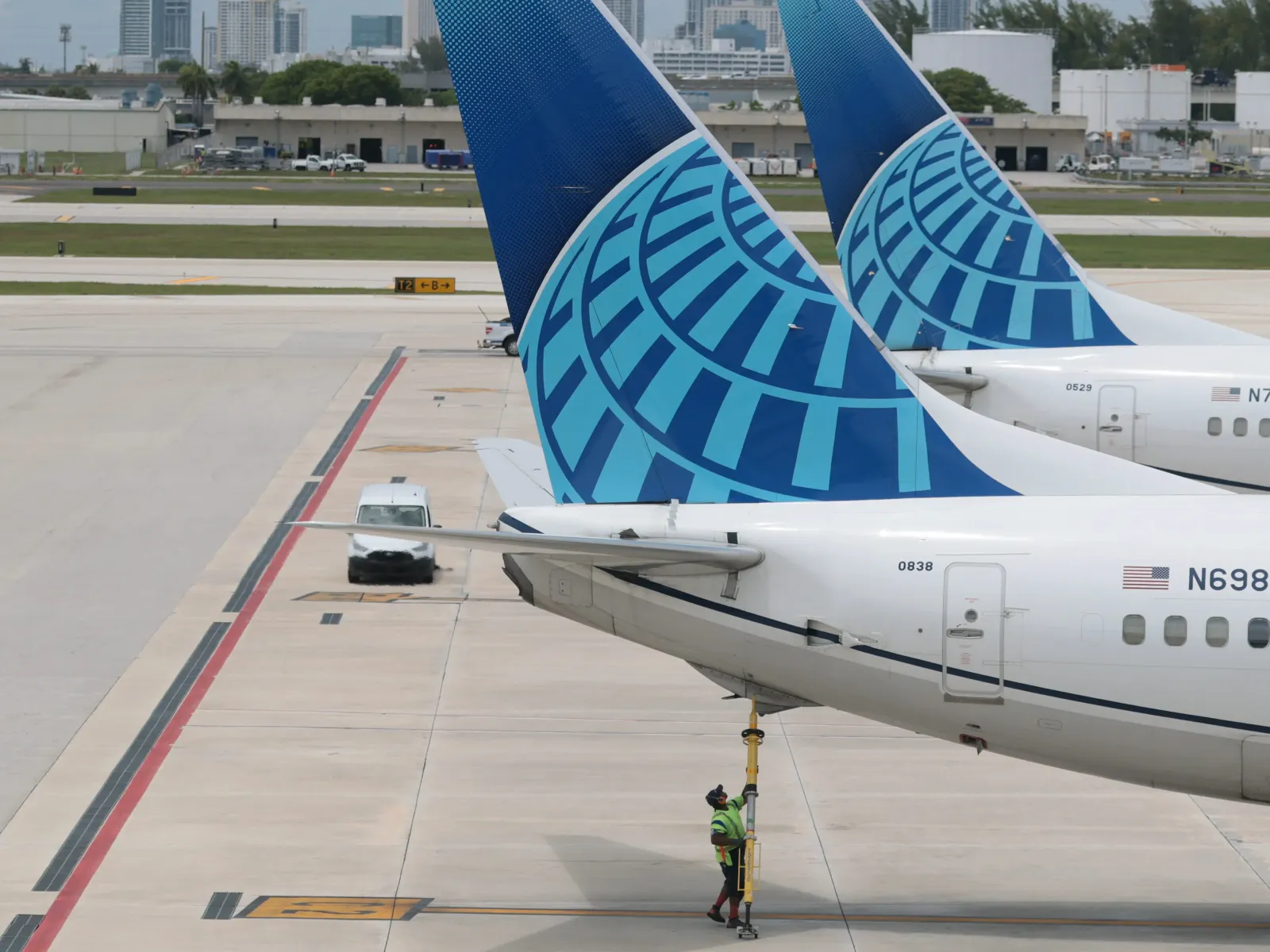
United Airlines confirmed to Business Insider that “Eurobusiness” blocked middle seats are real and will appear on its new Airbus A321XLRs. The move tees up a two-part bet: tighter labor compliance and potential premium-style upsells from coach.
United Airlines just confirmed the “Eurobusiness” mock-up that has been floating around online. The airline says its new Airbus A321XLRs will include blocked middle seats that resemble European-style business class, and it plans to test how the layout performs in the real world.
Why this matters immediately: blocked middle seats are not just a comfort tweak. They also run straight into the Federal Aviation Regulations that govern flight attendant staffing. United’s spokesperson told Business Insider that the A321XLR configuration will follow the rules with at least four flight attendants, including a structure that avoids accidentally triggering a fifth attendant position if a row of extra seats changes the math.
The context is important because the A321XLR is a different kind of airplane for United. These are “extra-long-range” narrowbodies meant to replace United’s Boeing 757s on mostly transatlantic routes, including examples like Newark to Edinburgh and even longer legs to Northern Italy and West Africa. The first A321XLR was delivered in June, and United expects it to enter service later this year.
The viral spark for all of this was a Reddit post from last week that showed a mock-up of what the airline might do with a three-seat row and a tray table acting as a divider. That image fueled speculation that United was borrowing from European short-haul cabin design, where “blocked middle seat” configurations create a distinct premium feel without turning the whole plane into full business class. United confirmed to Business Insider that this concept is real, and that it is evaluating and testing “new ways to further differentiate ourselves within the industry and add even more value to the experience.”
So what is the actual operational idea behind “Eurobusiness” in economy? United did not spell out a full pricing or operational strategy in detail, but the setup appears to be built to do two things at once. First, it can help save money by controlling how many seats are effectively available per row and, by extension, how many flight attendants are required. Second, it creates a more premium product surface in coach that could plausibly support incremental purchases, like upgraded comfort or better seating.
Here is the regulatory constraint that keeps this from being only a design story. Federal regulations require United’s A321XLR aircraft to have one flight attendant per 50 certified seats, plus a fourth attendant because of the complexity of sliding doors in business class. Under that framework, adding even one extra seat could force United to staff a fifth flight attendant, which is exactly the kind of threshold carriers try to avoid when they redesign cabins. United’s spokesperson said there would be at least four flight attendants on the A321XLRs.
United also laid out a separate but related detail that matters for the whole cabin experience. It will include a walk-up snack bar in economy on the A321XLR. Pair that with blocked middle seats, and you get a cabin that is not trying to imitate full premium service levels everywhere. Instead, it is trying to create a more differentiated economy experience that can be monetized, while still staying within the staffing rules that determine cost.
And the economics are coming at a time when United is already leaning into premium demand. The airline signed a new labor contract with its flight attendant union in May that hiked pay by 31% and added boarding pay. That increases the stakes of any layout change that might influence staffing counts, even by one person. In other words: if you are redesigning the cabin, the FAA math becomes financial math fast.
There is also a fleet and strategy angle here. United’s A321XLR is separate from a different “Coastliner” subfleet, the Airbus A321neo that has 161 seats and is set to exclusively operate premium transcontinental routes. United’s spokesperson said the blocked middle seat row would not be on the A321neo “Coastliner.” That suggests United is not trying to spread this concept everywhere. It is experimenting specifically on the A321XLR deployment, where United has a meaningful mix of long-haul coach demand but also a clear opportunity to upsell.
The A321XLR is positioned to be premium-heavy at the front of the cabin. A fifth of the aircraft’s seats will be either Polaris lie-flat business class suites or premium economy, leaving a large pool of coach passengers that United can still potentially convert to paid upgrades for more elbow room. The blocked-middle idea fits into United’s broader push to expand premium options “nose-to-tail” across the cabin, including product moves like two-person business-class “Studios” on its new Boeing 787-9s. United is also preparing to launch a “Rest Row” in coach, described as three economy seats with legrests that convert into a bed-like surface.
Zoom out one level and this looks like part of a bigger industry playbook. European airlines including Lufthansa, Finnair, British Airways, and Air France have long used blocked middle seats on short-haul flights to create a distinct business product, often with benefits like free luggage, priority check-in and boarding, and lounge access. In the US, blocked middle seats are also not brand-new. Airlines broadly adopted blocked middle seats during the pandemic for health and distancing reasons. Spirit experimented with blocked middle seats as part of a broader test of premium-economy-like cabins before its collapse, and Frontier started blocking middle seats in 2024 through its “UpFront Plus” product. Frontier’s SVP and chief commercial officer, Robert Schroeter, said in a May earnings call that the seat “drives quite a bit of benefit” and that its revenue contribution “increased significantly.”
For executives at other airlines, the second-order question is not whether blocked middle seats can look premium. It is whether the cabin can monetize that perception while staying safely on the right side of the staffing thresholds, labor cost pressures, and route-specific demand. United’s confirmation means this is no longer a Reddit fantasy. It is a design decision tied to regulation, staffing math, and the ongoing race to turn economy into a ladder you can climb, one paid inch at a time.
This story's Key Insights and Take-aways are locked.
Create a free account to unlock Executive Actions for one credit.
Register to UnlockAlways free for Executives Club members. Join the Club
More in Business

Gina Rinehart backs SpaceX with a $1B+ stake after its $2.5T debut valuation
The Aussie mining billionaire just put Hancock Prospecting behind Musk's rocket-and-satellite combo, and markets noticed.
Fox agrees to buy Roku for $22B, paying $160.00 per share
What looks like a simple streaming bet is actually a $22 billion corporate reshuffle with board and regulatory gravity.

SpaceX jumps 6% in premarket, valuing the company at $2 trillion+ after its debut
The stock’s first-day surge pushes SpaceX past $2 trillion, reshaping how investors and regulators think about private space risk.