

US hits Iran for a 10th straight night as Houthis threaten Red Sea oil route
Airstrikes continue while diplomacy lurches forward via Pakistan talks, and a new Red Sea chokepoint threatens energy prices.
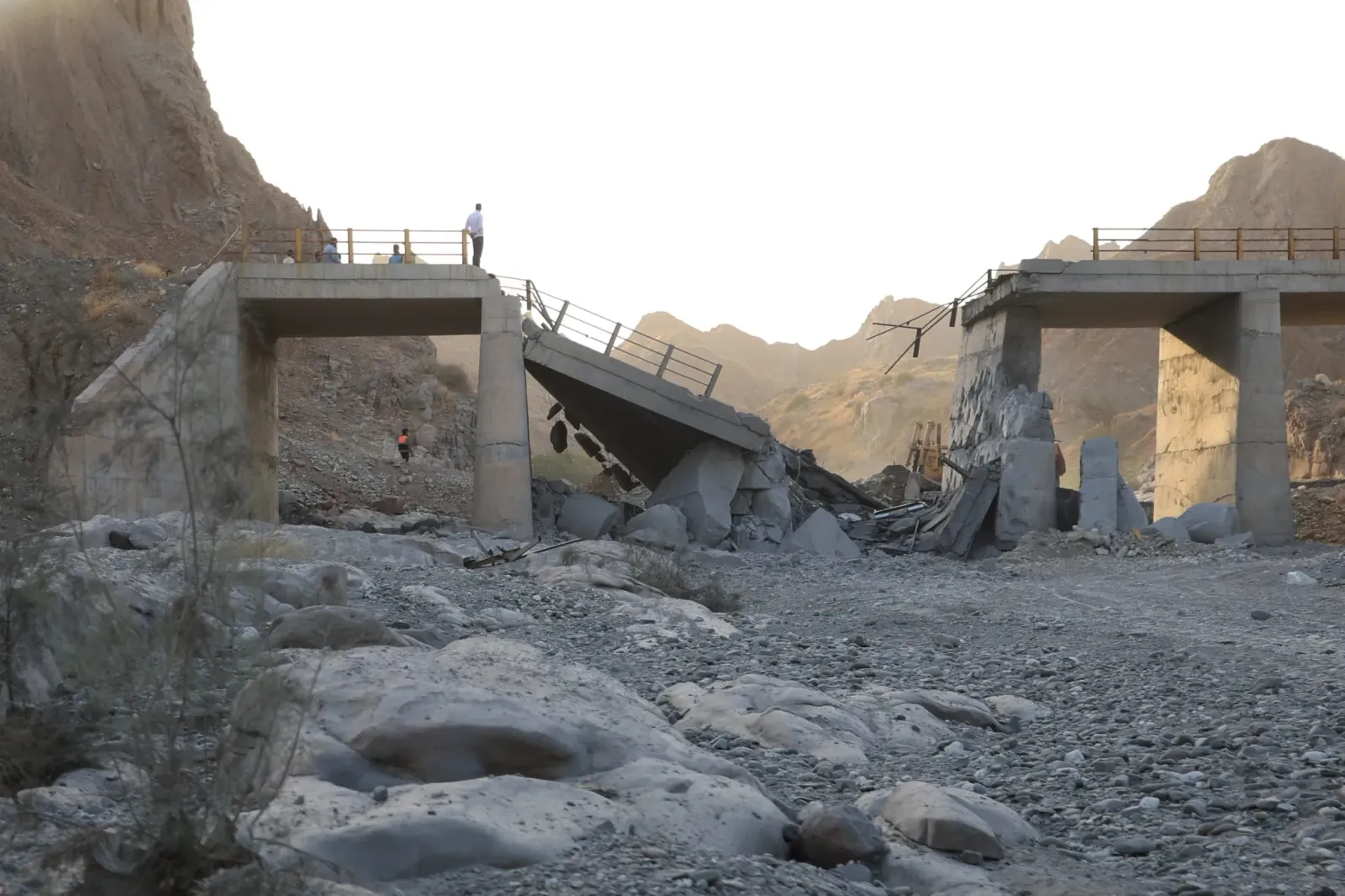
The U.S. military said it conducted its 10th consecutive night of strikes on Iran, aiming to reopen the Strait of Hormuz after another American service member died. Separately, Iran's interior minister traveled to Pakistan for talks as the ceasefire process unravels and shipping disruption expands from Hormuz to the Red Sea.
The U.S. military carried out its 10th consecutive night of strikes on Iran late Monday, saying the goal is to further degrade Iranian military capabilities used to attack commercial shipping in the Strait of Hormuz. The renewed bombings came after Iran launched attacks on American allies Kuwait, Jordan and Bahrain, home of the U.S. Navy’s 5th Fleet, and after another American service member died. In parallel, a different pressure point is rising: Yemen’s Houthi rebels said they plan to prevent Saudi Arabia from shipping in the Red Sea, a key alternate route for oil exports during the war.
Those two moves matter because they hit the same thing in different places: chokepoints that traders and insurers treat like instant risk multipliers. The Strait of Hormuz remains critical to world energy supplies, and the route has largely stalled. That kind of slow motion has a way of turning into headline-driven volatility, and Monday’s market read-through was immediate. Benchmark Brent crude traded above $88 a barrel, and regular gasoline in the U.S. climbed to an average of $4 a gallon, keeping pressure on Americans’ wallets ahead of midterm elections this fall.
On the military side, U.S. Central Command said the latest strikes are designed to further degrade Iranian military capabilities used to attack commercial shipping in the strait. It also laid out what it targeted Sunday: Iranian military command centers, air defense and coastal surveillance sites, maritime capabilities, missile and drone launch sites, and communications networks. The pattern is consistent with an effort to disrupt operations that enable attacks on vessels. Last week, the U.S. struck bridges and a tower at an Iranian port, and the latest reporting from Iran’s state-run IRNA said the strikes killed at least one person around Tabriz, a northwestern city about 520 kilometers from Tehran. IRNA also reported likely hits at multiple locations including Bandar Imam Khomeini in Khuzestan province, Sirik and Jask in Hormozgan province, and Konarak and Chahbahar in Sistan and Baluchistan province.
This escalation is also colliding with the human cost that tends to tighten political constraints. The U.S. military identified two soldiers killed in Jordan in attacks that left a third person missing. It also confirmed another death in Iraq on Saturday during the controlled detonation of a downed Iranian drone. President Donald Trump warned on social media that “Every time Iran kills an American Soldier they will pay for that killing many times over!” He was planning to attend a ceremony on Tuesday evening at Dover Air Force Base, where at least one service member’s remains were due to arrive. When casualties climb alongside intensified operations, it narrows the window for off-ramps, even if negotiators are still trying to build them.
Meanwhile, there is a real diplomatic thread, and it is exactly the kind of thread markets watch for because it can change the “duration risk.” Iran’s interior minister Eskandar Momeni traveled to Pakistan, arriving in Islamabad on Monday for two days of talks with Prime Minister Shehbaz Sharif and others. His Pakistani counterpart, Interior Minister Mohsin Naqvi, expressed optimism, saying, “God willing, we will have good news.” On Sunday, U.S. Secretary of State Marco Rubio told reporters the U.S. is still open to negotiating with Iran but that it “has to be real.” He said, “If the door opens to diplomacy... that’ll be a very positive development,” adding that “that’s not where we are tonight, unfortunately.” The immediate backdrop: the interim deal signed last month, meant to end fighting, has crumbled after both sides resumed attacks on each other’s military installations and other infrastructure. Iranian authorities said at least 50 people have been killed and 517 wounded in the latest rounds of U.S. strikes, and since the war began on Feb. 28, 17 U.S. service members have been killed.
Now add the second-order supply chain effect that executives may feel before anyone feels it politically. The UK’s Maritime Trade Operations center, UKMTO, said Monday evening that a second ship was attacked a day earlier in the Strait of Hormuz, off the coast of the United Arab Emirates. The other vessel caught fire after being hit by a projectile near the coastline of Oman, the crew abandoned it, and it remained adrift and still ablaze hours later. The route around Oman has been the one the U.S. military has encouraged ships to travel to avoid Iran’s control. Iran’s guard later claimed it was targeting tankers in the strait. Beyond Hormuz, Bahrain’s Foreign Ministry condemned Iranian drone strikes targeting the country’s air traffic systems, saying they endanger travel for civilians. Put simply: operational risk is spreading from “shipping lanes” into “transport systems,” which is more disruptive than it sounds.
The newest threat is the Houthis’ announced maritime embargo. Yemen’s Houthi rebels said they plan to block shipping between the Red Sea and the Gulf of Aden in response to an attack on Sanaa International Airport last week that they blamed on Saudi Arabia. With the Strait of Hormuz blocked up, Saudi Arabia has been relying on a pipeline to the Red Sea to move millions of barrels of oil to market. The Houthis previously demonstrated their ability to disrupt shipping there for months over the Israel-Hamas war in Gaza, with over 100 vessels attacked. There was no immediate response from Saudi Arabia. That’s the risk executives should model: even if one chokepoint becomes less accessible, alternative routes can quickly become newly contested. The market reacts to that possibility, not just the current reality.
For businesses and investors, this is also a regulatory and policy story in disguise. Trump has threatened to target Iran’s power stations and bridges to compel Tehran to loosen its hold on the Strait of Hormuz, and the U.S. in the past week reimposed a naval blockade on Iranian ports to halt its shipments of crude oil. The military says it has redirected seven ships and disabled one since then. A blockade plus contested alternate routes can compound shipping delays, insurance costs, and contract pricing. For boards and risk committees, the key question is less “what happens next on the battlefield” and more “how fast does this flow through to energy costs, logistics timelines, and election-cycle pressure.”
And for peers making capital and operational decisions in energy-adjacent industries, trading, shipping, or supply chain planning, the stakes are blunt: when diplomacy is a glimmer and kinetic operations are stacking night after night, the most expensive mistake is assuming the shock is contained to one lane, one week, or one geography.
This story's Key Insights and Take-aways are locked.
Create a free account to unlock Executive Actions for one credit.
Register to UnlockAlways free for Executives Club members. Join the Club
More in Politics

LA County: DOJ's 20,000 'noncitizen' voter list is 'unreliable,' includes U.S.-born
Preliminary review by Los Angeles County election officials finds errors in the federal list, raising the stakes for voter roll integrity ahead of November.

Trump's $1.5B Pentagon chip investment lands in North Carolina
A $1.5 billion defense infusion for North Carolina chipmaking signals a new era of Pentagon-backed reshoring - here's what it means for the industry.

Nigeria confirms first Ebola case in Abuja, a woman just off a Uganda flight
Health Minister Muhammad Ali Pate says the patient flew in from Uganda, putting Africa's latest outbreak on Nigeria's doorstep.