

US launches new Iran strikes at 9pm GMT Sunday, Tehran calls diplomacy “futile”
The fight over the Strait of Hormuz escalates again, and the next move hinges on whether attacks stop mariner risk rising.
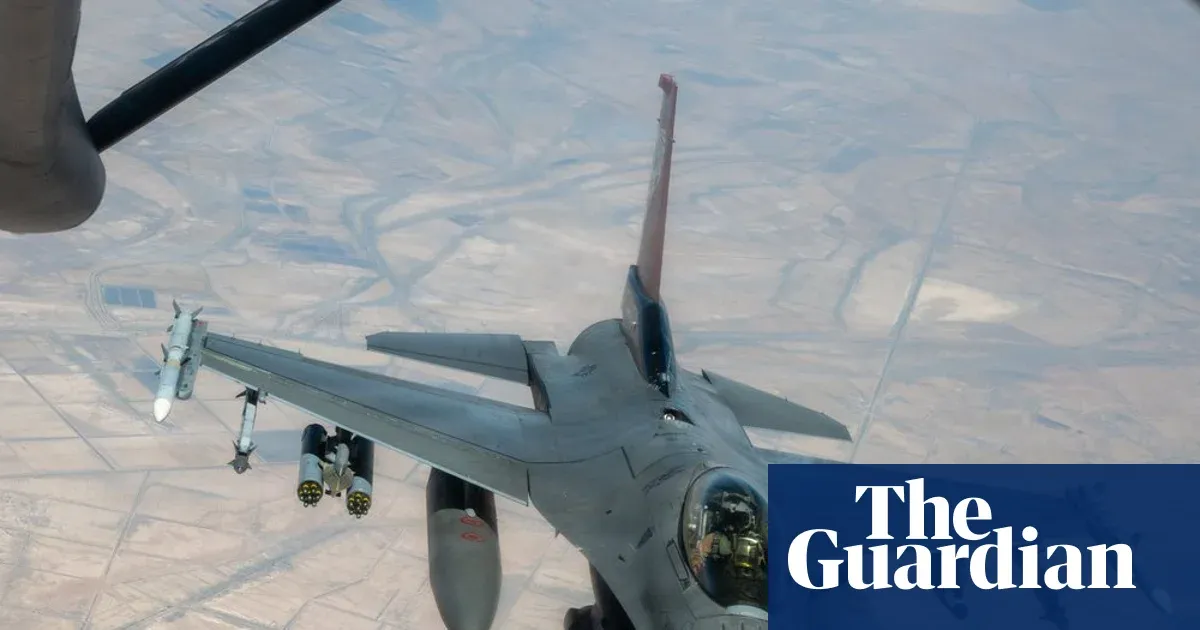
The US Central Command says the US military began more strikes against Iran at 9pm GMT on Sunday to degrade Iran's ability to attack civilian mariners and commercial ships through the Strait of Hormuz. Tehran responded by saying the latest strikes had “rendered futile” all the diplomatic efforts of the past few months, signaling talks are not delivering safety.
American and Iranian forces escalated their standoff over the Strait of Hormuz with heavy missile and drone attacks, and the latest US action started at a very specific time: 9pm GMT on Sunday. US Central Command (Centcom) said the new strikes were launched “to continue degrading their ability to attack civilian mariners and commercial ships freely transiting the Strait of Hormuz.”
Tehran, for its part, framed the moment as a diplomatic failure. The Iranian side said the latest strikes had “rendered futile” all the diplomatic efforts of the past few months, which is a notable signal for executives watching this conflict closely: it is not just kinetic escalation, it is also a message that the diplomatic runway is getting shorter.
Why this matters beyond the headlines is simple. The Strait of Hormuz is not a distant chessboard; it is one of the world’s most important chokepoints for shipping energy and other goods. When control disputes turn into missile and drone exchanges, insurers price risk differently, shipping routes get reconsidered, and logistics teams begin writing contingency plans they would rather not touch. Even if any specific commercial vessel is not struck, the operating environment changes quickly. The second-order effect is that uncertainty becomes a cost center.
From the US perspective, the framing is targeted and operational. Centcom’s language emphasizes “degrading” Iran’s ability to attack civilian mariners and commercial ships, and it ties the strikes directly to the threat to freedom of transit through the strait. That helps explain the timing and the posture. In practice, degradations are meant to reduce the frequency, scale, or effectiveness of attacks. But the same kinetic activity also hardens perceptions on all sides. Tehran is not describing a temporary tactical step. It is describing an entire diplomatic process that failed.
For boards and risk leaders, the strategic question becomes whether this escalation is bounded or open-ended. “Degrading” an adversary’s capability can be a finite objective, but the public messaging from Tehran suggests the conflict is not being managed as a short-term interruption. When Tehran claims past diplomacy has been “rendered futile,” it signals a shift from negotiation as a path to outcomes to force as the path to outcomes. That shift often affects how each side interprets incidents, including accidents or misreads.
There is also a timing dynamic embedded in the story. The US began the new wave of strikes at 9pm GMT on Sunday, according to Centcom on X. That kind of precise timestamping matters because markets and compliance teams plan around predictability. When attacks cluster into new waves, the operational risk model changes. It becomes harder to assume that a lull will hold. Companies that run global supply chains tend to run scenario analyses, and escalation changes the inputs: transit time, port downtime, security surcharges, and the likelihood of rerouting.
Regulatory and policy considerations follow risk. Governments typically review maritime security guidance, sanctions enforcement posture, and licensing decisions when tensions spike around key shipping lanes. Even when the story is military, the knock-on effects show up in paperwork, shipping documentation, and third-party due diligence. Companies with ties to energy flows or regional trade need to be careful about classification of shipments, compliance with local and extraterritorial rules, and the documentation trails that insurers and banks expect during heightened periods.
Then comes the corporate finance angle. When chokepoints get risk premiums, they can pressure cash conversion cycles and margin. Logistics costs rise. Delivery schedules slip. Contract disputes become more likely when delays hit service level agreements. The financial impact might not be immediate, but it can be persistent if the conflict encourages longer-term changes to shipping behavior. That is why executives should treat this as more than “news from the region.” It is a case study in how fast geopolitical escalation converts into operational friction.
For peers in similar roles, the immediate strategic stakes are clarity and control. Centcom’s stated purpose is to keep civilian shipping transiting the Strait of Hormuz more safely by degrading Iran’s ability to attack. Tehran’s response is essentially to deny diplomacy any usefulness. When those narratives clash, decision-makers need to plan for the possibility that escalation continues and that diplomatic progress stalls. The practical executive task is not to predict the next strike, but to ensure the organization can operate through a higher-risk shipping environment if the diplomatic channel does not cool the situation soon.
This story's Key Insights and Take-aways are locked.
Create a free account to unlock Executive Actions for one credit.
Register to UnlockAlways free for Executives Club members. Join the Club
More in Politics

Glacial collapse, not rain, killed 180 in Nepal's Himalayan flood
The Himalaya's extreme geography hid the true cause of Nepal's catastrophic flood, a glacial collapse that turned a geological battleground into a mass-casualty zone.

Iran’s Esmail Baghaei says Oman talks start shipping via Hormuz, not US talks yet
Temporary route plans with Oman aim to restart commerce while Tehran says Washington dialogue is not on the table.

Standards watchdog opens probe into Reform UK deputy leader Richard Tice over interests
The parliamentary standards commissioner says it began an investigation on 28 July into a possible undeclared interest.