
USCGC Eagle hauls a rare 1776 Declaration printing for America’s 250th parade
A 1776-era document is aboard the ship leading the tall-ship festivities, turning pageantry into tangible preservation risk.
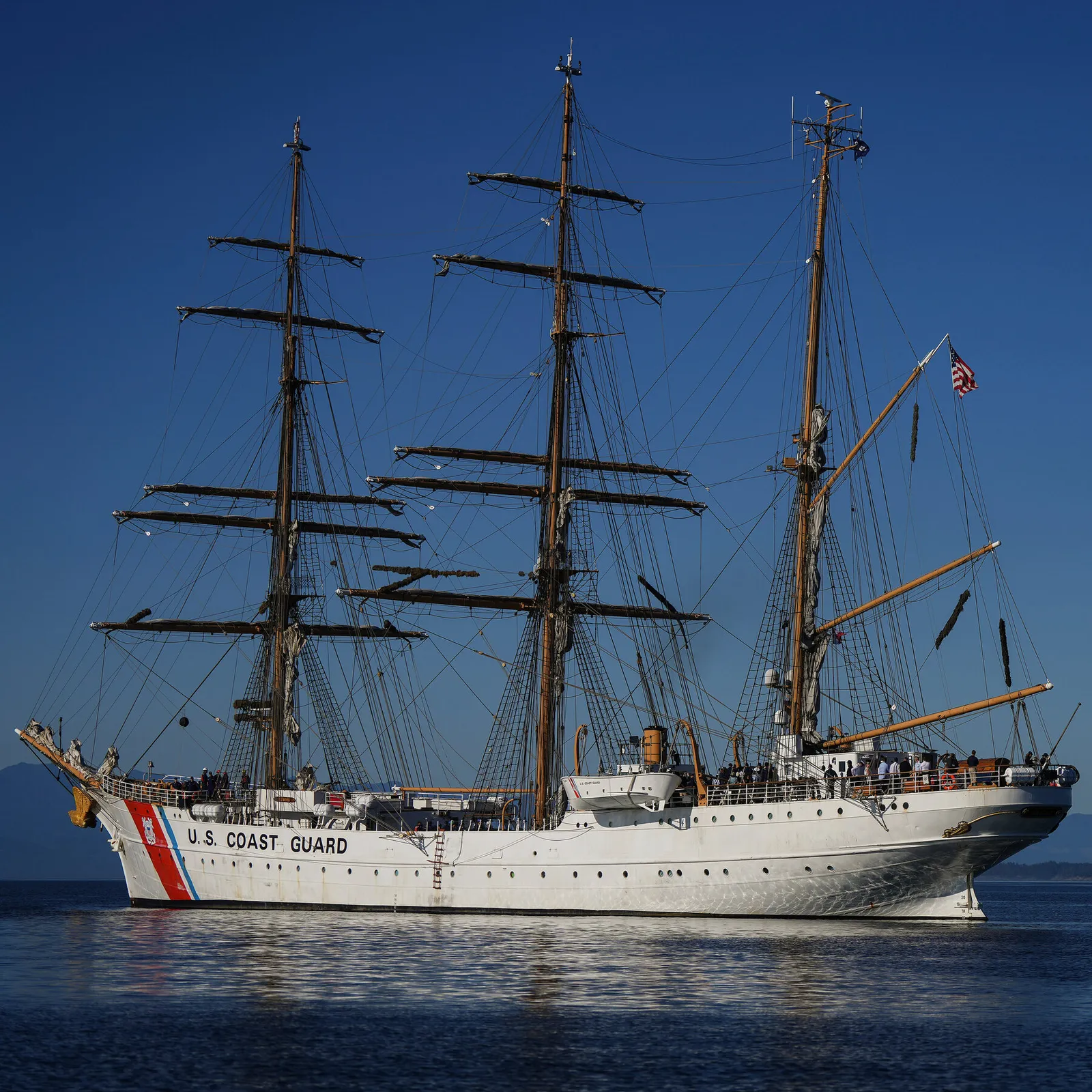
The USCGC Eagle, which leads the parade of tall ships for America’s 250th birthday, is carrying a rare 1776 printing of the Declaration of Independence. For decision-makers, it is a reminder that even ceremonial logistics come with real-world custody, handling, and preservation constraints.
The USCGC Eagle, leading the parade of tall ships in honor of America’s 250th birthday, is carrying a rare 1776 printing of the Declaration of Independence. That is the headline fact, and it is not trivial: moving a document that old turns a public celebration into an exercise in custody.
A 1776 printing is not just “historical.” It is a specific object from the founding era, meaning it carries centuries of physical risk. Paper, ink, binding, and any protective housing have to survive real motion: vibration from travel, changes in temperature and humidity, exposure to light, and the day-to-day chaos of operating a ship. The parade itself is the easy part to describe. The hard part is the chain of handling that keeps the document intact while it sits on a vessel at sea and then becomes part of a highly visible public moment.
Why does this matter beyond the novelty of watching tall ships glide into view? Because the same mechanics show up in boardrooms and compliance offices, even when the assets look different. Executives obsess over custody for anything irreplaceable, whether it is sensitive data, regulated records, or high-value physical artifacts. A rare 1776 printing is the physical equivalent of a “no spares” asset. Once something is damaged, there is no quick backfill, no rerun, and no easy substitute.
In the public sector, the incentives can look different from a private company’s. But logistics still obey physics, and preservation still obeys chemistry. You need controls. You need clear responsibility. You need documentation for how the item is stored, transported, and displayed. When an object is rare enough to merit a founding-era label, organizations also tend to think in terms of worst-case scenarios, because history cannot absorb negligence.
There is also a communications layer to this. The USCGC Eagle leading the parade makes the document effectively a centerpiece of attention. Visibility can raise the stakes, because the more people see an artifact, the more hands want to be involved, the more the environment changes, and the greater the pressure to move quickly. That is exactly when process matters most. An artifact can be treated with care, or it can be treated like a prop. The difference is often whether custody and preservation requirements are built into the plan from the start, not bolted on after the schedule is set.
If you are an executive running anything that has to be preserved, authenticated, or stored under scrutiny, the second-order lesson here is simple: pageantry and precision have to coexist. Even in a ceremonial context, the organization carrying the asset has to manage environmental exposure, movement, and access controls. And because the ship is leading a parade, the timeline is probably fixed by public-facing coordination, which means the preservation plan cannot be flexible in the ways a normal behind-the-scenes transport might be.
Now zoom out from the event. America’s 250th birthday is a once-in-a-generation moment. That kind of milestone often triggers partnerships across agencies, museums, and public institutions. Those collaborations can be powerful, but they also multiply stakeholders and responsibilities. That is where executives earn their keep: making sure every party understands who is accountable for the asset, what constraints apply, and what “safe” looks like in practice. In other words, the celebration is the visible output. The governance is the invisible product.
For boards and leaders who manage high-value assets or regulated materials, the USCGC Eagle story is a reminder that risk management is not only for warehouses. It is for float days, press moments, and high-visibility events. When you put something irreplaceable into motion, the operational details become strategy. And if you want the public outcome to be inspiring rather than regrettable, you build the preservation plan like you expect the spotlight to last longer than the crew’s patience.
This story's Key Insights and Take-aways are locked.
Create a free account to unlock Executive Actions for one credit.
Register to UnlockAlways free for Executives Club members. Join the Club
More in Politics

Glacial collapse, not rain, killed 180 in Nepal's Himalayan flood
The Himalaya's extreme geography hid the true cause of Nepal's catastrophic flood, a glacial collapse that turned a geological battleground into a mass-casualty zone.

Iran’s Esmail Baghaei says Oman talks start shipping via Hormuz, not US talks yet
Temporary route plans with Oman aim to restart commerce while Tehran says Washington dialogue is not on the table.

Standards watchdog opens probe into Reform UK deputy leader Richard Tice over interests
The parliamentary standards commissioner says it began an investigation on 28 July into a possible undeclared interest.