
Utica’s Bosnians revive a Rust Belt city, then split rooting for US tonight
A comeback driven by refugees meets the politics of identity when Bosnia faces the United States in the Round of 32.
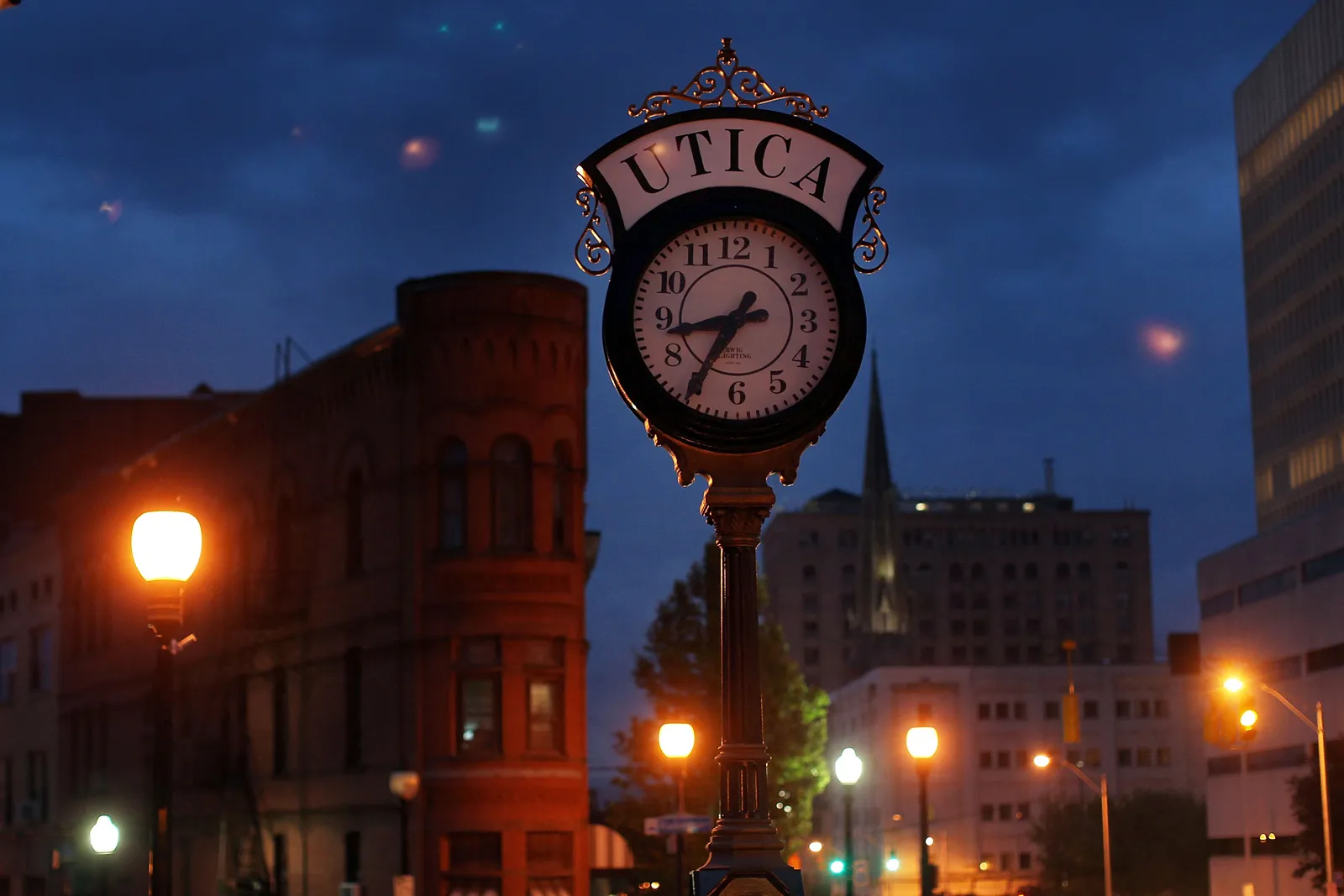
Bosnian refugees reshaped Utica, New York, after arriving in the mid-1990s, and the city now watches Bosnia and Herzegovina in its World Cup Round of 32 against the United States. For decision-makers, the story is a live case study in how migration, local entrepreneurship, and inherited war tensions can move together or clash.
Utica, New York, has a brand-new emotional fault line tonight. About 6,000 Bosnians live in the city, roughly 10 percent of its total population, and they are staring at the same kickoff with two loyalties that do not always sit politely together: Bosnia and Herzegovina versus the United States in the World Cup Round of 32. For Bosnians in Utica, the stakes are bigger than a game. This is only the second time Bosnia has qualified for the tournament since becoming independent in 1992, and it is the first time the team has advanced to the knockout rounds, which has turned watch parties from background tradition into a near-daily referendum on identity.
Hanka Grabovica, president of the Bosnian American Community Association, has already framed the dilemma plainly. “We are proud Americans, but we are also proud Bosnians and tonight we celebrate both,” she said, adding, “The U.S. is our home, but Bosnia is our heritage - and soccer brings us together.” The headline tension is real, and it has a local address: Utica Club Lounge, where the association is sponsoring a watch party ahead of kickoff. Around the city, in a place that used to feel like a forgotten chapter of the Rust Belt, the World Cup moment is both celebration and reconciliation work.
The context matters because Utica did not turn around on vibes. The city’s population cratered by roughly a third from a mid-century peak of just over 100,000 residents, and Bosnian refugees arrived in the mid-1990s as part of the post-breakup of Yugoslavia aftermath. Exact figures are hard to pin down, but the story of scale is consistent: a major community formed, stayed, and then helped repopulate and reanimate neighborhoods. Grabovica arrived in 2001 at age 16 and remembered boarded-up buildings and garbage. “I thought I came to another war zone when I came here,” she said, noting, “Utica was pretty bad back then.”
That “comeback story” is why Utica’s Bosnian American Community Association can talk about cultural success without ignoring trauma. Bosnia’s national team progress is “definitely something amazing,” said Sandro Sehic, secretary of the Bosnian American Community Association of Utica. But even as the team advances, lingering war tensions travel with the players and the people watching them. Sehic pointed to the reality that many ethnic Serbians and Croatians in the country still refuse to play for the national team, citing the tensions left over from the war. In other words, even when the scoreboard turns in Bosnia’s favor, the history inside the locker room and the history inside the audience do not reset automatically.
At the neighborhood level, the refugees’ impact shows up like an operating plan: new institutions, new social anchors, and local commerce that signals “we’re here, we’re building.” East Utica, once primarily an enclave of Italian Americans, has become a center of the Bosnian community. Last November, residents unveiled a traditional Bosnian fountain called a sebilj, modeled after a famous fountain in Sarajevo, as a symbol of the community’s importance to the city. And the city’s current mayor, Mike Galime, credits visible civic and entrepreneurial contributions for the shift in tone. He highlights Two Brothers Cafe & Pizzeria as emblematic, serving pizza slices alongside Bosnian specialties like burek (meat pies) and cevapi (grilled sausages). Galime called it “a perfect, perfect example of that melting pot,” and his predecessor Rob Palmieri, mayor from 2012 to 2024, said the Bosnians “reconstructed some parts of our city” and that it “has been a wonderful blend bringing the city back to vibrancy.”
But it is not just Bosnians. The source notes that their arrival has been followed by other immigrant waves, most notably a large influx of Karen refugees originally from Burma, which also contributed to reviving the city. For executives and boards, this is the operational lesson hiding in plain sight: local economic and community revitalization is often cumulative. One group’s arrival can create social infrastructure and demand for services that makes the next wave’s integration easier, and businesses like Two Brothers become the daily proof. When cities talk about growth, they usually mean retail sales and jobs. Utica’s example shows something more granular and harder to measure: community anchors that reduce isolation, keep neighborhoods from hollowing out, and make it easier for people to invest time, effort, and money.
Still, the cultural mashup has friction, because identity is not a spreadsheet. Bosnia and Herzegovina’s historic World Cup run is fueling delirium “among Bosnians from Sarajevo to St. Louis (the largest enclave of Bosnians in the U.S.) to Utica,” Sehic said. That range is important. It suggests that when a national team moves forward, it triggers networks across borders. Tonight’s match invites viewers to decide not only who to support, but what “home” means. In Utica, that question is complicated by the fact that many ethnic Serbians and Croatians in Bosnia may refuse to play for the national team, and the war’s aftershocks remain part of the emotional landscape.
If you lead something in a community that is changing, this story should feel uncomfortably familiar. Migration and revitalization can go hand-in-hand with unresolved collective history. The practical risk for institutions is assuming that assimilation automatically smooths out conflict. The practical opportunity is building civic systems that let people be loyal to multiple things at the same time. Tonight’s watch party is one small example of that balancing act: a room where Grabovica can say “proud Americans” and “proud Bosnians” in the same breath, while acknowledging the deeper tensions Sehic described. In a country where local elections, integration policy, and community trust can determine whether newcomers thrive or drift, Utica’s World Cup night is a reminder that belonging is something you actively manage, not something you inherit.
This story's Key Insights and Take-aways are locked.
Create a free account to unlock Executive Actions for one credit.
Register to UnlockAlways free for Executives Club members. Join the Club
More in Politics
Glacial collapse, not rain, killed 180 in Nepal's Himalayan flood
The Himalaya's extreme geography hid the true cause of Nepal's catastrophic flood, a glacial collapse that turned a geological battleground into a mass-casualty zone.
Iran’s Esmail Baghaei says Oman talks start shipping via Hormuz, not US talks yet
Temporary route plans with Oman aim to restart commerce while Tehran says Washington dialogue is not on the table.

Standards watchdog opens probe into Reform UK deputy leader Richard Tice over interests
The parliamentary standards commissioner says it began an investigation on 28 July into a possible undeclared interest.