

Vance says some Israeli officials “hate” the Iran deal tied to a 14-point MOU
The vice president links Israeli internal sentiment to US politics, raising questions about how Washington and allies align.

Vice President Vance said Wednesday that some members within the Israeli government “hate” the US-Iran deal, which he tied to a 14-point memorandum of understanding (MOU) signed last month. The remark signals potential political friction around how allies influence US decision-making on the Iran file.
Vice President Vance said Wednesday that some members within the Israeli government “hate” the US-Iran deal that was spurred by a 14-point memorandum of understanding (MOU) signed last month. In his remarks, he also pointed to broader debate in Washington about how much the Israeli government influences American politics, then framed the disagreement as something inside Israel rather than purely a US policy debate.
That is the headline stake. Vance is not just talking about the deal itself, he is talking about the politics around it. If there are Israeli officials who strongly oppose the deal, that can intensify pressure on US lawmakers and the administration, because Iran-related agreements tend to create clear winners and losers. The first-order question is whether the US can sustain the deal politically. The second-order question is whether ally alignment, or the lack of it, becomes another variable in the policy calculus.
To understand why this matters beyond a single comment, you have to remember how these agreements usually live and die. US-Iran negotiations and deal implementation sit at the intersection of sanctions policy, security assurances, and domestic politics in multiple countries. Once an MOU is signed, it can become a reference point that lawmakers, advocates, and foreign governments cite when arguing for or against the final structure. Even if the MOU is not the full agreement, it can still harden positions. In Vance's case, he explicitly tied the Iran deal conversation to the 14-point MOU, which suggests that the document is already being treated as a meaningful political and procedural anchor.
There is also a lobbying and influence layer here, because Vance referenced “a lot of talk” about Israeli influence on American politics. That phrase matters. When influence is debated openly, it becomes harder for a policy coalition to present itself as unified and disciplined. Instead of one story, you get competing narratives: one side says allies are coordinating on security outcomes, the other says foreign governments are shaping US domestic politics. In the real world, both stories can affect how reliably a deal can be supported as administrations change, elections approach, or new geopolitical shocks emerge.
For decision-makers, especially those who sit near national security policy or in industries sensitive to sanctions and geopolitics, this kind of comment is a leading indicator. Markets may not trade directly on a single politician's phrasing, but policy uncertainty and political friction can change the risk premium. If lawmakers believe the deal has deep opposition within an important ally’s government, they may be more likely to push for tighter oversight, additional conditions, or delays. Even before any formal change, that can affect planning horizons for businesses that rely on predictable regulatory rules tied to sanctions enforcement and compliance.
It helps to separate what Vance said from what it might imply. The source is clear on two specific elements: Vance's claim that certain Israeli government members “hate” the US-Iran deal, and his mention of the 14-point MOU signed last month as the spurred context. What the broader implication touches is governance quality around complex agreements. When allied governments are not aligned internally, each new US political step risks becoming another chance for opponents to mobilize. In this setting, lawmakers and staff may spend more time on coalition management, messaging, and attribution questions, rather than technical implementation details.
Strategically, this is the kind of friction that spreads. Iran policy is rarely contained to foreign policy circles. It echoes through congressional calendars, committee agendas, compliance guidance, and the day-to-day behavior of firms operating in energy, shipping, banking, insurance, and other sectors that interact with sanctions regimes. Boards and senior executives in those spaces often build compliance programs assuming that rules will stay stable, even if politics fluctuates. Comments like Vance’s can force a re-check: not because they change the legal text overnight, but because they can shift how fast politics moves toward revisions or constraints.
If you are an executive, a board member, or an investor underwriting geopolitical risk, the practical question is simple. Are you modeling the Iran deal as a durable framework with consistent implementation, or as a politically contested arrangement that could face new constraints depending on alliance dynamics? Vance’s remarks push the conversation toward the latter possibility, with the added twist that the friction appears to be rooted in Israeli government sentiment, not only US domestic debate. In the short term, that raises the odds that the deal will remain a live political wire. In the long term, it tests whether US partners can maintain a shared narrative strong enough to support continuity.
This story's Key Insights and Take-aways are locked.
Create a free account to unlock Executive Actions for one credit.
Register to UnlockAlways free for Executives Club members. Join the Club
More in Politics
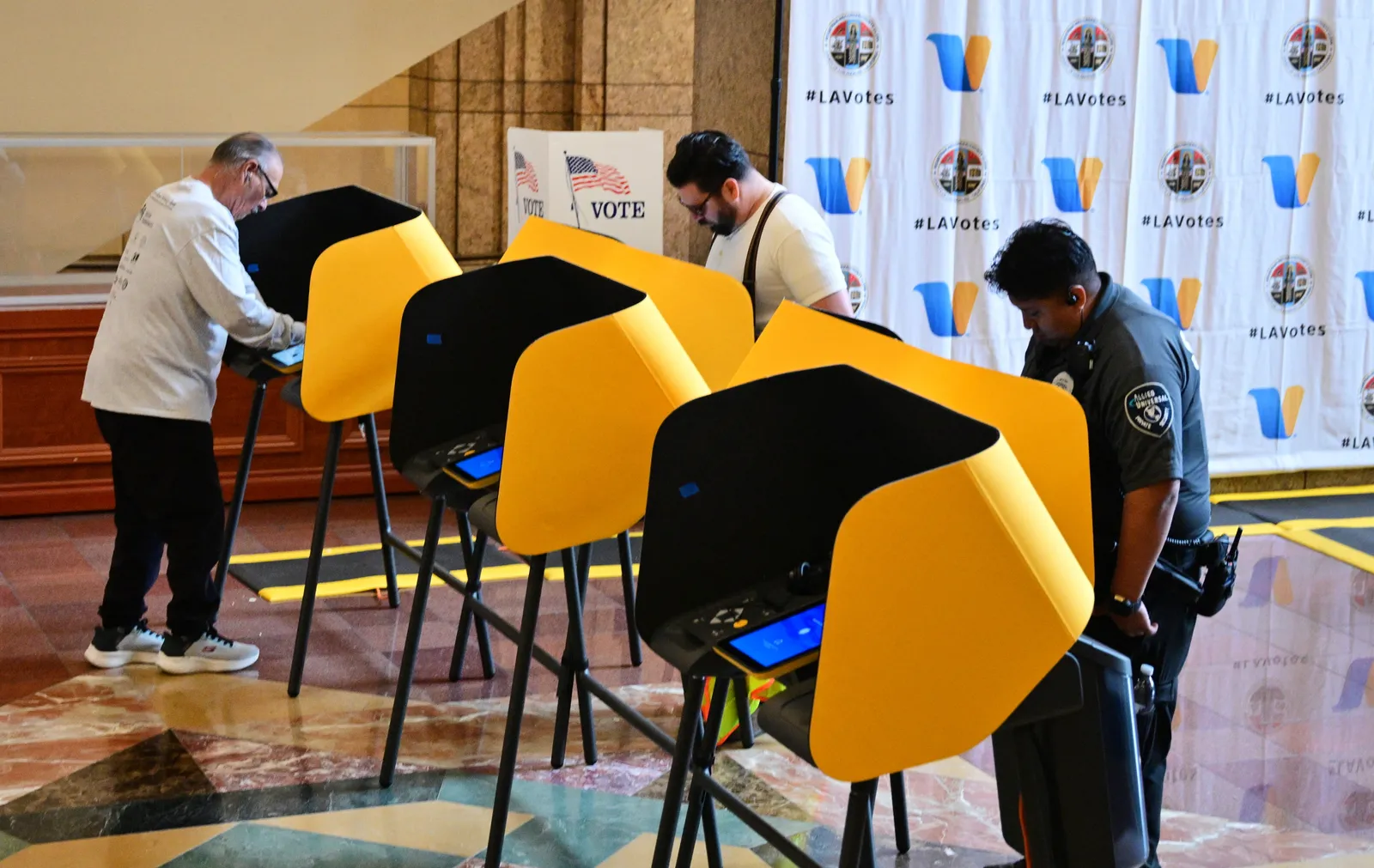
LA County: DOJ's 20,000 'noncitizen' voter list is 'unreliable,' includes U.S.-born
Preliminary review by Los Angeles County election officials finds errors in the federal list, raising the stakes for voter roll integrity ahead of November.
Trump's $1.5B Pentagon chip investment lands in North Carolina
A $1.5 billion defense infusion for North Carolina chipmaking signals a new era of Pentagon-backed reshoring - here's what it means for the industry.

Nigeria confirms first Ebola case in Abuja, a woman just off a Uganda flight
Health Minister Muhammad Ali Pate says the patient flew in from Uganda, putting Africa's latest outbreak on Nigeria's doorstep.