

Venezuela quake toll nears 1,500 as nearly 50,000 still unaccounted for
With the death toll approaching 1,500, rescuers are racing to account for about 50,000 missing people and survivors.
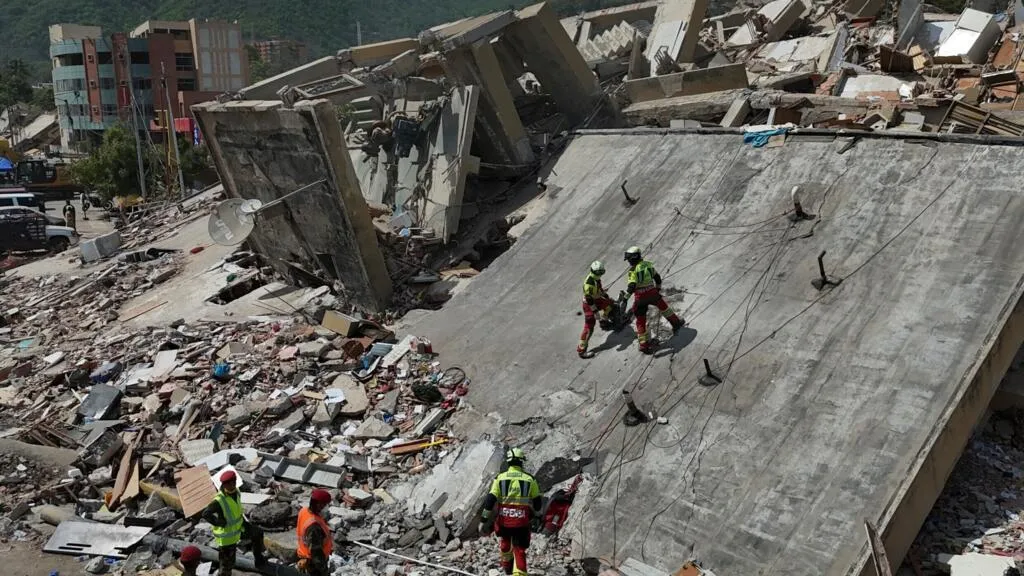
Venezuela’s devastating earthquakes have pushed the death toll to near 1,500 as rescue workers race against time to find survivors. For decision-makers, the operational and humanitarian uncertainty around nearly 50,000 unaccounted for people can spill into longer-term logistics, governance, and risk planning.
Venezuela’s earthquake death toll neared 1,500 on Sunday, according to France 24, as rescue workers raced against the clock to find survivors. At the same time, nearly 50,000 people still remained unaccounted for, turning every hour into a high-stakes contest between survival odds and disappearing information.
That combination is the hard part for leaders, beyond the tragedy itself: you have a rising confirmed number and a very large unknown pool. If the death toll is moving toward 1,500, the “still unaccounted for” figure is what determines whether the outcome stabilizes or keeps worsening, because it represents both potential survivors and potential additional fatalities. The source frames this plainly: the urgency is not symbolic. It is the difference between finding people alive and losing them.
For executives, the first second-order implication is that uncertainty does not pause while teams do triage. When nearly 50,000 people are unaccounted for, entire systems struggle with verification. Families need answers, shelters need accurate headcounts, and authorities need situation reports that are timely enough to guide decisions. In practice, that means the operational load does not just sit on rescue personnel. It spreads across local coordination, transport availability, communications, and the ability to establish who is where, what infrastructure is functioning, and which areas are reachable.
The second-order implication is governance and planning risk. Disasters expose how fragile information can be when infrastructure is damaged and institutions are under stress. Even when organizations do not control emergency response directly, they still feel the aftershocks: procurement timelines get disrupted, supply chains get rerouted, and budgets get re-timed. The “nearly 50,000 still unaccounted for” number matters because it signals that authorities and partners are still sorting reality on the ground. That sorting takes time, and time is costly for everyone trying to allocate resources effectively.
Third, there is a regulatory and compliance angle, even in the middle of a humanitarian crisis. Earthquakes force a cascade of administrative tasks that can include documentation delays, relief distribution rules, and recordkeeping challenges related to missing persons. While France 24 does not specify any particular regulation, the underlying dynamic is familiar to anyone who has managed crisis operations: rules do not disappear, but the ability to prove compliance often depends on having reliable data. When large segments of the population are unaccounted for, documentation can lag, audits can become complicated, and reporting requirements may need to be handled under rapidly changing conditions.
Looking beyond the immediate response, this event also carries strategic stakes for peers who run organizations in volatile environments. In disaster settings, uncertainty is often the biggest budget line item you did not plan for: contingency reserves, emergency logistics, and the cost of adapting operations to shifting site access and verified needs. When a credible news source reports a death toll nearing 1,500 while keeping the missing count near 50,000, it tells decision-makers that the situation is not transitioning cleanly from “rescue” to “recovery” yet. It is still in the blend phase, where both outcomes are possible.
For boards and executives, the practical question becomes: how do you maintain decision quality when the underlying situation data is incomplete? The source offers the key reality. Rescue efforts are racing against time to find survivors among a population that has not been accounted for. That should push leaders to treat information flows as a critical operational asset. In other words, your crisis playbook cannot just assume a steady stream of confirmed numbers. It must be designed to work while the most important figures are still uncertain.
This story's Key Insights and Take-aways are locked.
Create a free account to unlock Executive Actions for one credit.
Register to UnlockAlways free for Executives Club members. Join the Club
More in Politics
Obama Defends Ilhan Omar After Agents Search Her Home in Trump Inquiry
The former president's intervention raises the stakes in a federal probe into immigration paperwork that has put a prominent progressive lawmaker in the crosshairs.

Blair-era minister: cut welfare to fund youth job support
Alan Milburn's call for welfare cuts to fund employment support opens a Labour fight over benefits and the Neet crisis.

Hot September CPI: energy costs surge, voters feel the squeeze before midterms
The latest inflation print lands as Trump campaigns for GOP control of Congress, putting cost-of-living worries at the center of the midterm fight.