
Vietnam's new FDI pitch: bring technology, not just another factory
Vietnam is reweighting the incentives that built its manufacturing boom, and the multinationals choosing where to put their next chip, AI or R&D dollar now face a different calculus.
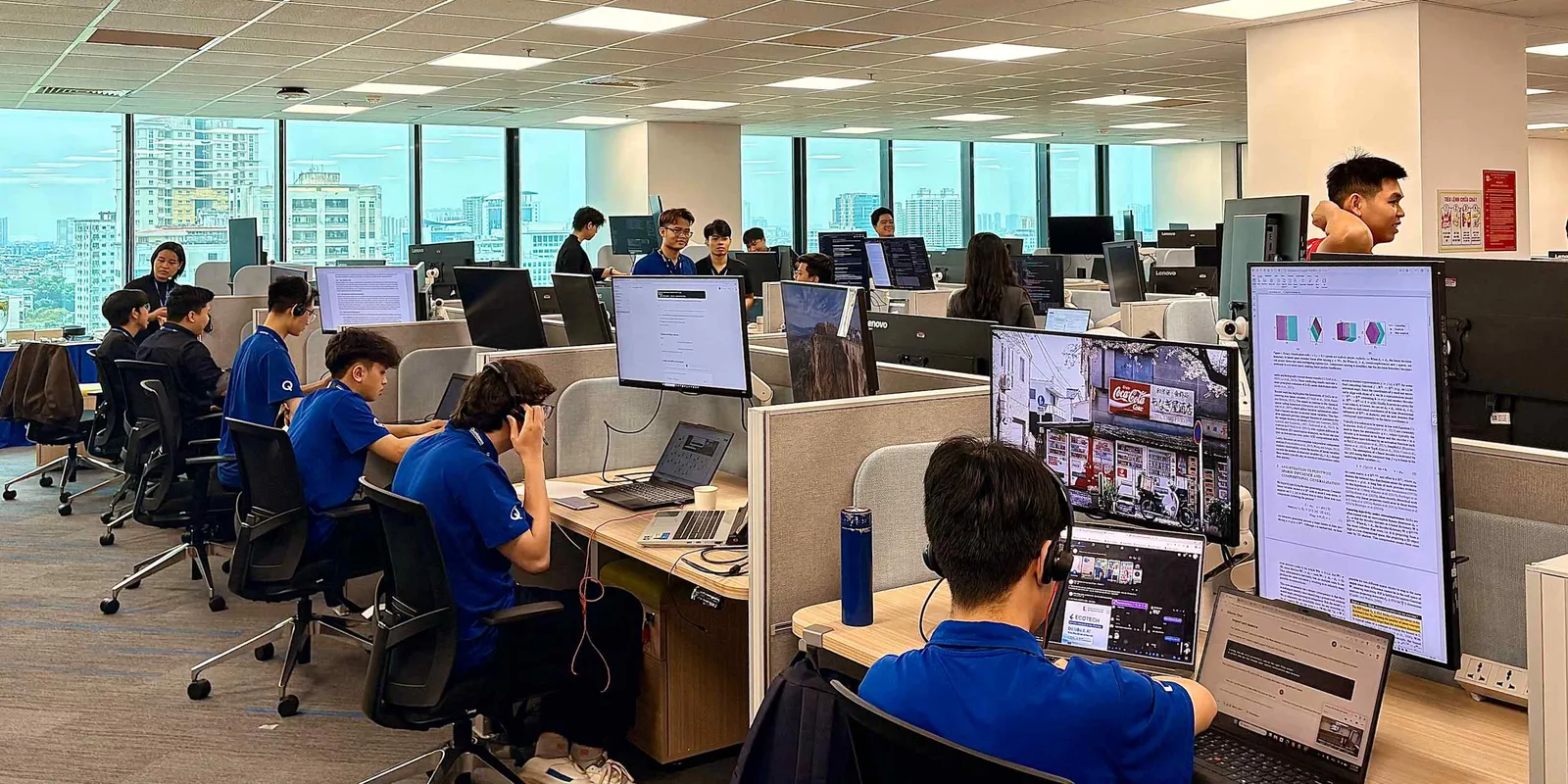
Vietnam's government is shifting its foreign direct investment focus away from jobs and factories and toward technology, according to Nikkei Asia. For multinationals and their boards, that means the tax-holiday-and-headcount bargain that defined three decades of Asian site selection is being replaced by a harder deal built on skills, R&D and supplier depth.
Vietnam is changing what it asks foreign investors to bring. According to Nikkei Asia, the country is shifting its foreign direct investment focus away from jobs and factories and toward technology, a reweighting of the pitch that turned a war-scarred economy into one of Asia's manufacturing engines. For three decades the offer was simple and it worked: build a plant, hire thousands of workers, ship the output, and collect generous tax holidays in return. The new offer is narrower and harder to satisfy. Vietnam still wants the factories. It increasingly wants the engineering, the research labs, the chip packaging lines and the software teams that sit above them.
The shift is not sentiment. It is arithmetic. The low-cost assembly model that made Vietnam a winner in the 'China plus one' era is running into its own limits. Wages have climbed steadily as the manufacturing base matured, narrowing the gap with regional competitors. The OECD-led global minimum tax has begun to blunt the value of the long tax holidays that were once the country's sharpest recruiting tool, since large multinationals now face a 15% floor on their effective rates in most major markets. And automation keeps eating the labor-intensity advantage: a modern electronics line creates fewer, better-paid jobs per dollar invested than the garment and footwear plants that defined the first wave.
In practice, 'technology' in Vietnam's FDI vocabulary means a handful of specific things. The most visible is semiconductors, where the country already hosts assembly, test and packaging operations and wants to move up into more advanced packaging and eventually design. The second is electronics R&D and engineering, the layer that sits between a factory floor and a product roadmap. The third is digital services, software and data work, which needs far less land and power than a fabrication plant but far more skilled people. The fourth, and the one every government in Asia is now chasing, is anything with 'AI' attached to it.
Vietnam is not shopping alone. Malaysia has spent years building a semiconductor services cluster. Thailand is courting chip and EV investment. Indonesia is trading nickel reserves and market size for battery and processing capacity. India is offering subsidies at a scale Vietnam cannot match. Mexico is selling proximity to the United States. The differentiator Vietnam can still claim is a combination: political stability, a dense network of trade agreements including the CPTPP, RCEP and a free trade agreement with the EU, physical proximity to Chinese supply chains, and a young population with a real appetite for technical education.
That is why the policy conversation has moved from blanket tax breaks to targeted support. The tools under discussion across the region typically include co-funded workforce training, R&D credits, discounted industrial land, faster permitting, and easier visas for engineers. For a government, the appeal is that these instruments buy capability rather than headcount. For a company, the appeal is that they lower the cost of the expensive part of an investment, the part that is hardest to relocate once it is built.
For executives weighing a site, the practical consequence is that the old negotiation is over. Arriving with a labor-cost spreadsheet and a request for a ten-year tax holiday will get a cooler reception than it did a decade ago. Arriving with a training program, a supplier development plan, a university partnership and an R&D commitment will get a warmer one. The economies that have made this pivot successfully, Ireland and Singapore being the obvious historical examples, did it by making the multinational's own upgrade path the price of admission.
The risk is the gap between the announcement and the delivery. Technology FDI is far more demanding of its host than assembly work. It needs reliable power, which has been a recurring constraint in Vietnam's industrial north. It needs a deep bench of engineers, and the supply of them is the binding constraint almost everywhere in Southeast Asia. It needs logistics and supplier ecosystems that took decades to build elsewhere. And it needs patience: a semiconductor supply chain is not assembled inside an electoral cycle.
There is also a domestic political dimension that outside investors often miss. Tens of millions of Vietnamese livelihoods still depend on labor-intensive manufacturing, and a government that visibly stops courting those plants invites a backlash it does not want. The likely outcome is not a replacement of the old model but a layered one: keep the garment, footwear and assembly work, and stack higher-value technology investment on top of it. That is a harder trick than a clean pivot, and it is the one Vietnam has actually chosen. For decision-makers, the signal to watch is not the rhetoric but the incentive code. If Vietnam's next investment rules reward training, R&D and supplier localization with real money and real speed, the shift is genuine. If they simply rename the same tax holidays, it is a press release. Either way, the direction of travel across Asia is now clear: the era when a factory alone was enough to earn a country's best terms is closing, and the companies that plan for that will negotiate from a stronger position than the ones that do not.
This story's Key Insights and Take-aways are locked.
Create a free account to unlock Executive Actions for one credit.
Register to UnlockAlways free for Executives Club members. Join the Club
More in Business

Anthropic's record IPO lands a day before Nvidia's longest losing streak since 2008
Anthropic's record Nasdaq debut and Nvidia's longest weekly losing streak since 2008 landed within 24 hours of each other, and the contrast shows how fast the market is re-pricing the AI trade.
New World's HK$24.9B rights issue triggers 41% plunge as HK$50B debt target looms
New World Development has three levers left to erase up to HK$50 billion in borrowings by 2031, and shareholders just told the market what they think of the first one.
Chip supply chain warns new US export controls will spread beyond the target list
Suppliers, distributors and equipment makers say the latest US restrictions will not stay contained to the firms named on paper, putting orders, inventory and delivery timelines at risk across the global chip chain.