

Vox Machina season 4 brings a Critical Role Campaign 3 character early
Why Titmouse is accelerating a Campaign 3 plot beat, and what it signals for future cross-campaign adaptations.
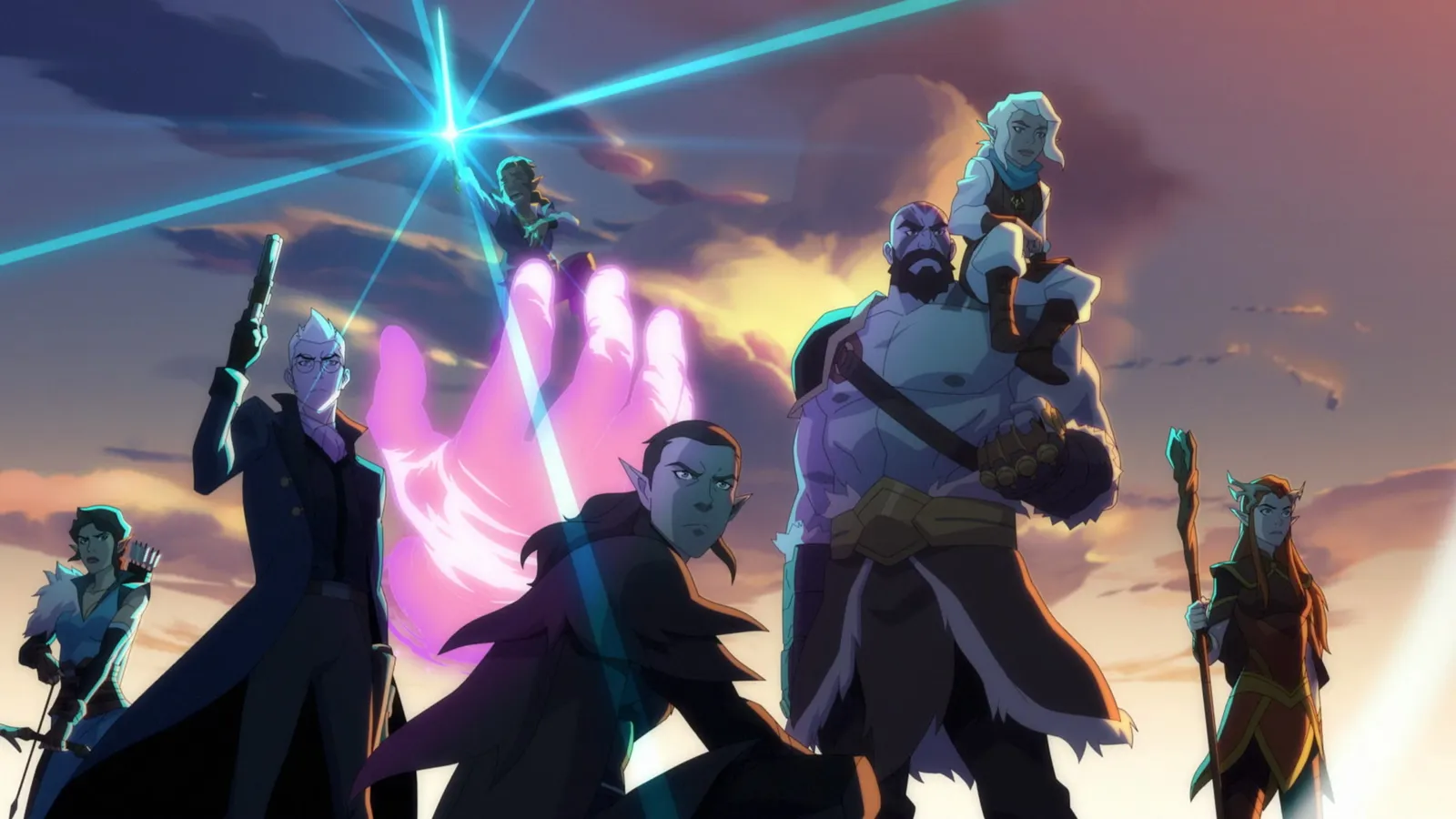
The Legend of Vox Machina season 4 introduced a character from Critical Role's Campaign 3 earlier than expected. For decision-makers, it shows how adaptations can reshuffle narrative timing across multiple fan-favorite storylines.
If you thought The Legend of Vox Machina season 4 would only “catch up” to what fans saw in Critical Role’s main campaigns, the show just played spoiler. New episodes introduced a character from Critical Role’s Campaign 3 earlier than expected. And that matters because it is not a simple cameo. It is a signal that the Vox Machina team is actively re-timing story events across different campaign eras, even when that means moving a Campaign 3 piece forward into the season where most viewers expected older anchors.
To be clear about the play: across earlier seasons, Critical Role already proved it wasn’t married to the exact sequence of its original actual-play Dungeons & Dragons campaign. The show skipped parts of the original story, and it reshaped character arcs for major players like Pike and Grog. Now season 4 is extending that pattern. The latest batch of episodes suggests the changes are not only affecting Campaign 1, Vox Machina, but also the broader shape of Campaigns 2 and 3. In other words, this is not just adaptation. It is remixing at the timeline level.
So what is actually going on under the hood? The Legend of Vox Machina is built on a franchise problem: the underlying material exists in a living, episode-by-episode actual-play format, but the animated series has to land coherent emotional beats inside a different rhythm. In a live campaign, players can wander, improvise, revisit decisions, or stretch consequences across dozens of sessions. On TV, you get a smaller number of episodes, a tighter arc structure, and the pressure to keep viewers oriented while still rewarding superfans who know the canon.
That pressure creates incentives. Titmouse and Critical Role can keep the “feel” of the original campaign, while still changing which events happen when, who gets focus, and which threads pay off first. The source framing is explicit that the show “comes very close” to the narrative beats of the original campaigns, but it does not hit every beat. That is the key difference between a faithful retelling and a competitive adaptation. Faithful retellings optimize for accuracy. Vox Machina optimizes for storytelling economy: what will play best on-screen right now, in front of a potentially broader audience than the live D&D community.
This is also why the early arrival of a Campaign 3 character is such a big tell. When an adaptation pulls a character forward, it changes the audience’s expectation of what the season is “about.” Viewers might start reading that character’s presence as an early setup for later themes, alliances, or reveals that would otherwise unfold much later in the original campaign timeline. That shifts the emotional math. It can also change the way fan communities debate continuity, because the show’s chronology becomes its own canon.
Now, let’s zoom out to second-order implications for the people who fund and govern media businesses. Executives tend to think in terms of licensing, brand continuity, and audience retention. But narrative timing is an operational lever. When a franchise spans multiple campaigns, earlier convergence points can keep new viewers from feeling lost, while still giving hardcore fans a sense that the show is “ahead” of their mental map. The catch is that it also raises the bar for consistency. If you pull characters from later storylines earlier, you have to manage payoffs so the season feels complete, not like it is borrowing excitement from a future episode.
There is no regulatory angle in the source itself, but the business logic resembles how regulated industries behave around timing and compliance in practice: when you change a sequence, you have to ensure the system still functions. In animation, that means internal story consistency. If you move a Campaign 3 element earlier, the show must ensure it does not break the arcs it already set in motion for Campaign 1 and Campaign 2. The source explicitly notes that the changes are affecting more than just Vox Machina. That implies Titmouse and Critical Role are coordinating across story layers, not treating each campaign segment as a standalone module.
For peers building or adapting IP-heavy franchises, the season 4 move lands as a practical lesson: do not assume canon is a straight line. It can be a toolkit. The show’s history already showed willingness to skip events like Kraghammer and to reshape arcs like those of Pike and Grog. The new twist is that it is now accelerating material across campaign boundaries, including Campaign 3 characters arriving earlier than expected. For decision-makers, the strategic stake is retention and trust. Fans will tolerate differences when the adaptation still respects character intent and narrative payoff. But if timing changes feel arbitrary, engagement drops. Right now, Vox Machina is betting that the remix will feel earned, not like a scramble.
The real question for the next decisions is whether this early Campaign 3 injection becomes a one-off or a broader pattern for season-by-season structure. If season 4 is any indication, the series is not just adapting a story. It is re-authoring the timeline, and it is doing so in a way that deliberately reaches across multiple Critical Role eras.
This story's Key Insights and Take-aways are locked.
Create a free account to unlock Executive Actions for one credit.
Register to UnlockAlways free for Executives Club members. Join the Club
More in Entertainment

Russell Brand's accuser 'bewildered and confused' as he denies 7 sex charges
The criminal case against the comedian is a live test of how media companies manage talent risk when serious allegations go public.

'It's a Magic Trick': Ballet Experts Say Rosalía's SNL Pose Is Impossible
Three ballet experts tell Rolling Stone Rosalía's gravity-defying SNL stillness shouldn't be possible - and why the debate is now part of the show.

Activision CMO: GTA 6 Will Boost Call of Duty, Not Bury It
Activision's top marketer says Rockstar's blockbuster will drive players back to consoles and into Modern Warfare 4, even as the company admits its recent strategy failed.