
Waymo adds a $29.99 per month tier, starting in San Francisco, Los Angeles, Phoenix
A new power-user subscription is landing in select cities. Here’s what it signals for pricing, regulation, and scale.
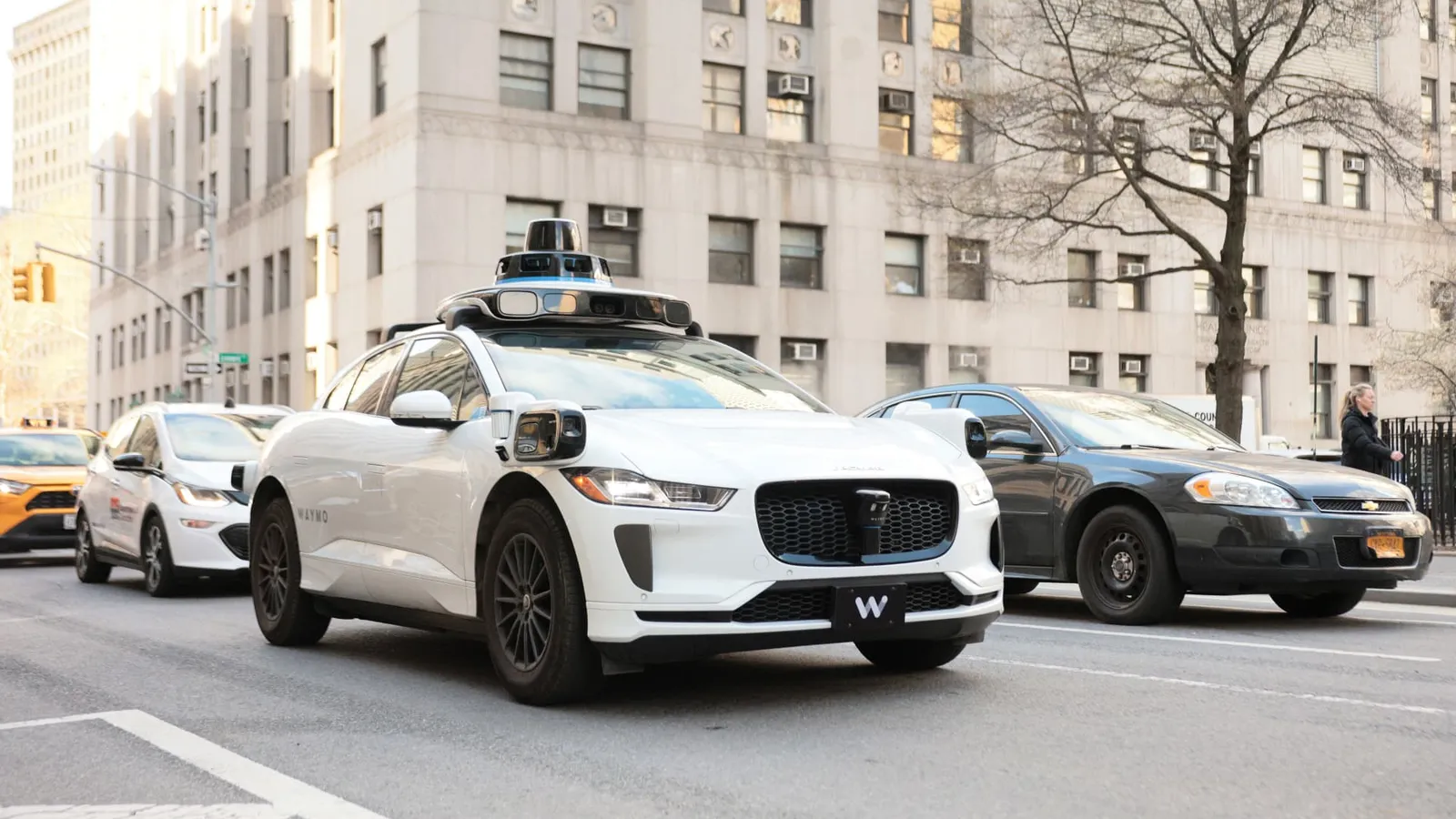
Waymo is launching a new subscription tier for power users at $29.99 a month, starting in San Francisco, Los Angeles, and Phoenix. For decision-makers, the move is a clear bet that autonomy can shift from “trial” to predictable recurring revenue in regulated urban markets.
Waymo is launching a new subscription tier aimed at power users at $29.99 per month. The service is rolling out first in San Francisco, Los Angeles, and Phoenix, which are not random picks. They are core test-and-operations markets where autonomy can be deployed, improved, and monitored in real-world conditions.
This matters because $29.99 is not a “maybe” number. It is a pricing signal. It tells you Waymo thinks enough riders will pay for convenience and repeat usage, not just sample rides. A subscription tier also changes the economics of the relationship with customers. Instead of one-off trips that can be volatile with demand or seasonality, a recurring plan can smooth revenue patterns and make it easier to forecast usage and capacity.
To understand why this is strategically loud, you have to consider how autonomous vehicle services have historically been sold. Many early deployments leaned on pilots, limited availability, or usage patterns that looked more like evaluation than consumer product. Even when services work, scaling them requires two things at once: technical reliability and operational trust. The trust part is not just brand and user experience. It is also the regulatory and city-by-city reality of deploying driverless or driver-assisted systems on public roads. Subscriptions are a step toward “product-market fit” rather than “innovation theater,” but they also demand consistency. If riders commit monthly, they will notice quickly if reliability dips or service areas shrink.
Starting in San Francisco, Los Angeles, and Phoenix also frames how Waymo is approaching city risk. Each market has its own local context and expectations, and those differences can affect deployment speed and operational constraints. By anchoring the first tier in multiple cities instead of one, Waymo is effectively testing whether demand for a power-user plan is portable. If it works across these distinct metro areas, it supports a broader thesis: that autonomy can become a repeatable commuting option, not just a novelty ride.
There is also a second-order implication for competitors and partners. When a company introduces a tier specifically for “power users,” it is implicitly segmenting demand: there are casual riders who will compare on convenience and price, and there are repeat users who value frequency, availability, and low friction. Competitors in the autonomy ecosystem, including other robotaxi operators or mobility platforms, now have to model how much consumer willingness to pay exists beyond basic access. If power users will pay $29.99 monthly, that suggests there is room for monetization layers, not just per-trip revenue. That influences how platforms negotiate partnerships, how they price their own offerings, and how they evaluate whether to invest in consumer-facing bundles versus infrastructure-only strategies.
From a board and investor perspective, subscription tiers can improve metrics that matter during fundraising and capital planning. Recurring revenue can be easier to underwrite than usage-dependent revenue, and it can help justify further scaling spend. But there is a trade-off. Subscriptions increase accountability. If service expansion slows or operational performance lags, churn becomes a real performance pressure. In other words, pricing up front is a bet that operations will hold steady enough for long-term retention. Launching this tier in select cities suggests Waymo is confident enough to attach a recurring price to real service delivery, even while continuing to expand.
Finally, the timing is a reminder that regulation and autonomy are not separate stories. They are braided together. Autonomous vehicle deployment typically requires ongoing coordination with regulators and city stakeholders, and that process can shape what kind of service can be offered, where, and under what conditions. By putting a subscription in-market now, Waymo is essentially saying that the regulatory path is mature enough to support a consumer commitment. For decision-makers at other mobility and robotics companies, that is the strategic lesson: autonomy companies that want to scale cannot treat compliance as a checkbox. They need compliance as an enabling layer that makes pricing and retention possible.
If you are an operator, the $29.99 launch is a concrete signal to watch: can Waymo convert repeat demand into predictable revenue while still expanding service responsibly? If you are an investor or board member, the question is even sharper: does this tier strengthen unit economics enough to justify the next phases of rollout? The move in San Francisco, Los Angeles, and Phoenix is small on paper, but it is big in direction. It points toward autonomy as an ongoing service, not a temporary experiment.
This story's Key Insights and Take-aways are locked.
Create a free account to unlock Executive Actions for one credit.
Register to UnlockAlways free for Executives Club members. Join the Club
More in Technology

OpenAI says 10,000 agents cracked a 90-year math problem in 88 hours
The company's claim is audacious, but one mathematician is pushing back. Here's what it means for AI-driven discovery.

Meta still serves child sexual abuse ads on Instagram in India - BBC report
A new report following the BBC Eye investigation says the ads are still there - what it signals for every platform with a self-serve ad engine.

White House yanks 'Build the Wall' game after Tetris Company copyright warning
The administration's arcade game vanished in hours - and the takedown playbook every brand can learn from.