
Whitmer threatens to yank Michigan National Guard from D.C. over Trump task force use
Michigan's governor joins other Democrats in warning that National Guard deployment has political limits, with national security optics on the line.
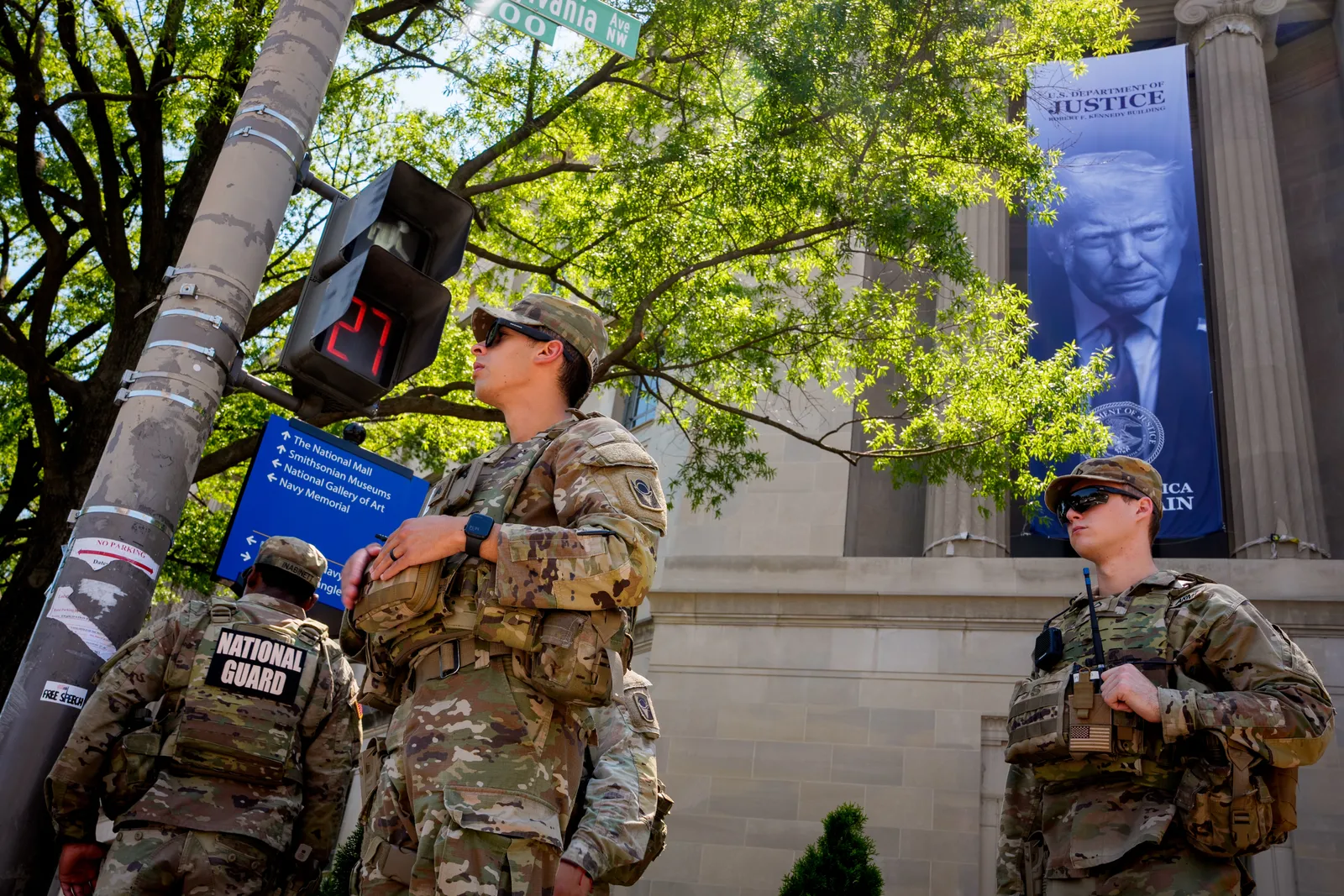
Michigan Gov. Gretchen Whitmer threatened to pull the state’s National Guard troops from Washington, D.C. if they are used for a Trump task force. The move raises pressure across state and federal leadership because National Guard deployments can turn into a test of legal authority and political boundaries.
Michigan Gov. Gretchen Whitmer is threatening to pull Michigan’s National Guard troops from Washington, D.C., if the deployment is used for a Trump task force. The warning matters because Whitmer is not acting in isolation: she is one of four Democrats who sent their states’ National Guard troops to Washington, D.C. ahead of America 250 celebrations in recent weeks, amid President Trump’s ongoing and controversial deployment in the city.
Put simply, this is a dispute over what the Guard is for. The Guard typically supports specific events and operational needs, and that distinction is the whole ballgame here. Whitmer’s threat signals that, in her view, the mission framing cannot quietly drift from event support into something that looks like partisan political activity. For decision-makers watching this, it is not just an intra-government spat. It is a stress test for how far state leaders will tolerate their personnel being pulled into federal politics, and how quickly they will try to reassert control.
America 250, the celebrations in Washington, D.C., are the backdrop. According to the source, Whitmer and three other Democrats sent Guard troops to the city in recent weeks. The reason the timing is so combustible is that the deployment is happening while President Trump is already operating in Washington with an ongoing and controversial posture. When that atmosphere exists, even an originally nonpartisan deployment can become politically charged fast, especially once the public starts asking whether National Guard troops are being used for public safety or for something else.
National Guard deployments sit in a tricky governance space. They are a blend of state and federal responsibilities, which means oversight and legitimacy depend on why the troops are there, what orders they receive, and how the mission is communicated. When leaders disagree about the purpose, the question quickly becomes: who decides the “use” of the troops, and what happens when state-level officials conclude that the use no longer matches the original rationale?
That is the operational and reputational risk for governors, and it is also a leadership and compliance risk for anyone tasked with coordinating the deployment. Even without new details beyond the source, the structure of the situation is clear: Guard troops were sent for America 250 preparations, but the deployment is happening alongside President Trump’s ongoing, controversial use of forces in the city. If Whitmer believes the task force use crosses a line, then her threat to pull troops is both a political statement and a mechanism to force a correction in how the mission is handled.
There are second-order implications beyond the Guard itself. First, when states publicly condition or threaten to reverse deployments, it can affect how quickly future requests will be accepted. Federal planners rely on predictable cooperation for logistics, communications, and staffing. If governors start attaching explicit conditions, federal authorities may need to adjust coordination processes, timelines, and contingency plans.
Second, this kind of public threat can reverberate in boardrooms and cabinet-level offices far away from Washington. While this story is about politics and national security optics, the underlying theme is governance discipline: what happens when mission scope expands without alignment. That lesson travels across sectors. Organizations that manage high-stakes resources, from public infrastructure operators to defense-adjacent contractors, know the cost of mission creep. Executives in regulated environments often have to think in terms of “authority to use” and “purpose limitation.” This political dispute is an unusually visible live-action example.
Finally, there is the strategic stakes for peers in similar roles. Whitmer’s position signals that at least some state leaders will treat Guard deployment as a boundary-sensitive decision, not a blank check. If other governors follow suit, the federal government could face a credibility and coordination challenge: how to conduct operations in the capital without triggering state-level refusals. For executives, investors, and leaders who track risk, the signal is that political disagreement can rapidly translate into operational constraints.
In the end, the core issue is not whether the Guard is useful. It is whether the mission stays within the reason it was approved and communicated. Whitmer’s threat to pull Michigan troops if they are used for a Trump task force turns that principle into an immediate test. And in a city where every move is amplified, the consequences are likely to be felt well beyond Washington.
This story's Key Insights and Take-aways are locked.
Create a free account to unlock Executive Actions for one credit.
Register to UnlockAlways free for Executives Club members. Join the Club
More in Politics

Obama Defends Ilhan Omar After Agents Search Her Home in Trump Inquiry
The former president's intervention raises the stakes in a federal probe into immigration paperwork that has put a prominent progressive lawmaker in the crosshairs.

Blair-era minister: cut welfare to fund youth job support
Alan Milburn's call for welfare cuts to fund employment support opens a Labour fight over benefits and the Neet crisis.

Hot September CPI: energy costs surge, voters feel the squeeze before midterms
The latest inflation print lands as Trump campaigns for GOP control of Congress, putting cost-of-living worries at the center of the midterm fight.