

Wilbur Ross warns Trump’s Iran exit is a midterms lose-lose: oil prices or “weak” withdrawal
The former commerce secretary tells Fortune the Strait of Hormuz is where voters decide whether “peace” is believable.
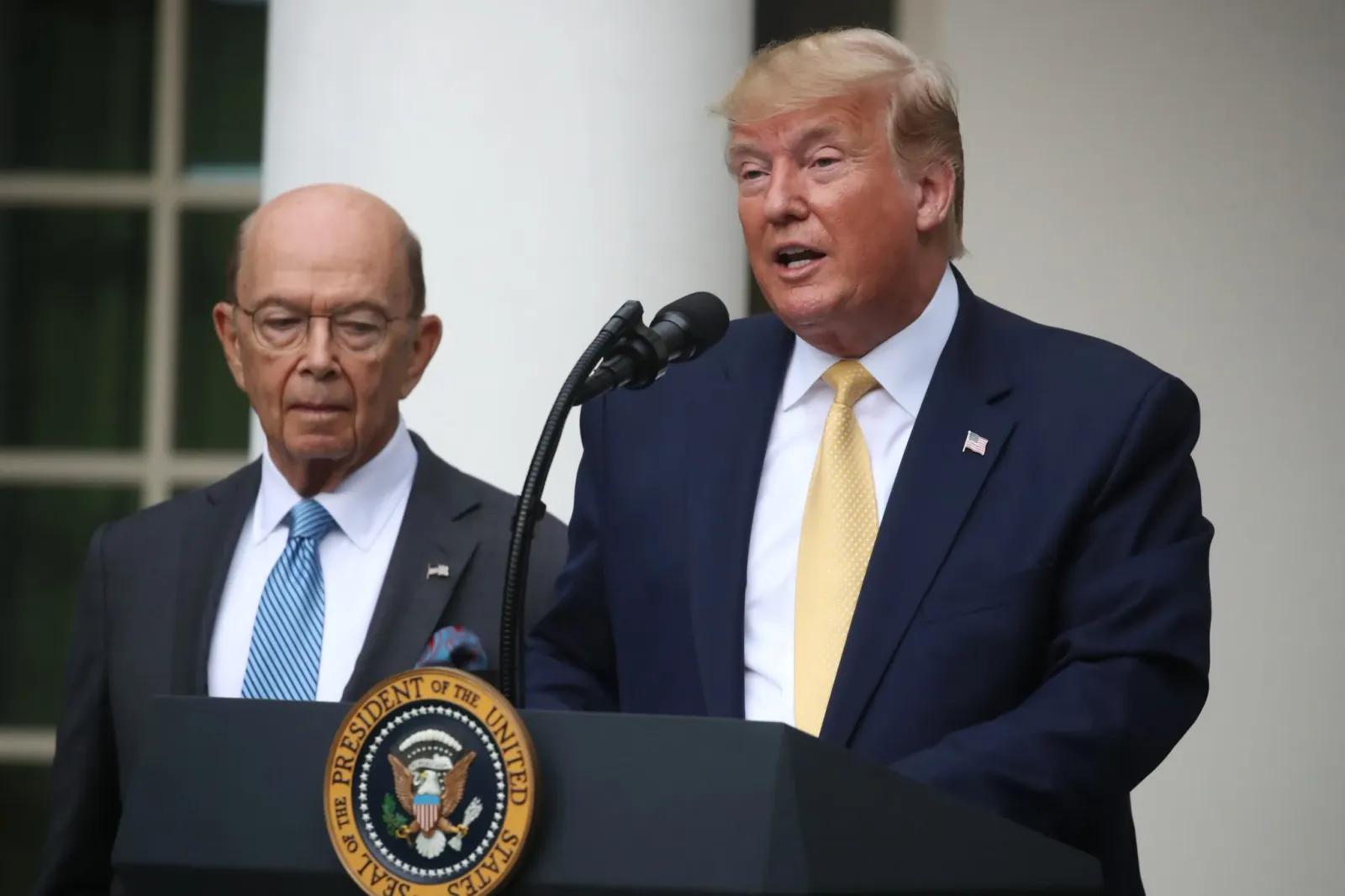
Wilbur Ross, Trump’s former commerce secretary, tells Fortune the U.S. faces a Catch-22 as midterms loom: keep pressure on Iran and risk high oil, or withdraw and risk looking weak. The consequence for decision-makers is clear, Hormuz-linked shipping and pump prices can still move even if diplomacy changes.
Wilbur Ross says Trump is stuck in an Iran Catch-22 tied to the 2026 midterms: either the Middle East conflict keeps oil expensive, or a U.S. pullback becomes ammunition for Democrats. Speaking exclusively to Fortune, Ross frames it as a political math problem with real-world market spillovers.
Ross argues that in a “technical sense” the war is already “over” because Iran has “no air force, they have no real navy, they have no air defense,” but the hard part is winning “the peace,” and he says “that’s what Hormuz is about.” That matters because the Strait of Hormuz and neighboring chokepoints determine whether oil exports keep flowing and whether prices stay anchored at the pump while voters are making up their minds.
Start with the baseline: Ross says Trump has been unable to conduct the negotiations he had hoped for and reach a final deal over the Strait of Hormuz. Meanwhile, Iran’s military infrastructure and “a great deal of its economic infrastructure” have been reduced to rubble. The uncomfortable part is how quickly politics outruns outcomes. Ross says both sides are aware of a timeline: for Trump, the Middle East conflict needs to reach a “palatable point” for voters before November; for Iran, it means making life difficult for the Oval Office and waiting, in the hopes Trump loses some political firepower.
Ross points to a core theory he says the Iranians have had in prior discussions: that they can outlast the president. He adds that consumers are already paying, because Iran borders the Strait of Hormuz, a vital waterway for oil exports from the Persian Gulf. His explanation is plain economics with geopolitical tinder underneath. When ships are reluctant to travel down the Strait, supply stalling meets steady demand, and prices rise. And even if Trump insists the Strait is controlled by the U.S., he is still dealing with the market reality that shipping decisions can lag political assurances.
On top of that, the region’s risk has broadened beyond Hormuz. In the last 24 hours, the Houthis, described by Ross as a Yemen-based terror group that acts on Iran’s behest, began attacking ships in the Bab al-Mandab Strait on the other side of the Arabian Peninsula. That’s the kind of second-order catalyst that executives tend to track closely, because it can turn “localized” disruption into route re-pricing, insurance cost spikes, and longer transit times. And longer transit time tends to show up later, but it always shows up.
Ross’s bluntest midterms risk is oil at the pump. He warns that if oil gets back up to $5 a gallon, “that’s gonna make the midterms very, very difficult.” He also lays out the political pathway: “if he loses both houses in the midterms, he will be impeached.” If control splits, for example Democrats controlling the House and Republicans controlling the Senate, Ross says Trump could face restrictions on his prerogative to make or conduct war. For boards and C-suite teams, the relevance is not partisanship, it is how quickly energy prices translate into consumer sentiment, cost of capital expectations, and demand softness.
Now to the Catch-22 Ross believes Trump is facing. Ross says there are two risks to strike. First, if oil stays high because the Iran conflict drags on, voters may punish the incumbent. Second, if Trump withdraws from the region without it being resolved, Democrats gain a clean narrative: the U.S. war effort did not produce peace, and the result was high oil prices with no payoff. Ross also cautions against an easy assumption that a U.S. pullback automatically brings prices down. He says he “can’t imagine” that if the U.S. withdrew and Iran “suddenly” decided to “play nice,” there would be no constraints on Hormuz. Ross argues the midterms may be influencing the Iranians more than the Americans.
That domestic pressure is not only about diplomacy. Ross says Trump has begun turning up the temperature on Big Oil as well. In a Truth Social post last month, Trump wrote that even though oil prices were “dropping like a rock,” big oil companies were not dropping pump prices “commensurate” with the lower prices they were paying for oil. Trump called it “gouging,” said he instructed the DOJ to “immediately start looking into this,” and demanded that gasoline prices “better start going down a lot faster than what I’m seeing!” Ross ties the policy pressure to timing: he says pump prices jumped “as soon as any military action occurred,” even though “the oil hasn’t found its way through.” He expects Trump to keep pressing Big Oil to avoid expanding gas station margins and to “produce more,” because companies have been relatively constrained in production.
Ross anchors that production point with a specific data reference: U.S. Energy Information Administration data released earlier this month shows the U.S. producing an average of 13.8 million barrels a day in 2026, only slightly higher than a year ago at 13.6 million barrels a day. Put together, the story becomes a broader executive briefing on what happens when geopolitics, shipping risk, and domestic price politics collide. The Iran file controls chokepoints and uncertainty, while the DOJ and consumer affordability politics control incentives and narratives around margins and production.
For decision-makers, the message is not “Iran will do X” or “prices will do Y.” It is that even if the technical military conflict is “over,” the peace that determines Hormuz access and shipping confidence is what can still move markets. If midterms push decisions toward optics, oil affordability becomes the scoreboard. And if the region keeps delivering new shipping threats like the Bab al-Mandab attacks, executives should expect volatility to stay in the system longer than the headline version of the story suggests.
This story's Key Insights and Take-aways are locked.
Create a free account to unlock Executive Actions for one credit.
Register to UnlockAlways free for Executives Club members. Join the Club
More in Politics

LA County: DOJ's 20,000 'noncitizen' voter list is 'unreliable,' includes U.S.-born
Preliminary review by Los Angeles County election officials finds errors in the federal list, raising the stakes for voter roll integrity ahead of November.

Trump's $1.5B Pentagon chip investment lands in North Carolina
A $1.5 billion defense infusion for North Carolina chipmaking signals a new era of Pentagon-backed reshoring - here's what it means for the industry.

Nigeria confirms first Ebola case in Abuja, a woman just off a Uganda flight
Health Minister Muhammad Ali Pate says the patient flew in from Uganda, putting Africa's latest outbreak on Nigeria's doorstep.