

Xi hosts Lukashenko in Beijing, underscoring China’s Russia balancing act
The meeting in the Diaoyutai guesthouse signals how China, Belarus, and Russia keep negotiating pressure points in public.
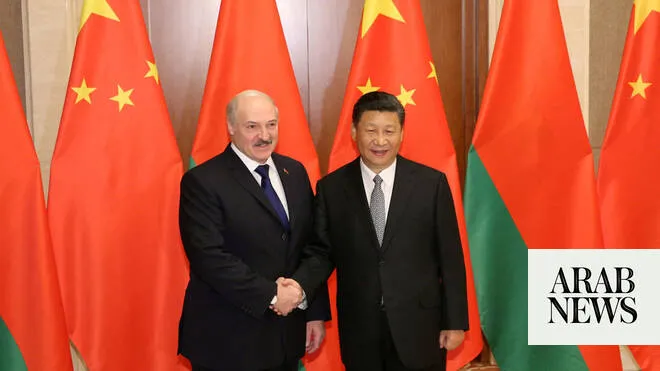
Chinese President Xi Jinping met Belarusian leader Alexander Lukashenko in Beijing on Monday, with state media saying Xi hosted him at the Diaoyutai state guesthouse. The political optics matter for decision-makers watching how China maintains a “neutral” posture while Belarus remains tightly tied to Russia’s war infrastructure.
Chinese President Xi Jinping met Belarusian leader Alexander Lukashenko in Beijing on Monday, according to state media. Xi hosted Lukashenko at the ornate Diaoyutai state guesthouse, CCTV said, without offering immediate additional details.
That setting is not just ceremonial. Belarus is described in the same state-linked context as a key Russian ally, and the relationship carries operational consequences for the war in Ukraine, as well as for how Beijing sells its own neutrality narrative.
Lukashenko, who has been in power since 1994, has allowed Moscow to launch its 2022 Ukraine invasion through Belarus. At the same time, he has denied plans for direct involvement in the war. In other words, Belarus sits in a complicated middle lane: geographically adjacent to the conflict, politically aligned with Russia in enabling terms, but publicly trying to limit how directly it is seen as fighting.
The strategic geography is even sharper. Belarus borders NATO’s eastern flank, which means any shift in its posture has ripple effects beyond Ukraine and Russia. The country also hosts Russia’s latest nuclear-capable missile, the Oreshnik. When a leader like Lukashenko travels to China, you are not just watching diplomacy. You are watching how nuclear-adjacent risk, alliance management, and deterrence signaling get choreographed across capitals.
China, meanwhile, has presented itself as a neutral party throughout the conflict. But Kyiv’s allies have long accused Beijing of secretly helping Moscow. That tension is the real subtext for executives and investors, because it affects the compliance environment around trade, logistics, and technology flows. Even if companies think their activities are commercial, governments and counterparties often treat “neutral” rhetoric as a political claim that can change with every high-profile meeting.
For boards and senior leaders, the meeting also lands in the middle of a specific track record. Lukashenko last visited China in September 2025, when he attended a grand military parade in Beijing and the Shanghai Cooperation Organization summit in Tianjin. That earlier visit matters because it suggests this is not a one-off personal stop. It is part of an ongoing cadence, meaning counterparties should expect continued relationship management in parallel with the war’s evolution.
So what does this mean in practice for decision-makers? First, state-level diplomacy can tighten or loosen the informal constraints that companies experience on the ground. Belarus is not a generic regional partner; it is where Russia’s launch capacity for the 2022 invasion could operate. If Belarus is hosting nuclear-capable assets, risk frameworks and due diligence standards do not stay theoretical. They become operational inputs for financing structures, export controls, insurance terms, and contract counterpart selection.
Second, the optics can change scrutiny from regulators who are already looking for indirect support. Even when a company is not shipping weapons, regulators often assess indirect enablers such as communications infrastructure, logistics services, dual-use components, and payments rails. A headline like this meeting can be used by analysts and compliance teams as a trigger to reassess country risk and counterpart exposure.
Finally, this is also a story about alliance balancing. Xi hosting Lukashenko in Beijing signals that China is willing to keep channels open with Russia’s allies even while insisting on neutrality. For executives building cross-border strategies, the second-order implication is simple: neutrality claims do not eliminate politicized risk. If anything, they shift it into subtler zones where documentation, sourcing, and destination logic become the difference between “acceptable” and “exposed.”
This story's Key Insights and Take-aways are locked.
Create a free account to unlock Executive Actions for one credit.
Register to UnlockAlways free for Executives Club members. Join the Club
More in Politics

Obama Defends Ilhan Omar After Agents Search Her Home in Trump Inquiry
The former president's intervention raises the stakes in a federal probe into immigration paperwork that has put a prominent progressive lawmaker in the crosshairs.

Blair-era minister: cut welfare to fund youth job support
Alan Milburn's call for welfare cuts to fund employment support opens a Labour fight over benefits and the Neet crisis.

Hot September CPI: energy costs surge, voters feel the squeeze before midterms
The latest inflation print lands as Trump campaigns for GOP control of Congress, putting cost-of-living worries at the center of the midterm fight.