

Zelenskyy replaces PM Yuliia Svyrydenko after one year in office
Ukraine’s president announces a government reshuffle, with the prime minister stepping down after a year, reshaping political and administrative priorities.
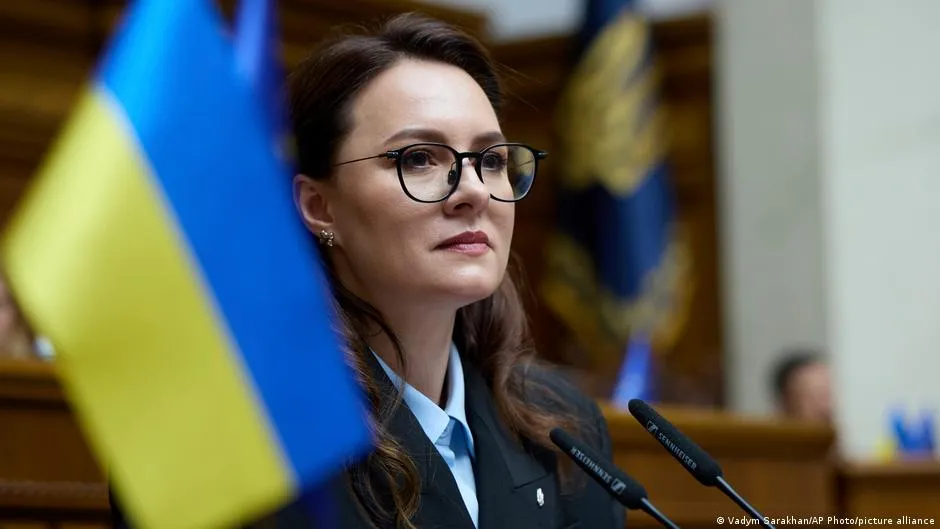
Ukrainian President Volodymyr Zelenskyy announced a government reshuffle in which Prime Minister Yuliia Svyrydenko steps down after a year in office. The change forces decision-makers to track continuity risks in governance and the execution of policy priorities.
Ukraine’s President Volodymyr Zelenskyy announced a government reshuffle, and Prime Minister Yuliia Svyrydenko is stepping down after a year in office. That timing matters, because in a high-stakes political system, a “change at the one-year mark” is rarely a routine staffing update. It is a signal about what the President wants to reset, what he believes needs different momentum, and what kind of leadership style the government now needs to deliver.
For investors, partners, and anyone who cares about how policy actually gets executed, the immediate question is not “who got replaced?” It is “what changes between the announcement and the follow-through?” A prime minister is not just a ceremonial role. In practical terms, the PM typically sits at the center of coordination across ministries, bureaucracy, and day-to-day implementation. So when Svyrydenko steps down after a year, the real stake is continuity: will current programs keep running, or will priorities and timelines be rewritten as the new leadership settles in.
The Deutsche Welle report frames the move as a shake-up announced by Zelenskyy, with Svyrydenko stepping down after that one-year stint. Even with that limited detail, the executive implication is clear. Government reshuffles tend to come with a period of internal re-triage. Officials adjust to new reporting lines. Political appointees recalibrate. Meanwhile, ministries must keep delivering services and managing commitments that do not pause for politics. That tension can create short-term drag, even when the long-term objective is clarity and acceleration.
It also matters that Ukraine is operating under intense external pressure, where domestic governance is watched closely by both citizens and international stakeholders. In such environments, cabinet turnover can affect not only internal policy but also the confidence calculus of external partners. Decision-makers outside the country often build planning assumptions around stability. When leadership changes, those assumptions get stress-tested. Even if the policy direction stays largely the same, the speed of approvals, the tone of inter-minister discussions, and the willingness to escalate bottlenecks can shift quickly.
There is also a governance dynamic underneath the headlines. In many parliamentary systems, prime ministers are pivotal in building consensus across the government. A reshuffle can be used to tighten alignment between political objectives and bureaucratic delivery. If the President decides that the current configuration has not produced the desired outcomes, replacing the PM becomes a direct lever. That is likely why Zelenskyy’s announcement is treated as more than personnel news. It can be interpreted as a recalibration of how the executive branch works, and which set of priorities needs stronger top-level attention.
From a regulatory and operations standpoint, the second-order impact shows up in paperwork, timelines, and enforcement. Regulations do not only change when laws are rewritten. They change when interpretations, administrative practices, and implementation capacity change. A new prime minister may reorganize how ministries coordinate on regulation, how ministries respond to urgent issues, and how quickly they produce the documents that markets and partners rely on. That can affect everything from procurement rhythms to administrative approvals, even when no headline-grabbing “new law” appears in the immediate news cycle.
For executives and boards watching from outside the Ukrainian political sphere, the lesson is to separate “announcement risk” from “delivery risk.” The announcement of a PM stepping down after a year tells you something about political direction, but not the full operational picture. The delivery risk emerges in the weeks that follow, when the new leadership team clarifies responsibilities, confirms which initiatives continue, and sets expectations for how decisions will be made. Those are the moments that determine whether counterparties experience delays or friction.
Ultimately, this reshuffle is a reminder that governance is an operational system. Zelenskyy’s decision to replace Prime Minister Yuliia Svyrydenko after one year is a high-signal move that can reshape coordination inside the government. And for anyone with a stake in Ukraine's policy environment, the strategic focus should be on continuity, implementation tempo, and how the new leadership will manage the translation of priorities into real-world outcomes.
This story's Key Insights and Take-aways are locked.
Create a free account to unlock Executive Actions for one credit.
Register to UnlockAlways free for Executives Club members. Join the Club
More in Politics

Glacial collapse, not rain, killed 180 in Nepal's Himalayan flood
The Himalaya's extreme geography hid the true cause of Nepal's catastrophic flood, a glacial collapse that turned a geological battleground into a mass-casualty zone.

Iran’s Esmail Baghaei says Oman talks start shipping via Hormuz, not US talks yet
Temporary route plans with Oman aim to restart commerce while Tehran says Washington dialogue is not on the table.
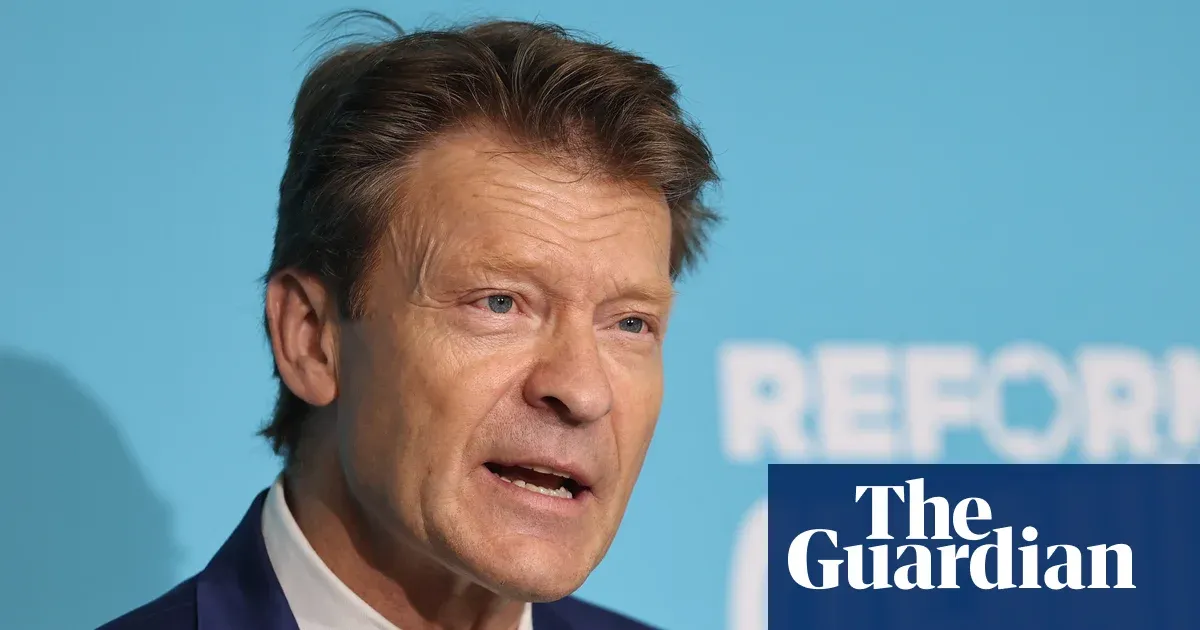
Standards watchdog opens probe into Reform UK deputy leader Richard Tice over interests
The parliamentary standards commissioner says it began an investigation on 28 July into a possible undeclared interest.