
13 years in the making: GTA 6 goes worldwide as the UK piles in
A 13-year development cycle ends in a simultaneous global launch, and the question for media and retail leaders is how much of the world's attention one title can absorb.
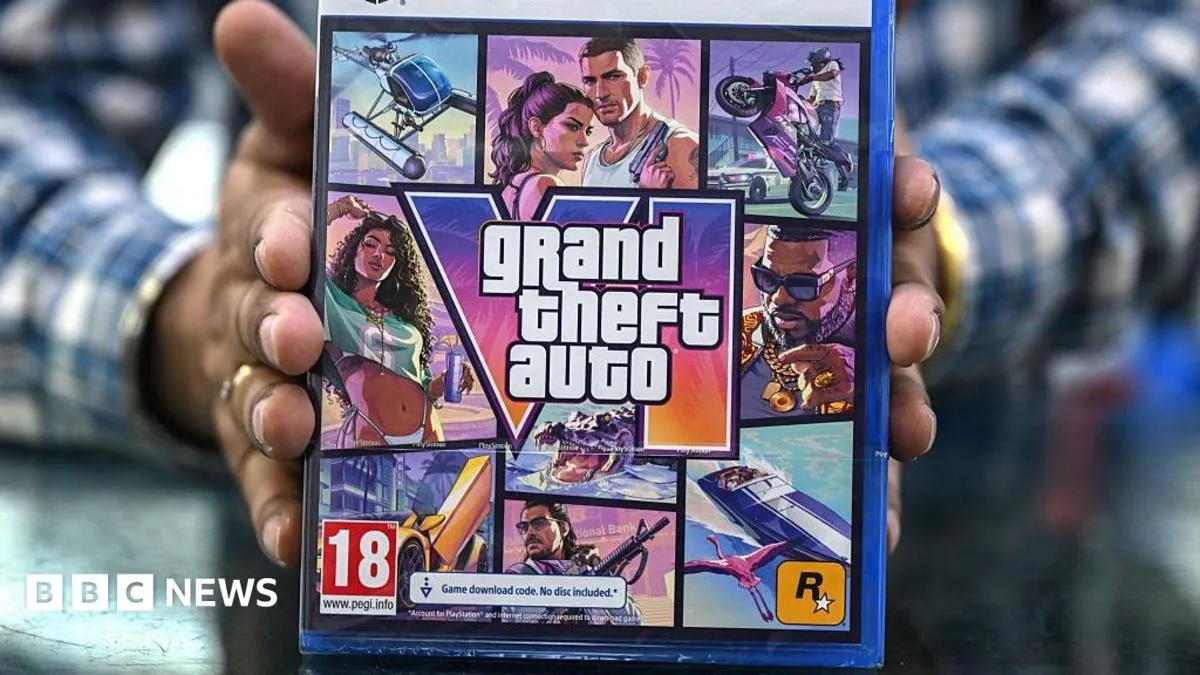
GTA 6 has launched worldwide after 13 years in development, with the UK joining the global frenzy around a title the BBC reports is set to become one of the world's most popular entertainment products ever. For decision-makers in media, retail and platform businesses, the launch is a live test of tentpole concentration: how much revenue and attention a single product can pull into one window, and what that costs everyone competing for the same audience.
Thirteen years of development ended in a single global launch. GTA 6 is now available worldwide, and the UK has joined the frenzy, with the game set to become one of the world's most popular entertainment products ever. That is the fact at the centre of it, and it is a large one: a title that spent 13 years in development is now shipping across the world's major markets at the same time, Britain included. The BBC's framing is blunt about the scale, and it should be. This is not a niche release with a loyal following. It is a mass-market event, and the UK is inside the wave rather than watching it from the shore.
The scale claim deserves a beat of its own. Calling something one of the most popular entertainment products ever puts a video game in the same conversation as the biggest film openings, the biggest albums and the biggest live events on the calendar. That is a statement about attention, not just units. A launch of this size is measured in the hours it pulls out of the global population, and those hours come from somewhere: other games, streaming queues, social feeds, sleep. For the UK, joining the frenzy means British players, retailers and platforms are part of the same day-one moment as every other major territory, which matters commercially because launch windows are where the money is made.
Thirteen years is the number that should stop a boardroom cold. In any creative industry, a decade-plus between flagship releases is an outlier, and in games it is typically a function of compounding scale: bigger worlds, more systems, larger teams, higher costs, and more ways for a competitor or a cultural shift to land first. Historically, even the biggest franchises have shipped sequels on cycles far shorter than this one. Stretching a single project across 13 years means somebody funded salaries, tools and infrastructure for more than a decade before a single customer could pay for the result. That is a bet most companies cannot make and most boards would not approve.
Launch day is also a machine with many hands in it. Digital storefronts and console platforms typically take a cut of every sale, which means platform owners earn on day one without having financed a minute of development. Physical retail, still a real channel in the UK, gets a short and intense window in which footfall and shelf space matter enormously. For the publisher, the economics are front-loaded: the first weeks of a release like this typically decide whether more than a decade of spending turns into a profit or a cautionary tale. That is why launch execution, from server capacity to stock allocation, is treated as a board-level risk rather than a marketing detail.
There is a regulatory and cultural layer on top of the commercial one. A game of this profile carries age ratings in every major market, and in the UK that means the established classification regime that determines who can buy what. Releases at this scale also tend to pull the wider public conversation about screen time, in-game spending and youth access along with them. None of that is likely to slow a launch of this size, but it shapes how the game is debated well beyond the people playing it, and it is the reason regulators and policymakers tend to pay attention when a single title becomes a cultural default.
The second-order effects are where executives outside gaming should sit up. A release this large does not simply sell copies; it absorbs attention, and attention is the scarce resource every media business is fighting over. Historically, rival publishers have avoided putting major titles in the same window as a launch of this magnitude, because competing for the same hours is expensive and often futile. Streaming services, advertisers, music supervisors and even cinema operators feel the same squeeze. When one product can pull that much of the audience into a single place at a single time, everyone else's calendar quietly rearranges around it.
For leaders in media, retail and consumer technology, the strategic lesson is about tentpole concentration. One title can now function as an economic event, which is a gift if you own it and a problem if you compete with it. Companies whose revenue depends on the same young, engaged audience should be asking what their counter-programming looks like and whether their release calendar is built around this kind of shock or exposed to it. The flip side is opportunity: hardware, accessories, advertising and subscription services all tend to see a lift when a launch this big pulls people back to their screens.
The 13-year figure is the part worth carrying out of the room. Long-horizon bets are rare because boards rarely have the patience for them, and the returns are invisible until the day they are not. Whatever the final numbers look like, the launch is a reminder that the biggest prizes in entertainment still go to the people willing to spend a decade building something before anyone is allowed to buy it. The UK joining the frenzy is a small line in a very large story, and the story is about patience, scale and the price of both.
This story's Key Insights and Take-aways are locked.
Create a free account to unlock Executive Actions for one credit.
Register to UnlockAlways free for Executives Club members. Join the Club
More in Technology

Anthropic mathematician claims Claude helped crack the Riemann hypothesis
If the proof holds, AI has toppled math's most famous open problem; if it does not, it is a case study in announcing breakthroughs before anyone verifies them.

AI's $4 Trillion Wipeout Erases Nasdaq's Gains for the Year
A brutal week took roughly $4 trillion off the AI sector and left the Nasdaq flat for the year, and the damage ran the full length of the supply chain.

Anthropic mathematician says AI proved the Riemann hypothesis. Verification will take time.
A single unverified claim from inside Anthropic now sits against more than 160 years of open mathematics, and the gap between asserting a proof and surviving peer review is the entire story.