
2.2 exaFLOPS tops the Top500. Meta, OpenAI and SpaceXAI don't even submit.
The ranking's own authors say capacity has outrun capability, and the AI clusters that matter most are invisible to the list that crowns the world's biggest machines.
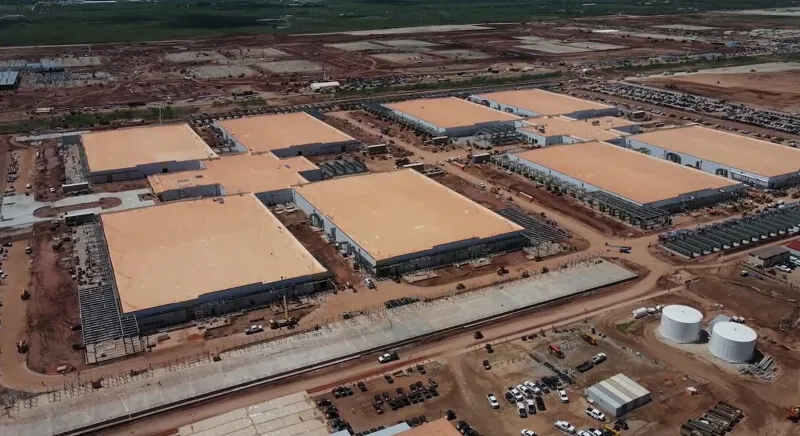
Top500 author Erich Strohmaier and Eth Zürich's Torsten Hoefler used this week's Supercomputing stage to concede that the ranking no longer captures the world's largest machines, as SpaceXAI's Colossus, Meta's Promethius and OpenAI's Stargate stay off the list entirely. For executives sizing AI compute, the public scoreboard now measures capability rather than capacity, and a replacement benchmark could take years to build.
China's Lineshine supercomputer sits at the top of the Top500, the bi-annual ranking of the world's most powerful publicly known machines, with 2.2 exaFLOPS of double precision compute on the High-Performance Linpack (HPL) benchmark. It is also, by the admission of the people who run the list, nowhere near the biggest compute cluster on Earth. That title belongs to machines that have never appeared on the ranking at all: SpaceXAI's Colossus, Meta's Promethius and OpenAI's Stargate, each packing hundreds of thousands of GPUs and dwarfing everything the Top500 currently tracks.
The reason is not secrecy. It is indifference. "These [companies] are not interested in submitting to the Top500," Eth Zürich's Torsten Hoefler said during his Supercomputing address this week. That one sentence is a problem for a list that has spent three decades as the industry's scoreboard, and the Top500's own authors are now openly debating whether it still measures the right thing. "What's really needed for tracking that more appropriately is not just a different benchmark but also different methodology," Top500 author Erich Strohmaier said.
For a long time, Strohmaier explains, compute capability and compute capacity moved roughly in lockstep. What changed in the last few years with AI is that "capacity really pulled ahead of capability in terms of market size," he said. "We were and we still are very focused on capability." Capability, in Top500 terms, means the ability to run one piece of code across an entire cluster. "Our prime rule for benchmarking is, you have to benchmark your whole system with one code and you cannot just add two parts up to make up a number," Strohmaier explained.
That rule is precisely what disqualifies the AI mega-clusters. "All those systems are capacity systems," Strohmaier said. They are not built to run one giant simulation. They are architected to run many, many smaller or medium-sized code instantiations at once, spanning training, fine-tuning, reinforcement learning and, increasingly, inference. Expecting SpaceXAI to run HPL across a cluster like Colossus would not be reasonable, Strohmaier concedes. The machine was never designed for that job, and its owners have no incentive to pretend otherwise.
So the fix is not to shame hyperscalers into submitting. It is to build a benchmark that measures what these arrays actually do, while making it hard for operators to game the number. That is a harder problem than it sounds. "If we do anything to the benchmark itself, we're going to lose the historic trends, which is extremely valuable," Hoefler said. The Top500's real asset is continuity: entries from the early 1990s and entries from today can be compared on the same axis. Break the benchmark and you break the only long-run dataset the field has.
One avenue is to allow lower precisions. HPL-MxP already does this to some extent, and it maps onto a genuine shift in silicon: accelerators are increasingly trading FP64 performance for lower-accuracy floating-point data types like FP8 and FP4, because that is what AI training and inference reward. Another avenue is a separate AI benchmark, which would apply immediately to the big clusters. The catch is timing. "The AI workloads change every two weeks, so if you pick something today, it's going to be irrelevant in at most a year, and these benchmarks need to live for multiple decades," Hoefler said.
For anyone buying, financing or regulating compute, the gap has real consequences. The Top500 has historically functioned as shorthand for national and corporate compute standing, a reference point that procurement teams, vendors and policymakers have leaned on for decades. If the largest clusters stay off it, the public picture of global AI compute quietly becomes incomplete, and the machines doing the most commercially important work become the least visible. That is a strange outcome for an industry that treats transparency about scale as a competitive signal.
The strategic read for executives is straightforward. A Top500 position now tells you about a system's ability to run one code at extreme scale, not about the throughput a hyperscaler can throw at training, fine-tuning or inference. Those are different questions, and the second one is where the money is. Until a new methodology lands, the honest answer to "who has the biggest computer" is that nobody can say with confidence, and the people who built the ranking are the first to admit it.
This story's Key Insights and Take-aways are locked.
Create a free account to unlock Executive Actions for one credit.
Register to UnlockAlways free for Executives Club members. Join the Club
More in Technology

Anthropic mathematician claims Claude helped crack the Riemann hypothesis
If the proof holds, AI has toppled math's most famous open problem; if it does not, it is a case study in announcing breakthroughs before anyone verifies them.

AI's $4 Trillion Wipeout Erases Nasdaq's Gains for the Year
A brutal week took roughly $4 trillion off the AI sector and left the Nasdaq flat for the year, and the damage ran the full length of the supply chain.

Anthropic mathematician says AI proved the Riemann hypothesis. Verification will take time.
A single unverified claim from inside Anthropic now sits against more than 160 years of open mathematics, and the gap between asserting a proof and surviving peer review is the entire story.