
6.4M outage reports in a week: Downdetector says coincidence, Warner blames AI patch rush
Downdetector's research chief calls the Microsoft, FAA, Chase and Apple pileup 'a bit of a coincidence' while Sen. Mark Warner points to a patch rush, and the tracker's own data says big outages are getting rarer.
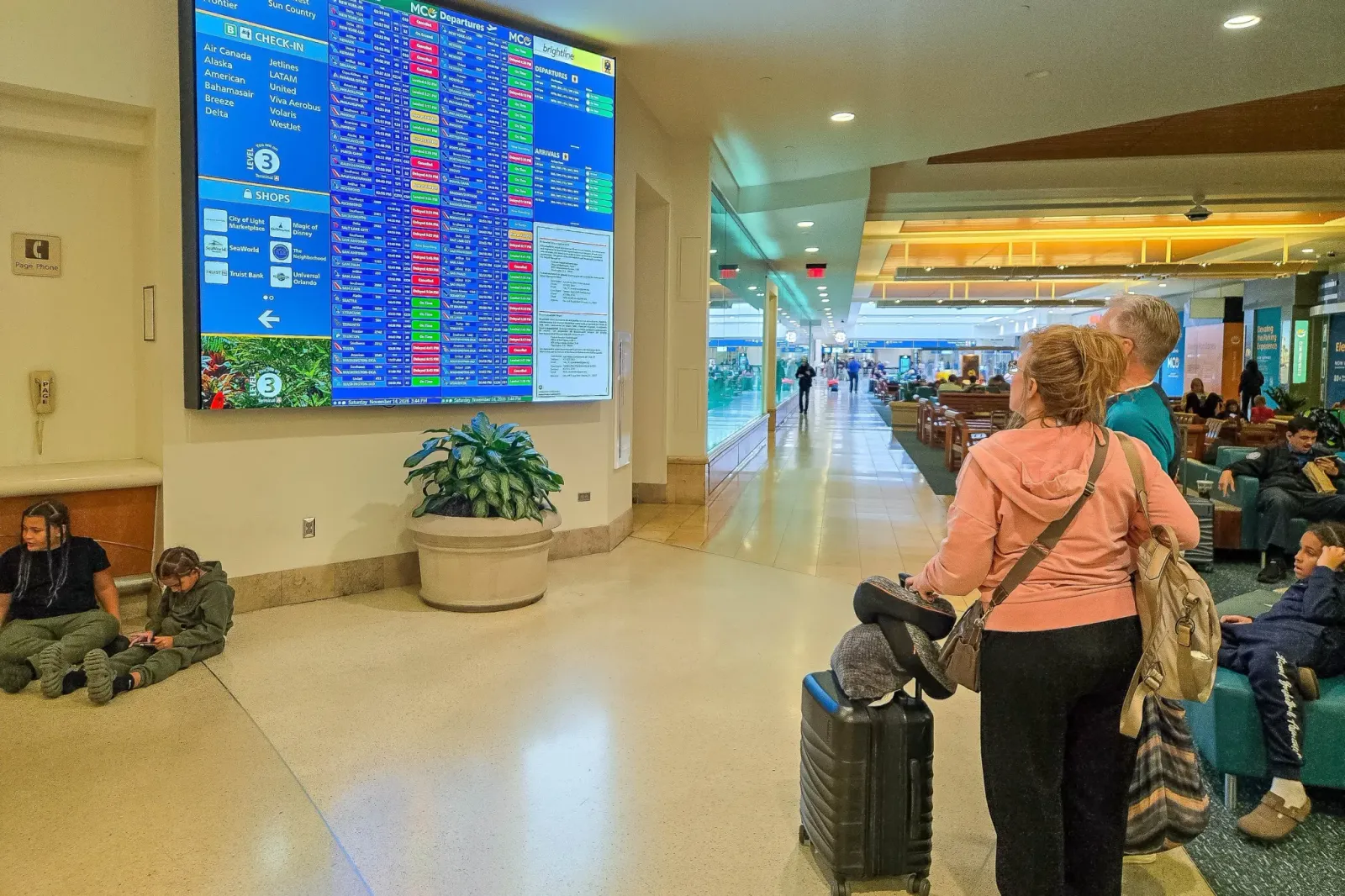
Downdetector logged 6.4 million U.S. outage reports in the seven days ending Tuesday as Microsoft, the FAA, Chase and Apple all failed, and Ookla Research director Mark Giles calls the timing mostly coincidence while Sen. Mark Warner blames a rush to patch AI-found software flaws. For executives, the split matters: the closest thing to a public outage scoreboard cannot see root causes, so boards must decide whether to fund resilience and patch discipline before the next cluster carries their name.
Downdetector logged 6.4 million U.S. outage reports in the seven days ending Tuesday, four times a typical week, and 14 million worldwide, three times its usual level. That is the number behind a week in which Microsoft's email, the FAA, Chase and Apple all broke. Mark Giles, director of Ookla Research, which owns Downdetector, is not convinced they are connected. "You always wait for a bus, and then they come all at once," he told Fortune. "I think this looks like a bit of a coincidence. There's nothing really linking the outages."
The sequence was brutal. Microsoft's Outlook and Teams went down on Nov. 12 and 13, taking out email in more than 70 countries for almost 24 hours and drawing nearly 3.9 million U.S. reports and 7.8 million worldwide, Downdetector's largest outage since Amazon Web Services went down in October 2025. On Friday, the FAA grounded every flight in the country in response to what it called unstable legacy equipment; its initial investigation points to two sites, including a radio site in El Dorado, Ark., where its network contractor, L3Harris, had been installing a new router. On Monday, a software bug at Chase meant Chase and Wells Fargo customers could not get to their money. Chase drew about 90,000 U.S. reports, roughly 165 times normal and more than twice any other U.S. bank outage this year. On Tuesday, Apple Pay, iCloud, the App Store and Apple Support drew about 81,000 reports from what Apple said was a faulty internal update. Downdetector flagged 67 U.S. services that day, versus the 16 it would get on a typical day, the broadest results of any day so far this year.
Washington has a different theory. Sen. Mark Warner, vice chair of the Senate Intelligence Committee, told the Financial Times there was no sign of a cyberattack and that the outages most likely came from organizations racing to patch software. Part of it is new technology: AI tools now find flaws faster than companies can safely fix them, and Warner said the pressure to fix them right away is straining systems that were never designed for that speed. On Wednesday, Microsoft CEO Satya Nadella said at the New York Times' DealBook Summit that the company had already pushed at least three critical patches that day, Citigroup CEO Jane Fraser, whose bank reported no outages, said the volume of patches moving through the world at once is "five-, 10-fold what we've ever seen before." Still, neither Microsoft nor JPMorgan Chase tied their respective outages to patching AI-found flaws.
Downdetector's own data complicates the panic. Once the pandemic years are set aside, outages in its U.S. and U.K. data have fallen since about 2022. Giles said the site averages one large outage, which it defines as more than 50,000 U.S. reports for one company in a day, a little more than once a week. In the past year, only Christmas week and one week in June had more than this week's four. Over the past 30 days the count is typical, because October was quiet, and Downdetector calls this week a cluster so far. "This is a big blip, but it's kind of on par for the course for what we're seeing in terms of those longer-term trends," he said. "Most of the time they're fairly self-contained and remedied quite quickly. It's the ones where you can't withdraw money or you can't access your emails that really get the headlines."
There is a measurement problem baked into every one of those numbers. Downdetector counts user complaints, not confirmed failures, and it can overstate an outage. Monday's bank problems were a Chase outage, Giles said, but customers at other banks whose payments to Chase users failed reported their own banks as down. "We tend to overrepresent in some cases the actual outage," he said. Outage news also brings more people to the site, which pushes up reports for other services. And because companies disclose their own outages one at a time, if at all, and no U.S. agency publishes a running count, Downdetector remains the closest thing to a public scoreboard. "We're more connected than ever," Giles said. "There's these foundational points of the internet, which when something happens there, then the whole internet screams at once."
Giles described a cycle he has seen in banking over the past three to four years. A company rolls out something new and spends less on making its systems resilient, and outages creep up. Then customers complain, the company invests, and outages fall. "I'm not saying that's the case for Chase here," he said. "A lot of these are just one-offs, maybe software problems or updates."
The patch rush is where the two explanations collide. Giles said it "has to be an increasing concern for security and IT teams," and it "speaks to a concern that hackers with swarms of AI agents are better able to find and exploit these." None of that shows up on Downdetector's charts, because root cause is "not something that Downdetector can pick up on." The site currently flags a service only when its reports stand out from its own normal level. It plans to build AI tools over the next year to tie related spikes together and show which company actually failed.
For executives, the strategic read is uncomfortable but clear. A week like this is a stress test of disclosure, not just uptime. If your outage lands in a cluster, the public narrative will be written by complaint volume, not by your incident report, and the gap between the two can be wide. That argues for three things: instrumenting your own resilience metrics so you are not relying on a third-party complaint tracker for your board's view; treating patch velocity as a risk tradeoff rather than a pure compliance checkbox, since speed itself can destabilize legacy systems; and pre-building the disclosure playbook, because the difference between a Chase-scale headline and a footnote is often how fast and how plainly you explain what broke. The next cluster is a matter of when, not if.
This story's Key Insights and Take-aways are locked.
Create a free account to unlock Executive Actions for one credit.
Register to UnlockAlways free for Executives Club members. Join the Club
More in Business

S&P 500 Enters Correction, Down 10% From Its High on AI Worries
The index's slide past the 10 percent line is a symbolic verdict on investor mood, and the AI trade that powered the rally is now the thing testing it.

Dow and S&P 500 enter correction as Nasdaq logs worst week since 2020
All 11 S&P 500 sectors fell more than 1% in the same week for the first time since April 2025, a breadth signal that matters more than any single index level.

Chip stocks lose $2.3 trillion in a week, worst run in 25 years
A $2.3 trillion weekly wipeout in semiconductors is forcing every board with an AI story to ask whether it owns a thesis or just a crowded trade.