
A Justice Didn't Recuse. Reporters Lost Their Shield in 1972.
An FBI campaign against the Black Panthers and one justice's questionable failure to step aside turned a routine grand jury fight into the ruling that still decides whether journalists can protect their sources.
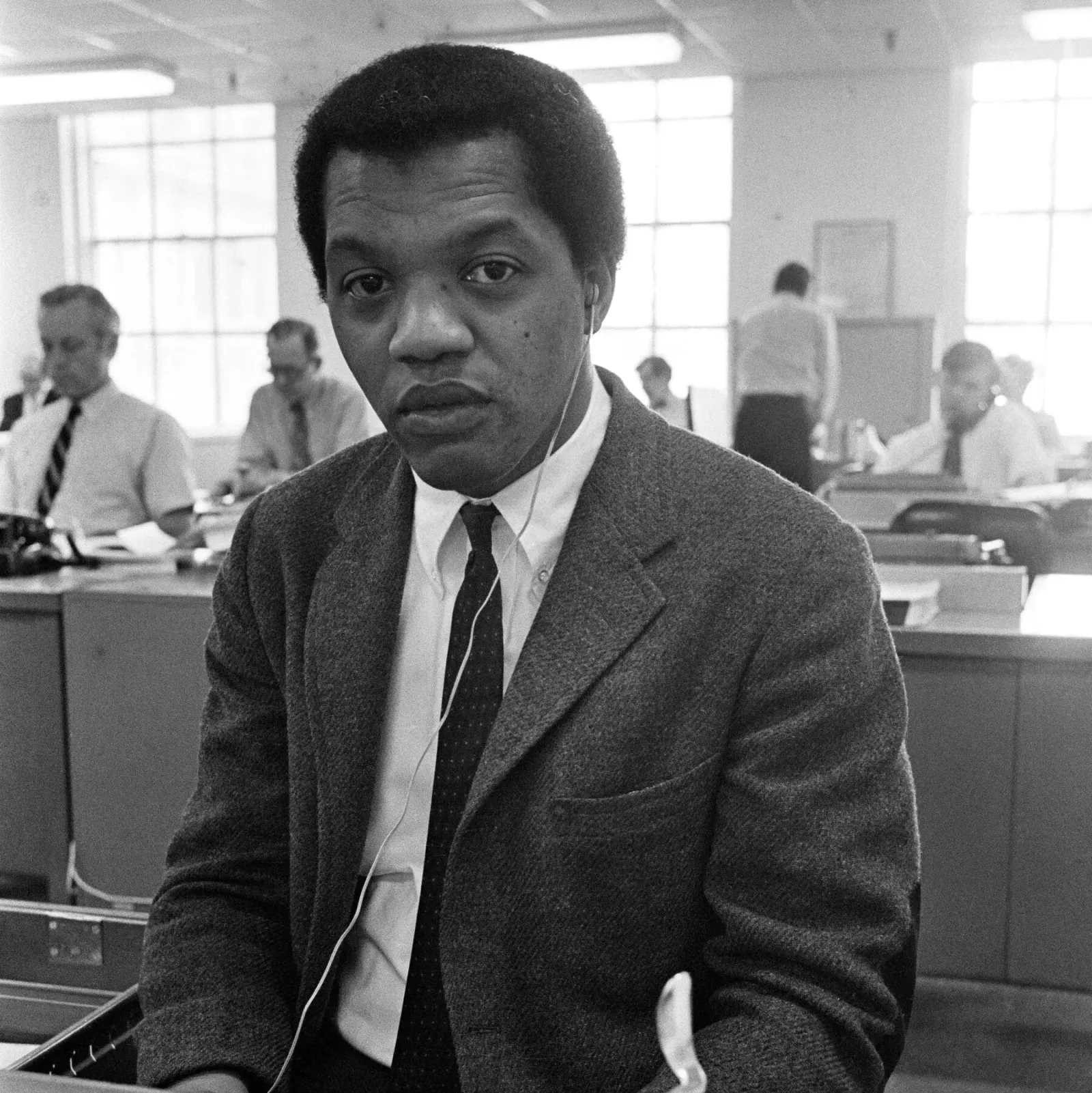
A 1972 Supreme Court case on press freedom, shaped by an FBI campaign against the Black Panthers and a justice's questionable failure to recuse himself, dealt a lasting blow to protections for confidential sources. For executives, boards, and communications teams, that ruling is why a promise of confidentiality to a whistleblower or leaker carries real legal risk today, and why the absence of a federal shield law still shapes how companies handle internal leaks and investigations.
In 1972, the Supreme Court handed down a press-freedom ruling that journalists have been fighting ever since. The case began as a grand jury fight over whether a reporter could be forced to reveal confidential sources. The Court's answer was, in effect, no: the First Amendment does not give journalists a blanket privilege to refuse to testify about who told them what. Two forces drove that result, and neither had much to do with the law of evidence. One was an FBI campaign against the Black Panthers. The other was a justice's questionable failure to recuse himself.
Start with the Panthers. Through the late 1960s and early 1970s, the bureau ran an aggressive, sustained campaign against the Black Panthers, treating the group as a domestic security threat and using surveillance, informants, and legal pressure to disrupt it. Journalists who covered the Panthers, and who had built relationships with members and sources inside the movement, became useful to investigators for a simple reason: reporters knew things the government wanted to know, and they had promised not to say. Subpoenaing a reporter was cheaper and faster than infiltrating a chapter. The government did not have to prove the reporter had done anything wrong. It only had to show he might know something.
Then there is the recusal question, the part of the story that stayed buried. A justice who heard the case did not step aside, despite a conflict that, in hindsight, looks disqualifying. Recusal is not a technicality. On a closely divided Court, one justice's participation can decide the outcome, and the authority of a ruling rests on the public's belief that the people deciding it had no stake in the result. When that belief is undermined, a precedent does not simply become controversial. It becomes vulnerable to the argument that it was never legitimately decided.
The ruling itself was narrow on its face and enormous in practice. The Court declined to recognize a First Amendment privilege that would let journalists refuse to answer grand jury questions, reasoning that the public's interest in every citizen's testimony outweighed the press's interest in protecting sources. A concurring opinion left the door slightly ajar, suggesting courts could still weigh a reporter's needs case by case. That ambiguity is why the fight never ended. Every subpoena since has been argued in the gap between what the majority said and what the concurrence implied, and the gap has never been closed.
The aftermath is the part that touches anyone who has ever read a story built on an anonymous source. Because the Supreme Court declined to create a federal shield, the protection migrated to the states, where nearly every legislature has passed some form of shield law. But state laws stop at state lines, and they do not bind federal prosecutors or federal grand juries. Congress has introduced a federal shield bill repeatedly; it has never become law. In 2005, a reporter for The New York Times spent 85 days in jail for refusing to name a source in a leak investigation. The 1972 precedent is the reason that was legally possible.
For executives, the practical consequence is that confidentiality is a promise with a legal ceiling. A board investigating an internal leak, a company facing a federal probe, or a communications team cultivating a whistleblower all operate in a world where a journalist's inbox is not a vault. Federal investigators can subpoena a reporter's notes, call records, and testimony. Companies that assume a leak will stay contained because it went to a journalist are assuming a protection that does not exist at the federal level. That cuts both ways. It makes aggressive leak hunts more tempting, and it raises the reputational cost of being seen to chase journalists.
Why does a half-century-old case matter now? Because the secret history is not just color. If the outcome was shaped by a domestic surveillance campaign and a justice who should have stepped aside, then the precedent rests on a foundation that was never as solid as it looked. That matters because the ruling still governs every federal subpoena aimed at a journalist, and because the tools for unmasking sources, from digital records to subpoenaed metadata, are far more powerful than anything the FBI had in 1972. The decision has survived for five decades. Its origins are only now getting the scrutiny they never received.
This story's Key Insights and Take-aways are locked.
Create a free account to unlock Executive Actions for one credit.
Register to UnlockAlways free for Executives Club members. Join the Club
More in Politics

Fifth Circuit Kills Pregnant Workers' Law Over Pandemic Proxy Votes
A procedural ruling, not a policy one, has blocked a federal pregnancy-accommodation law and put every pandemic-era statute in the crosshairs ahead of an expected Supreme Court appeal.

Measles kills a Virginia child under 5, the state's first death of 2026
Virginia's health department confirmed the death but withheld the child's vaccination status, leaving schools, clinics and employers to plan around the one detail that would explain the most.

Former Brazilian President Bolsonaro Hospitalized with Intestinal Obstruction
The health status of the former far-right leader raises immediate questions about political stability and the trajectory of Brazil's conservative movement.