
AI and human rivals both claim a Riemann hypothesis proof. Neither is verified.
Two rival claims to have cracked math's most iconic open problem, one machine-written and one human, now face the only test that counts: rigorous checking that scholars say has not happened yet.
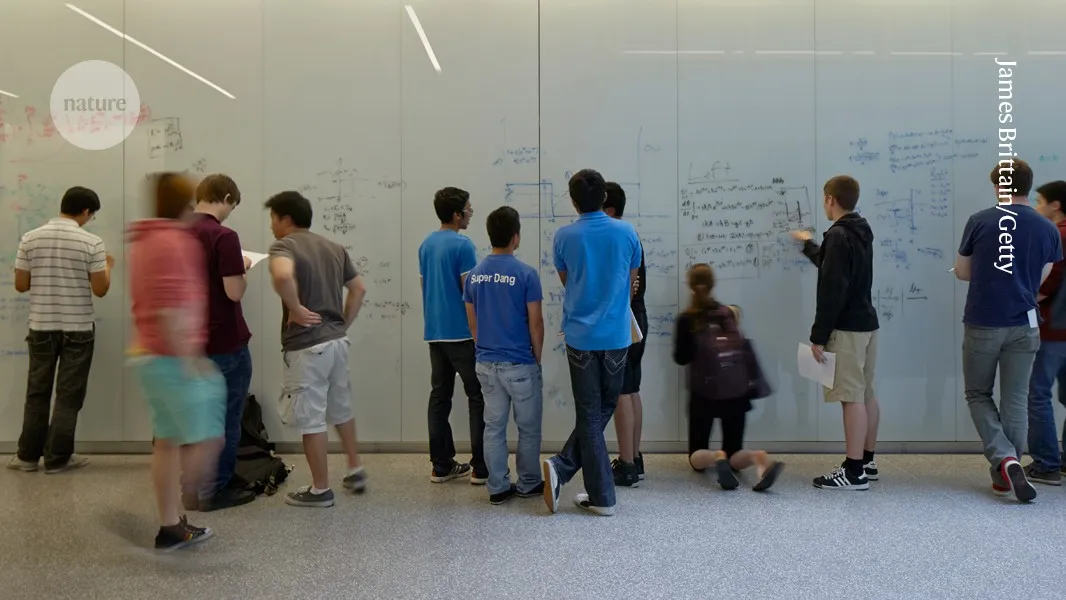
Rival claimants, one working with AI and one writing as a human, say they have derived a proof of the Riemann hypothesis, the landmark problem in mathematics, and scholars quoted by Nature say both will need rigorous checking before either is treated as real. For decision-makers, the episode is a live preview of the verification bottleneck that will decide how fast machine-generated research can be trusted in any field.
Two rival claims to have proved the Riemann hypothesis, one produced with artificial intelligence and one written by a human, have left mathematicians astounded, according to Nature, which published the news on 20 November 2026. The reaction from scholars is not triumph but caution: both claims, the report says, will need rigorous checking before anyone treats either as a proof of anything. That is the whole story in one line. Mathematics has a new kind of claimant, and the field's oldest bottleneck, verification, is now the only thing standing between a headline and a theorem.
Start with what is actually at stake. The Riemann hypothesis is a statement about the zeta function, a device that encodes how prime numbers are spread along the number line. Formulated by Bernhard Riemann in 1859, it says, in plain English, that the zeros of that function which carry real information all sit on a single vertical line. If true, it pins down how wildly primes can clump or thin out. Primes are the atoms of arithmetic, and almost everything in number theory is built on guesses about where they land. That is why the problem is called iconic rather than merely hard.
For context on the scale: the Riemann hypothesis is one of the seven Millennium Prize Problems set out by the Clay Mathematics Institute in 2000, each carrying a $1 million award. Only one of the seven has ever been resolved, the Poincaré conjecture, proved by Grigori Perelman, who declined the prize. The Riemann hypothesis has stood for more than a century and a half. It has attracted amateur and professional attempts alike, and historically, announcements of a proof have tended to collapse under expert reading rather than survive it. That history is why the word astounded in the Nature headline is doing so much work.
What is genuinely new is the pairing. A machine-written proof and a human-written proof arriving as rivals is a category the field has not had to referee before. Generating a plausible proof is now cheap. Checking one is not. A proof is not a result until other mathematicians can follow every step, and the machinery for that, peer review, expert reading, and increasingly formal verification in proof assistants such as Lean, is slow, human, and expensive. The gap between the cost of producing a candidate proof and the cost of confirming it is the defining asymmetry of AI-era research, and it is wider in mathematics than almost anywhere else, because there is no experiment to run and no dataset to re-check.
So what does rigorous checking actually mean here? It means referees and specialists working through the argument line by line, hunting for the step that quietly assumes what it is trying to prove, or the lemma that holds in the easy case and fails in the hard one. It means months, sometimes years, and it means the claimants' reputations are exposed the entire time. When two rival claims land at once, the process gets messier: priority becomes contested, institutions get pulled in, and the temptation to declare a winner early rises. Scholars quoted in the Nature report are explicit that the checking has to happen first. Until it does, both claims sit in the same category: unverified.
The practical stakes reach beyond pure mathematics. The distribution of primes is not a curiosity; it underpins the assumptions behind primality testing and key generation, and it shapes how cryptographers reason about what is hard. A proof of the Riemann hypothesis would not, by itself, break modern encryption, since that would require factoring large numbers, a different problem. But it would rewrite the map that security researchers navigate, and it would tell them which of their assumptions were load-bearing all along.
The bigger lesson is about trust infrastructure. Every industry now has a version of this problem: a model produces something that looks like an answer, and the humans who are supposed to check it are the scarce resource. Mathematics is simply the cleanest test case, because a proof is either valid or it is not, and no amount of confident prose changes that. Whoever builds the fastest credible verification layer, in math, in code, in law, in medicine, holds the leverage. The claimants here may or may not have done it. The checkers decide.
For leaders watching, the takeaway is uncomfortable and useful. The cost of generating claims has collapsed; the cost of adjudicating them has not. Any organization that lets AI-generated output into a decision pipeline without a matching investment in verification is borrowing against its own credibility. The Riemann hypothesis story is a preview: two claims, one machine, one human, and a field waiting on the slowest step in the chain. That step is where the value is.
This story's Key Insights and Take-aways are locked.
Create a free account to unlock Executive Actions for one credit.
Register to UnlockAlways free for Executives Club members. Join the Club
More in Science
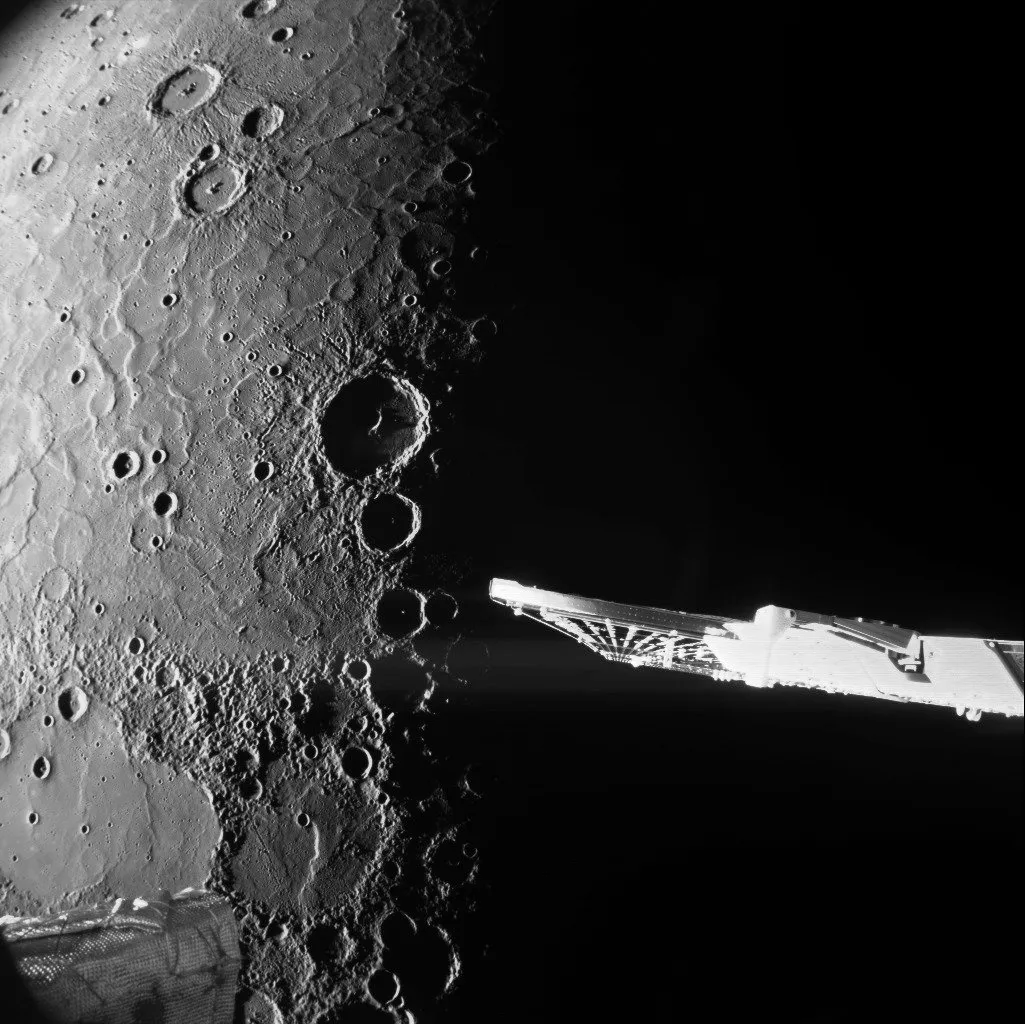
Europe and Japan park $2B twin probes at Mercury after eight years
BepiColombo's arrival ends an eight-year, $2 billion cruise and hands Europe and Japan a multi-year data edge on the solar system's least-studied planet.
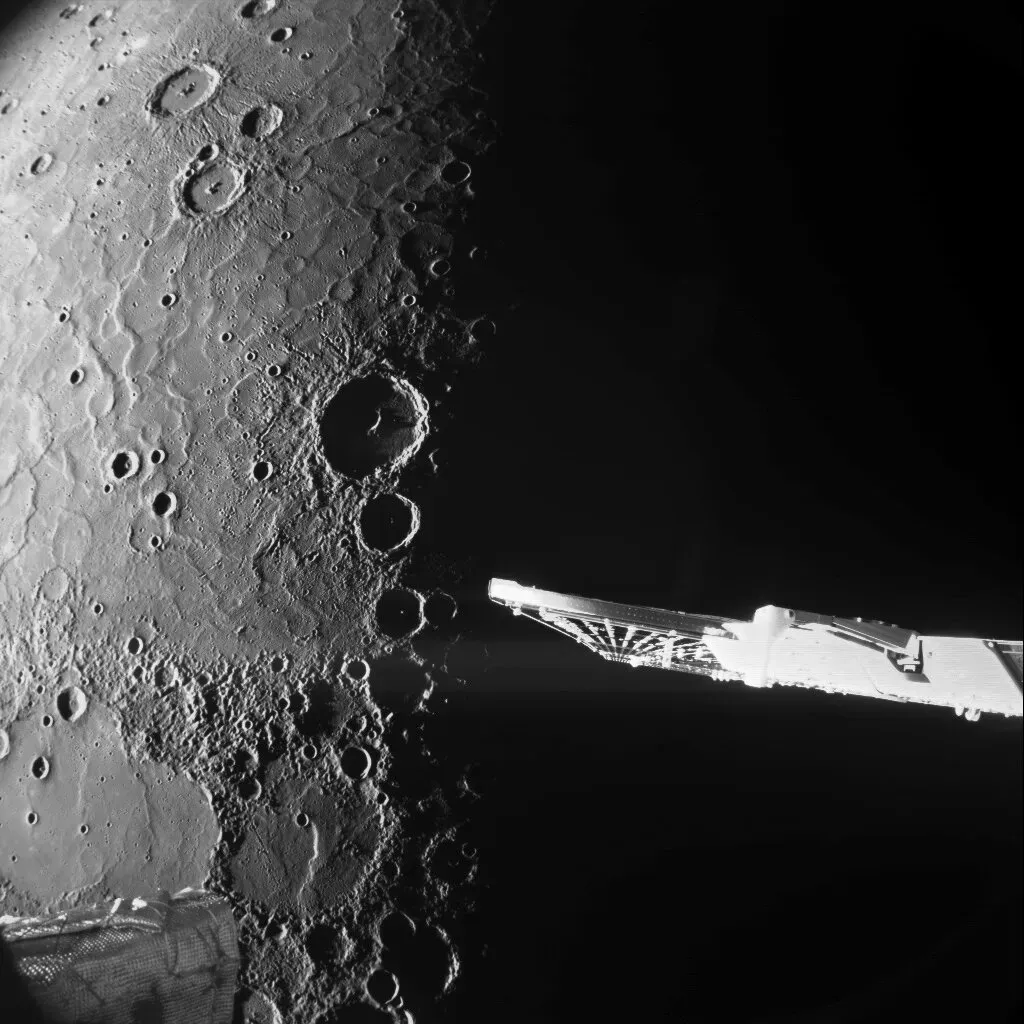
BepiColombo becomes only the second spacecraft ever to orbit Mercury
The international mission reaches the planet closest to the sun, giving scientists a rare second set of eyes and giving operators a case study in long-horizon R&D.
COP31 stalls as countries weigh forcing a Saudi showdown on fossil fuels
Two weeks of UN climate talks in Turkey have overrun without a deal, and the decision now facing governments will shape energy costs, transition timelines and capital allocation for years.