
AI flagged a Doritos bag as a gun. 99% of alerts were false.
Four Black Baltimore County students are suing the district and its police after a chip bag triggered a gun alert, and the false-positive rate behind it is a warning for every school buying detection software.
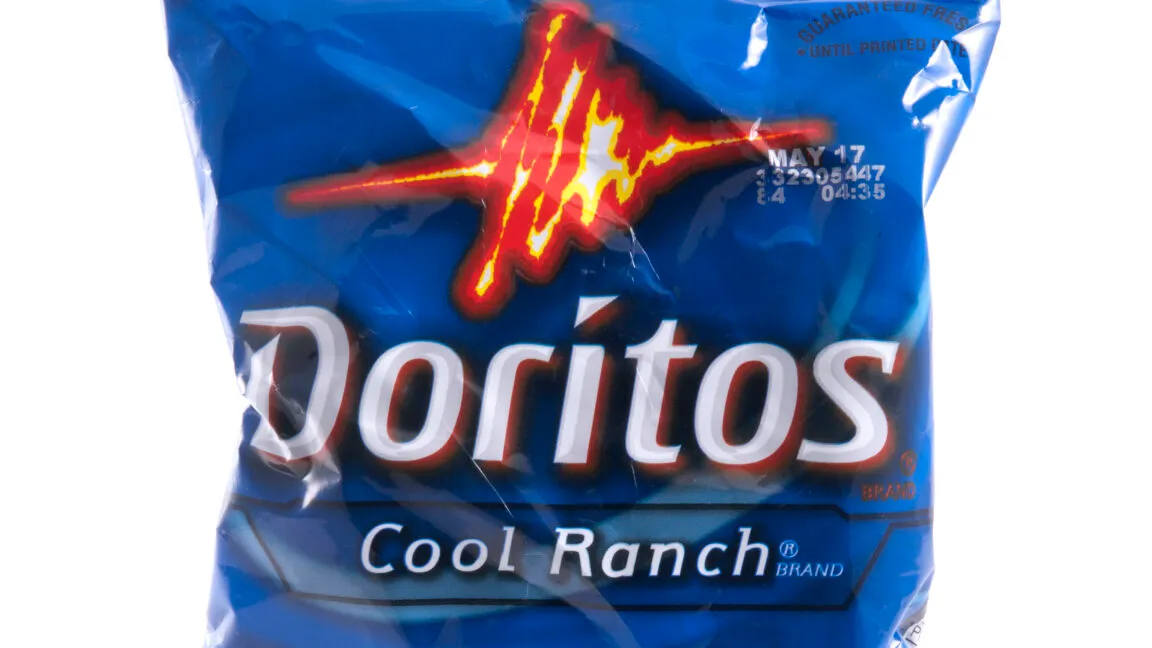
Four Black high school students in Baltimore County are suing their school system and the Baltimore County Police Department after an AI gun detection system flagged a bag of Cool Ranch Doritos as a gunman in October 2025, even though district reviewers cancelled the false alert within two minutes and a campus clash with police followed anyway. For superintendents, boards, and CIOs running or buying AI detection, the case puts a number on the record that vendors rarely volunteer: over 99% of that system's gun alerts were false positives.
The alert went out in October 2025, while four Black high school students were sharing a bag of Cool Ranch Doritos after football practice, waiting for their rides home. The district's AI gun detection system looked at the same scene and saw a gunman. Within two minutes, Baltimore County Public Schools officials reviewing the security camera footage linked to the alert worked out what they were actually looking at, recognized the chip bag, and cancelled it. The cancellation went out to the other school officials on the chain and to the Baltimore County Police Department with a clear message: no response was needed.
That should have been the end of it. According to Ars Technica, it wasn't. The students ended up in what the outlet describes as a traumatizing campus clash with police, and they are now suing both the school system and the police. Their case rests on a statistic that ought to stop every district that has bought this technology mid-signature: more than 99% of the school system's AI gun alerts were false positives.
Context matters here, because AI gun detection is not a fringe purchase anymore. The technology typically works by layering machine-vision software on top of the cameras a school already owns. The model is trained to recognize the shape of a firearm in a frame and to fire an alert to staff, and often to local police, within seconds. The sales pitch is speed and stamina: a human watching a wall of feeds will miss things, and software never blinks. Districts across the United States have signed up in the years since a string of high-profile school shootings turned campus security into one of the few line items voters rarely argue about.
The trouble lives in the base rate. A system that is right 99% of the time sounds close to perfect until you run it against volume. A district that generates a large number of alerts will still produce false alarms regularly, and each one typically carries a price: officers dispatched, class time lost, students questioned. In this case the error rate runs the other way. Per the lawsuit, over 99% of the alerts were false positives, which means the system's normal operating state was being wrong. Detection software is cheap to sell and expensive to be wrong about, and the person who absorbs that cost is usually a teenager with a bag of chips.
The detail that should worry operators most is not the miss. It is that the humans got it right and the day still went wrong. Reviewers looked at the footage, identified the Doritos bag, and killed the alert inside two minutes. At the review layer, the system performed exactly as designed. Yet the sequence ended with police on campus and students traumatized enough to file suit. That points to a failure that is not only in the model but in the plumbing downstream of it: how a cancellation propagates, who sees it, how quickly it reaches officers already rolling, and what a responder does once a notification has hit their screen. The students are Black, a fact that will matter if the case turns on how a detection system performs across different faces, skin tones, and lighting conditions, and on whether anyone tested that before deployment.
For the people signing these contracts, the 99% figure is a procurement problem before it is a legal one. Vendors in this category are rarely required to publish false-positive rates, and districts rarely demand them. Boards approving safety technology budgets should be asking for what they would demand from any other vendor: audited accuracy data gathered on their own cameras, in their own hallways, with their own student population; contract terms tied to false alerts rather than to uptime; written rules on who gets notified, in what order, and how an all-clear travels back through the chain; and an explicit protocol for the minutes after an alert is cancelled, not just the seconds before it fires.
The stakes extend well past one district. School safety technology is a growing market with a sympathetic buyer, thin public scrutiny, and no industry standard for proving the product works. A lawsuit that puts a false-positive rate into the public record can accomplish what a dozen internal audits could not: force disclosure. Superintendents, chief information officers, and boards running similar systems should assume their own numbers are one discovery request away, and that their own October is one bad frame away. The cheapest thing to fix this quarter is the notification chain. The most expensive thing to keep ignoring is the assumption that a false alert is harmless because somebody, eventually, cancels it.
This story's Key Insights and Take-aways are locked.
Create a free account to unlock Executive Actions for one credit.
Register to UnlockAlways free for Executives Club members. Join the Club
More in Technology

Anthropic mathematician claims Claude helped crack the Riemann hypothesis
If the proof holds, AI has toppled math's most famous open problem; if it does not, it is a case study in announcing breakthroughs before anyone verifies them.

AI's $4 Trillion Wipeout Erases Nasdaq's Gains for the Year
A brutal week took roughly $4 trillion off the AI sector and left the Nasdaq flat for the year, and the damage ran the full length of the supply chain.

Anthropic mathematician says AI proved the Riemann hypothesis. Verification will take time.
A single unverified claim from inside Anthropic now sits against more than 160 years of open mathematics, and the gap between asserting a proof and surviving peer review is the entire story.