
AI likely played a role in America's outage wave. Not the one you fear.
Foreign Policy reports that experts see AI behind the recent U.S. outage wave, and the sci-fi version of that story is the one to discard, which moves the fix from firewalls to blast radius.
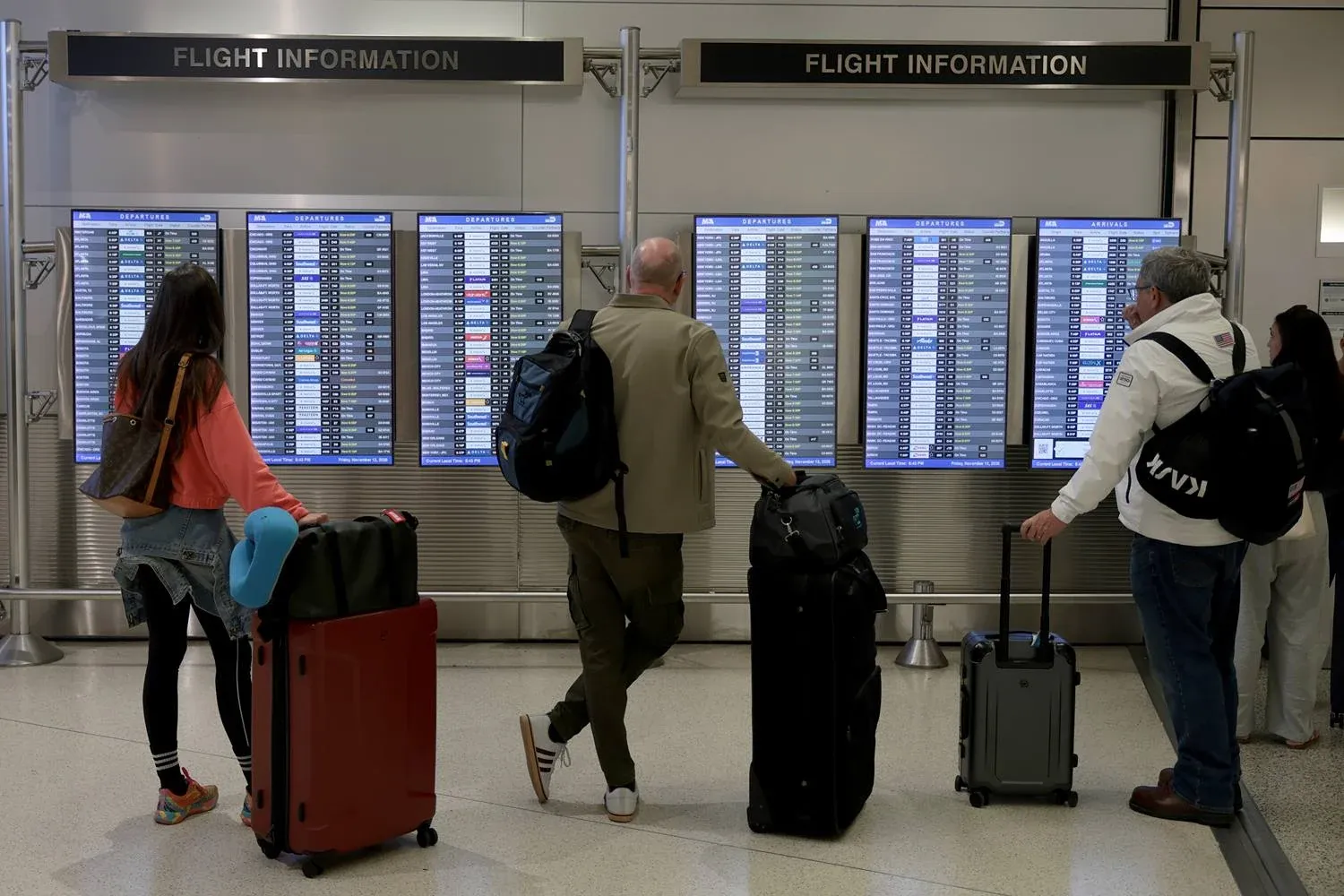
Foreign Policy reports that experts believe AI likely played a role in the recent wave of U.S. tech outages, but not in the form most people assume, which pushes the explanation away from a rogue model and toward the mundane plumbing of modern software. For executives and boards, that reframing turns outages from a pure security problem into a resilience and vendor-dependency problem, where the budget conversation is very different.
Foreign Policy's read on the wave of U.S. tech outages lands as a sentence that refuses to let you relax: experts say AI likely played a role, but not in the way you might think. So clear the first image that probably arrived in your head. The version of this story that travels fastest is the cinematic one, an artificial intelligence that decides on its own to knock the systems we depend on offline. That is not what experts are pointing at, and building your defenses against it would be building them against the wrong thing.
The phrase 'not the way you might think' is doing real work. It signals that the role AI plays here is not the role of an actor with intent, a saboteur with a target list. The temptation, when something as large as a national wave of outages happens, is to reach for an agent, something we can blame, name, and hunt. The reporting instead pushes you toward the unglamorous side of the ledger: the tooling, the automation, and the layers of software that sit between a user and a service and that almost nobody outside engineering can draw from memory. That reframing matters, because it changes what a fix even looks like.
For context on how a wave becomes a wave: modern digital infrastructure is less a chain than a lattice. A single vendor's flawed update can reach millions of machines in minutes. A cloud region, a domain name system provider, an identity service, or a content delivery network can each become a single point of failure for thousands of companies that have nothing to do with each other. Companies have spent a decade consolidating onto a handful of providers because it is cheaper, faster, and simpler to run. The same decision quietly removes the blast walls.
Historically, most outages are not attacks. They are changes: a deploy, a configuration push, an expiring certificate, a permission tightened one notch too far. Engineers have known this for years, which is why mature operations teams obsess over rollback speed and change review far more than they obsess over movie-plot adversaries. That is the lens worth holding when the question turns to AI. The reporting leaves the direction of causation open: AI may be an accelerant inside the systems that fail, or simply the newest layer where a failure becomes visible. Either way, the thing that breaks is still the plumbing.
If AI compresses the time between an idea and a production deploy, it compresses the time in which an error travels. More code, shipped faster, with more generated configuration and more automated judgment about what counts as normal, means more surface area and less human intuition about what changed. It can also flood on-call teams with signals at exactly the moment they need fewer of them. None of that requires a machine with a grudge. It only requires a machine with a lot of permission.
Second-order effects are where this gets expensive for anyone holding a budget. Vendor concentration that made the last five years cheap now shows up as correlated risk: if your cloud, your identity provider, and your observability tool all have a bad hour, your own status page is the only thing left standing. Insurers, enterprise customers, and boards are all asking harder questions about that overlap. Meanwhile the talent that prevents the problem, the unglamorous reliability engineering that keeps systems boring, is exactly the work that gets trimmed when the pressure is on to ship features.
On the governance side, U.S. public companies have lived under tighter incident disclosure expectations since 2023, when securities regulators adopted rules requiring most material cybersecurity incidents to be reported on a short clock of four business days. Outages that are not attacks do not always fit that definition neatly, which is its own quiet problem: the incident the market hears about and the incident that actually hurt customers can be two different events. Add insurance renewals, contracts with uptime commitments, and procurement questionnaires that now probe for AI in the vendor stack, and resilience stops being a purely technical topic.
That is the stake for anyone running something. A wave of outages is an argument about where risk actually lives, and the answer this framing implies is: in dependencies you inherited and rarely re-examine. Ask which vendor failure would take you down for a day, whether your rollback plan has been tested this quarter, and whether the AI now embedded in your tooling sits inside the perimeter you think you have. The boring answer is usually the correct one, and it is almost always cheaper than the dramatic one.
This story's Key Insights and Take-aways are locked.
Create a free account to unlock Executive Actions for one credit.
Register to UnlockAlways free for Executives Club members. Join the Club
More in Politics
Fifth Circuit Kills Pregnant Workers' Law Over Pandemic Proxy Votes
A procedural ruling, not a policy one, has blocked a federal pregnancy-accommodation law and put every pandemic-era statute in the crosshairs ahead of an expected Supreme Court appeal.

Measles kills a Virginia child under 5, the state's first death of 2026
Virginia's health department confirmed the death but withheld the child's vaccination status, leaving schools, clinics and employers to plan around the one detail that would explain the most.

Former Brazilian President Bolsonaro Hospitalized with Intestinal Obstruction
The health status of the former far-right leader raises immediate questions about political stability and the trajectory of Brazil's conservative movement.