
AI saw a gun in a Doritos bag. Four students now sue Omnilert.
A year after armed Baltimore county police handcuffed football players waiting for rides home, the suit names the AI vendor, the department, the board, the principal and the officers.
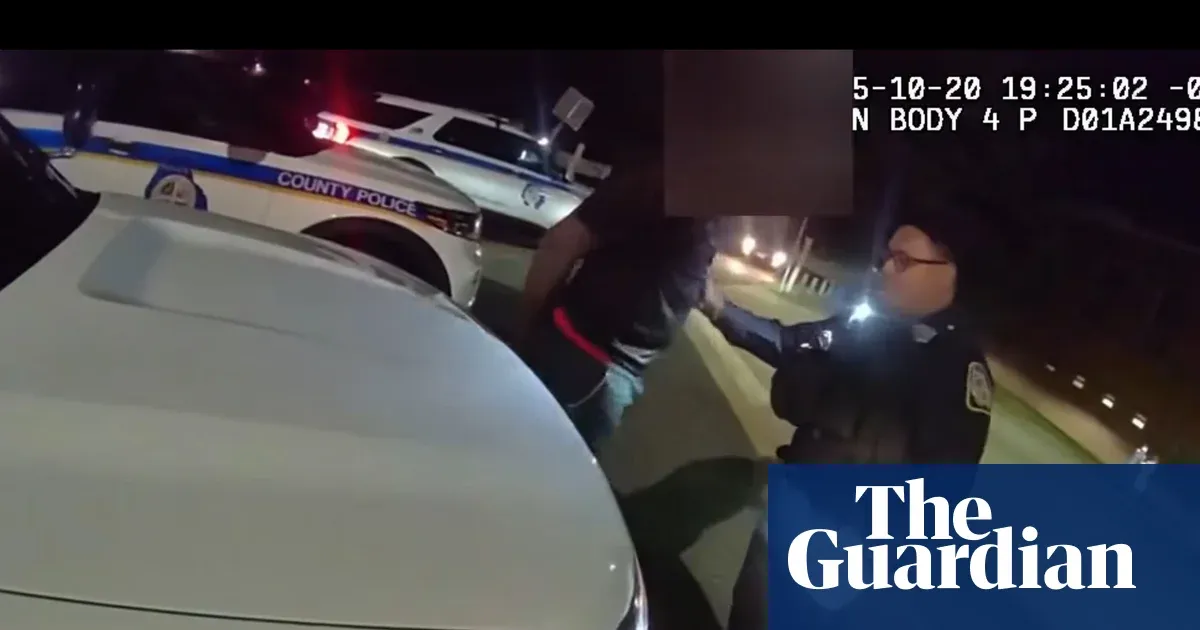
Four current and former Maryland high school students are suing Omnilert, the AI gun-detection vendor whose alert mistook a bag of Doritos for a firearm, along with Baltimore county police, the board of education, individual officers and the school principal. The case puts an algorithm's false-positive rate into legal discovery, a warning shot for every company selling automated threat detection into schools and public agencies.
Four current and former students at a Maryland high school have sued Omnilert, the company behind the AI gun-detection system that flagged a bag of Doritos as a gun, triggering an armed police response that ended with the students handcuffed and detained. The lawsuit lands a year after the incident and names a long chain of defendants: Omnilert, Baltimore county police, the board of education, individual officers and the school principal. The plaintiffs allege unlawful detention and search, blaming a combination of technological and human errors. They are football players who say they were waiting for rides home when officers moved in. According to the reporting, the encounter left them "fearing for their lives," and they describe themselves as "traumatized."
The detail that should stop any operator cold is the object at the center of it: a snack bag. AI gun-detection systems in the Omnilert category typically work by running computer vision over camera feeds a school or venue already owns, looking for the visual signature of a firearm and pushing an alert to a monitoring desk or directly to police. The pitch is speed, seconds shaved off the gap between a threat appearing and a response arriving. The trade-off is baked in. Any classifier tuned to catch weapons in crowded, low-resolution footage will produce false positives, and the cost of a false positive is not a dismissed notification. It is armed officers, handcuffs and, in this case, a lawsuit. The plaintiffs' claim that both the technology and the humans failed points at the two places these systems break: the model's confidence and the reviewer's judgment.
The defendant list is the part executives should study. Suing the AI vendor alongside the police department, the school board, the principal and the officers on scene is a deliberate strategy. It puts the algorithm's behavior into discovery, where questions about training data, confidence thresholds, alert logs and whether a human ever reviewed the flag before dispatch become sworn testimony. For a company selling safety software to public agencies, that is an uncomfortable place to be. Procurement contracts in this space often lean on indemnification clauses, insurance requirements and limits of liability, and those terms are about to get a lot more attention from both sides of the table.
Context matters here. Since the school shooting wave that began in the late 2010s, districts have spent heavily on hardening: locked vestibules, cameras, threat-assessment teams, and now software layers that promise to make the cameras smarter. AI gun detection has become one of the fastest-moving slices of that budget because it is sold as an add-on rather than a rebuild. Vendors historically market it as one layer among many, not a replacement for people or policy. That framing is exactly what makes a Doritos bag so damaging. A single viral false positive can undo years of trust-building with the districts and departments a vendor needs to renew contracts.
Legally, the students' claim of unlawful detention and search runs into a familiar wall. Officers typically receive qualified immunity protections, and courts have historically given police wide latitude on reasonable suspicion, even when the underlying tip is wrong. Vendor liability is harder still, since software makers usually argue they supply a tool, not a decision. But lawsuits are not only about verdicts. They are about documents, depositions and headlines, and a case that forces a detection vendor to explain its false-positive rate in public can shape how every competitor writes its next contract.
The second-order effects will show up in three places. First, procurement: districts and departments will start demanding accuracy disclosures, audit trails and clear escalation rules before an alert reaches a dispatcher. Second, insurance: underwriters covering both public entities and AI vendors will want to know who reviews an alert and how fast. Third, staffing: if a human monitor is the backstop, then the backstop is a line item, and cutting it is the cheapest way to make a system look affordable and the fastest way to produce a case like this one.
For peers in adjacent roles, the lesson is blunt. If you sell AI into public safety, your false-positive rate is not a marketing metric, it is a legal document. If you run a district or a department, your deployment policy is your defense, and it needs to say who sees an alert, what they do with it, and when a human overrides the machine. The Maryland case is a year old and just entering the phase where the interesting facts surface. Watch the discovery. The alert log from that afternoon will tell everyone in this market exactly how much the software saw, and how much the humans around it chose to believe.
This story's Key Insights and Take-aways are locked.
Create a free account to unlock Executive Actions for one credit.
Register to UnlockAlways free for Executives Club members. Join the Club
More in Business

S&P 500 Enters Correction, Down 10% From Its High on AI Worries
The index's slide past the 10 percent line is a symbolic verdict on investor mood, and the AI trade that powered the rally is now the thing testing it.

Dow and S&P 500 enter correction as Nasdaq logs worst week since 2020
All 11 S&P 500 sectors fell more than 1% in the same week for the first time since April 2025, a breadth signal that matters more than any single index level.

Chip stocks lose $2.3 trillion in a week, worst run in 25 years
A $2.3 trillion weekly wipeout in semiconductors is forcing every board with an AI story to ask whether it owns a thesis or just a crowded trade.