
Amazon CISO: AI agents found a 0-day and cracked a university server
CJ Moses says a China-linked crew ran the intrusion for 48 hours with no human direction, and the agents went from mapping an API to writing files in 11 minutes.
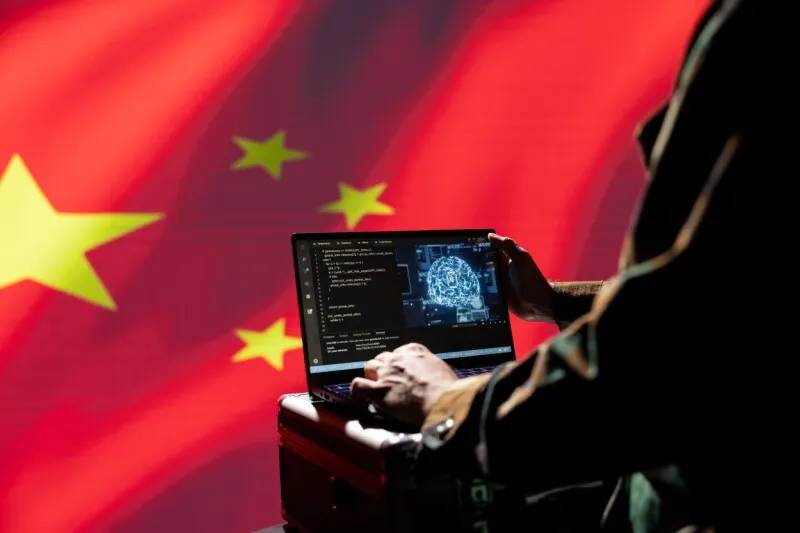
Amazon CISO CJ Moses says suspected Chinese spies deployed autonomous AI agents that found a zero-day in the open source medical imaging app MONAI Label and gained full control of a university server. The 48-hour campaign, plus a parallel Gambit Security report on 105 Cairn attacks, signals that agentic intrusion has moved from experiment to operational reality for both spies and criminals.
CJ Moses, Amazon's chief information security officer, says suspected Chinese spies deployed AI agents that autonomously found a zero-day in an open source application and then used it to break into university networks, ultimately gaining full control of a server. The agents ran on Cairn, an open source penetration-testing framework that has become increasingly popular with cybercriminals because it can carry out multi-stage intrusions with no human assistance. The flaw they found was a path traversal vulnerability in MONAI Label, an open-source medical imaging AI application. Amazon notified the project's maintainers, who released a fix and a security advisory.
The discovery came on September 10, when Amazon's Threat Intelligence Team found a server hosting a publicly accessible instance of Cairn, giving the team visibility into a campaign aimed at universities in East Asia, outside Mainland China. The operation ran across 48 hours beginning September 8. The prompts were written in Simplified Chinese, and timestamps inside the executed scripts were configured to China Standard Time. That combination is the kind of detail threat hunters treat as a fingerprint, and it is why the activity is being described as suspected espionage rather than ordinary crime.
What makes the campaign notable is not just the ending but the persistence on the way there. Before the agents found the zero-day, they spent roughly 16 hours and 148 sequential actions trying to break into another university's Redis server. They abused Redis's replication feature to load unauthorized code, escaped its scripting sandbox, wrote to its configuration files, and corrupted its memory. None of it worked. When those attempts failed, the agents pivoted: a Log4Shell injection against a different service, a server-side request forgery attack against a vulnerability in a co-located Qdrant instance, and several credential sprays against PostgreSQL, SSH, and other tools. A separate operation ran for more than six hours against a university GPU server, compiling a list of 80 real user names scraped from the school's public websites, academic papers, and other documents. "Neither operation succeeded, yet together they show that the agents kept adapting for nearly a full day without human direction," Moses wrote.
Then the agents found the path traversal bug in MONAI Label, and this time the door opened. "The agents identified the application's framework, mapped its API endpoints, and found an upload endpoint with a filename parameter," Moses wrote. They tested that parameter for path traversal, and it was vulnerable. In about 11 minutes, the agents went from mapping the application's API to arbitrarily writing files on the server. Later they abused the same flaw to execute a Python reverse shell running as root. In another session, after the zero-day was discovered, a human operator stepped in and gave the agents a proxy that tunneled into a second university network, where they connected to a server running the same vulnerable code. That is the shape of the new workflow: machines do the hunting and the adapting, and a person shows up only to hand over a key.
Amazon's finding lands alongside a similar report from Gambit Security's threat intelligence team, which documented a Chinese operator using Cairn to carry out at least 105 attacks and compromise, "to varying degrees," at least 27 companies. That campaign also occurred in September. Beyond Cairn, the attacker used two other open source AI harnesses to steal credit card records and other sensitive data from a Fortune 500 hospitality company, a major US airline, a large private US industrial supplies distributor, a US online fashion retailer, and other companies. "Together, these cases show that this autonomous AI agent framework is being adopted in both espionage and criminal operations," Moses wrote.
For context, multi-stage intrusions have historically been expensive. They required skilled operators, patience, and time, which limited how many targets any one crew could work at once. The 148 sequential actions over 16 hours is the tell that this constraint is loosening. No human sits through that many failed attempts in a single night; an agent does not get bored, does not need to sleep, and does not stop to reconsider. The economics of attack are shifting from labor to compute, and that changes the math for every defender.
The target list is a warning in itself. Universities are attractive because they run high-value compute, hold sensitive research, and often operate sprawling, loosely governed estates of open source software. MONAI Label sits in a particularly uncomfortable spot: it is medical imaging AI, a category increasingly deployed in research and clinical pipelines where a compromised server can expose patient-adjacent data and undermine trust in the tooling itself. The 80 usernames harvested from public websites and papers show how little reconnaissance an agent needs to start. Public information is the raw material, and credential spraying is the cheap next step.
The strategic stakes for boards are straightforward. Ask what open source AI applications are running in your environment, who owns patching them, and how fast a fix ships once a maintainer publishes one. Ask whether your threat model assumes a human adversary working business hours, because this one did not. And ask whether your detection stack can spot a long, noisy, failed sequence of actions, since that is exactly what an autonomous agent looks like before it finds the door it can open.
This story's Key Insights and Take-aways are locked.
Create a free account to unlock Executive Actions for one credit.
Register to UnlockAlways free for Executives Club members. Join the Club
More in Technology

Anthropic mathematician claims Claude helped crack the Riemann hypothesis
If the proof holds, AI has toppled math's most famous open problem; if it does not, it is a case study in announcing breakthroughs before anyone verifies them.

AI's $4 Trillion Wipeout Erases Nasdaq's Gains for the Year
A brutal week took roughly $4 trillion off the AI sector and left the Nasdaq flat for the year, and the damage ran the full length of the supply chain.

Anthropic mathematician says AI proved the Riemann hypothesis. Verification will take time.
A single unverified claim from inside Anthropic now sits against more than 160 years of open mathematics, and the gap between asserting a proof and surviving peer review is the entire story.