

Amodei's Anthropic debuts at $2tn after the largest IPO raise in history
The Claude maker's Nasdaq listing puts it among the world's most valuable public companies and hands Dario Amodei a far stronger balance sheet, plus a shareholder base to answer to.
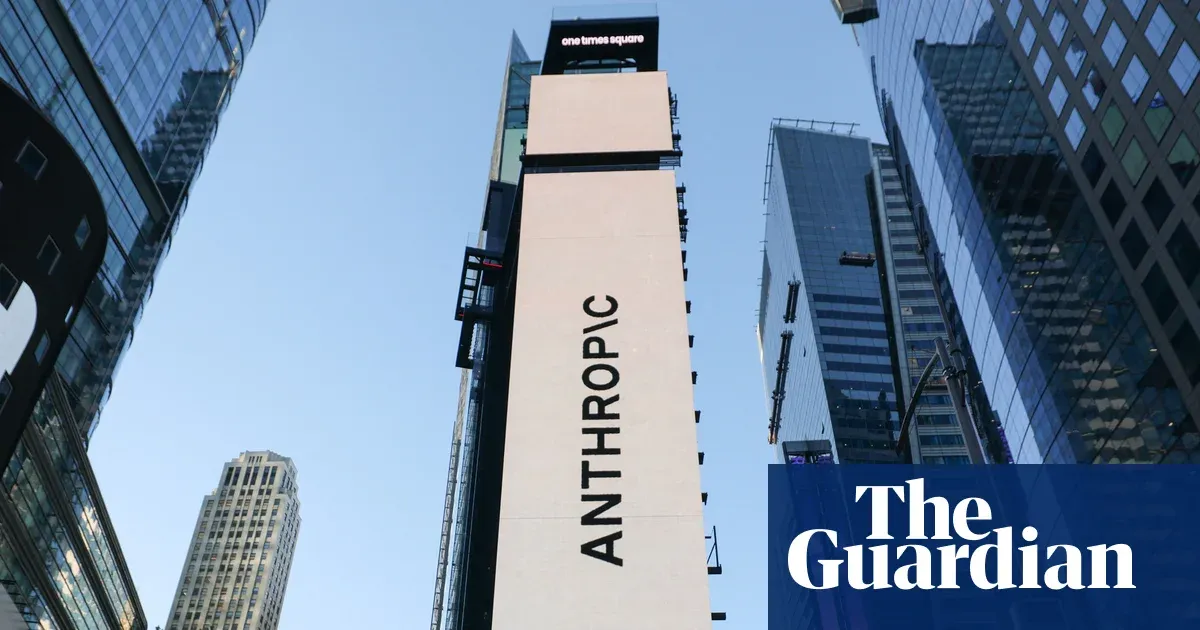
Anthropic, the AI startup behind the Claude chatbot, debuted on the US stock market on Thursday at a $2tn valuation after raising the largest amount of investment in history for an initial public offering, with chief executive Dario Amodei ringing the Nasdaq opening bell. The listing turns a private research lab into one of the world's most valuable public businesses and hands it a public currency for compute, talent and deals, while subjecting its safety-first positioning to quarterly scrutiny.
Anthropic is public. The Claude chatbot maker debuted on the US stock market on Thursday at a $2tn valuation, after raising the largest amount of investment in history for an initial public offering. Chief executive Dario Amodei rang the Nasdaq opening bell to mark the listing, then framed the moment in the language of mission rather than multiples: "Today puts the company in a stronger financial position, and in doing so, only strengthens our resolve to do the right thing." That is the whole story in one sentence. A company built to argue that AI needs to be developed carefully just became one of the most heavily capitalized entities on earth, and it did so by asking public investors to buy the argument.
Sit with the number first. A $2tn market value places Anthropic among the most valuable publicly traded businesses in the world, a tier historically occupied by platform companies with decades of compounding revenue behind them: chipmakers, software giants, industrial conglomerates. Anthropic arrives there as a young AI lab whose public identity is a family of models and a chatbot, not a portfolio of mature product lines. The Guardian notes the debut likely makes it one of the world's most valuable listed businesses. That is not a rounding error in the history of capital markets. It is a repricing of what investors think an AI lab is worth before it has spent a single day filing a quarterly report.
The raise matters more than the valuation, and the two get conflated constantly. A valuation is a price. A raise is cash. When a company lists, it prices its equity and sells shares into the public market, and for the company that means money onto the balance sheet, a liquid stock to pay employees with, and a tradeable asset for early backers who have been locked up in private shares for years. Anthropic did this at a scale Historic mega-listings have typically been measured in the tens of billions of dollars. Whatever the final figure, the signal is the same: public markets just wrote the largest cheque an IPO has ever written to a single company.
Why does an AI lab need that? Because frontier AI is a capital-hungry industrial business dressed up as software. Training and serving large models historically runs through enormous clusters of specialised chips, and the largest of those clusters have carried price tags in the billions of dollars. Compute is the input, not a line item. A public listing gives Anthropic two new instruments it did not have last week: a stock that can be used as acquisition currency and as compensation for scarce researchers, and a war chest that lets it commit to multi-year infrastructure spending without circling private investors every eighteen months. Public equity is, historically, the cheapest permanent capital a company can access.
Then comes the trade every founder makes when they ring the bell. Private companies can promise. Public companies have to report. A listed business files quarterly results, discloses material risks to investors, holds earnings calls and answers to shareholders who care about margin trajectory as much as mission. Amodei's line about resolve is the one to hold onto, because it is precisely the kind of commitment that gets tested when a bad quarter lands. AI safety work is expensive, slow and hard to quantify in a 10-K. Analysts will ask what it costs. Investors will ask what it returns. That tension, not the opening bell, is the real story of Anthropic's next four quarters.
The listing also resets the reference price for everyone else in the sector. Rivals still private now get measured against a public tape, and their late-stage investors, employees holding illiquid stock options and prospective recruits all have a transparent number to argue with. For context, index inclusion typically requires a sustained earnings record, a threshold newly listed growth companies often spend years working toward, and until then Anthropic trades on narrative and revenue growth rather than on the passive flows that come with being in a major benchmark. Lock-up periods on insider shares, which are typically measured in months, will also set a calendar the market watches closely for signs of selling pressure.
There is a governance layer here that boards should be thinking about now. Public companies must disclose material risks to investors, and for an AI lab those risks are unusually hard to box: model misbehaviour, compute supply, regulatory action, reputational shocks. The Guardian ran the news alongside a pointed question, "Outages, spies, and trillion-dollar IPOs: is this our AI future?", which is a fair summary of the disclosure problem. Anthropic will now have to describe those risks in plain English, on a schedule, to anyone who buys a share. The safety-first posture that differentiated it privately now becomes a public commitment with securities-law implications.
For leaders outside AI, the takeaway is structural. The largest IPO ever just went to a company selling compute-intensive intelligence rather than software licences, and the public market paid up. That is a signal about where capital believes the next decade of margin lives. For boards at companies weighing their own AI exposure, whether as buyers, builders or competitors, the question shifts from whether to invest to how quickly they can secure supply and talent before the newly public giants use stock as a recruiting weapon. Anthropic got stronger financial footing on Thursday. Everyone else got a benchmark they now have to beat.
This story's Key Insights and Take-aways are locked.
Create a free account to unlock Executive Actions for one credit.
Register to UnlockAlways free for Executives Club members. Join the Club
More in Business

S&P 500 Enters Correction, Down 10% From Its High on AI Worries
The index's slide past the 10 percent line is a symbolic verdict on investor mood, and the AI trade that powered the rally is now the thing testing it.

Dow and S&P 500 enter correction as Nasdaq logs worst week since 2020
All 11 S&P 500 sectors fell more than 1% in the same week for the first time since April 2025, a breadth signal that matters more than any single index level.

Chip stocks lose $2.3 trillion in a week, worst run in 25 years
A $2.3 trillion weekly wipeout in semiconductors is forcing every board with an AI story to ask whether it owns a thesis or just a crowded trade.