
Anthropic Founders Built a 50.1% Voting Shield Jensen Huang Lacks
How Anthropic's special Class F shares and independent trusts are insulating AI leadership from the pressures that ousted Nvidia's CEO.
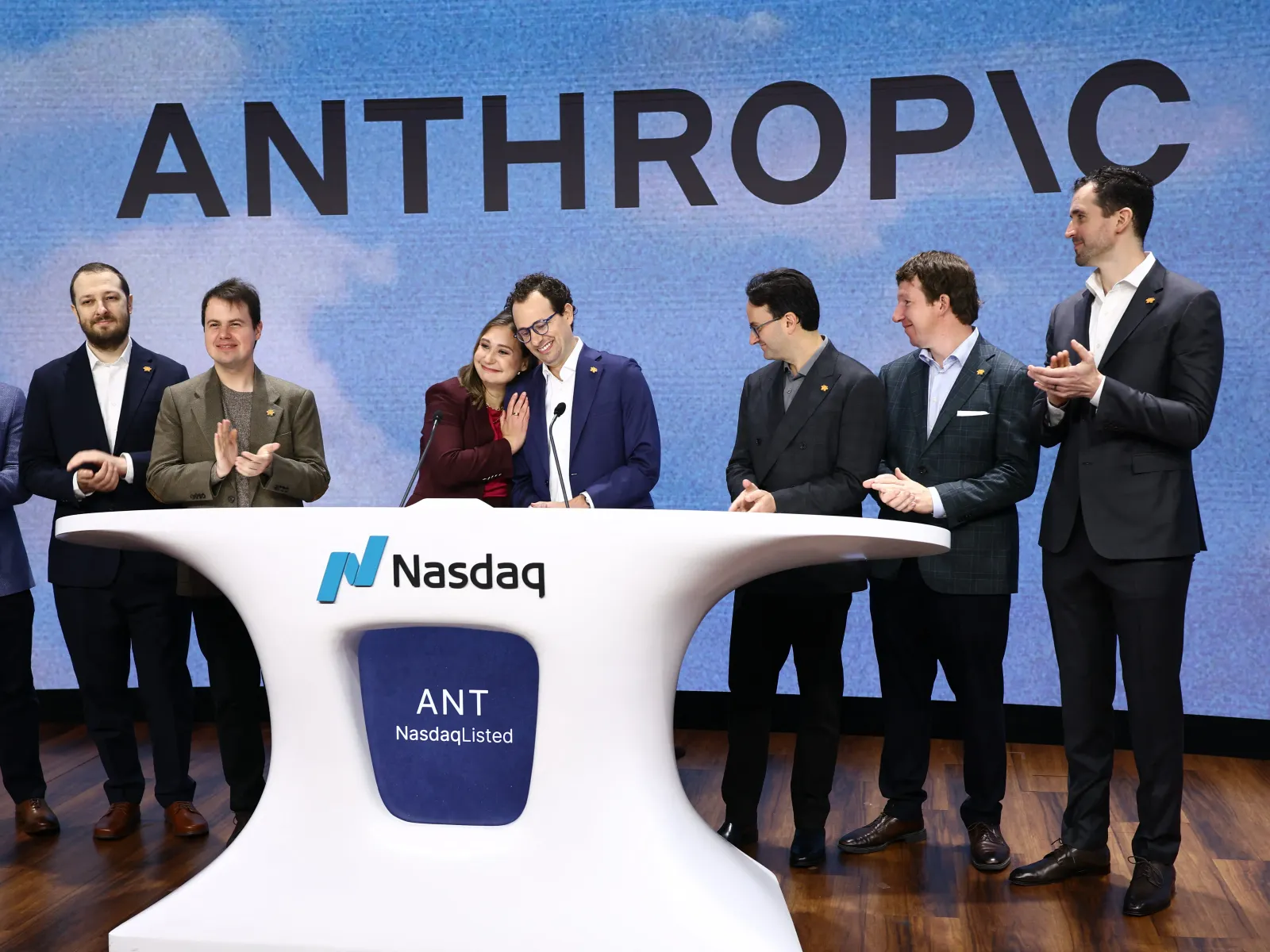
Anthropic's seven cofounders have implemented a unique corporate governance structure, including Class F shares, to maintain control over the company's mission. This model offers a stark contrast to the situation at Nvidia, where CEO Jensen Huang lacks special voting rights and faced board pressure.
Anthropic's seven cofounders have engineered a sophisticated corporate defense mechanism that grants them collective control over the company's destiny, a structural safeguard that stands in sharp contrast to the governance model of Nvidia. Specifically, the cofounders collectively control 50.1% of shareholder votes through a specialized instrument known as a Class F share. This mechanism is designed to ensure that no matter how many ordinary shares Anthropic sells to the market, this critical voting power remains firmly within the founders' hands. Furthermore, a separate, independent trust holds Class T stock, which grants it the authority to appoint and remove a majority of the company's board of directors. This isn't merely a power grab; it is a deliberate architectural decision rooted in the belief that the development of AI is so profoundly powerful that its trajectory must be shielded from the volatility and short-term pressures inherent in traditional investor capitalism.
This level of structural control is a direct response to the perceived risks of mission drift. Anthropic asserts that AI development requires a long-term vision that cannot be compromised by quarterly earnings reports or the whims of short-term shareholders. By securing this voting majority, the founders have created a formidable barrier against external pressures that could force them to pivot away from their core AI safety mission. The practical benefit of this structure is clear: it makes it exceptionally difficult to oust the leaders who hold the ultimate voting power in the company. This is a sophisticated evolution of a concept pioneered decades ago by tech giants like Google, whose cofounders Larry Page and Sergey Brin utilized special voting stock to protect their search engine's mission during its 2004 IPO. That strategy proved effective, allowing them to retain control while other tech founders, including Mark Zuckerberg, followed suit.
However, the contrast between Anthropic's proactive governance and the situation at Nvidia highlights a critical divergence in corporate strategy. Jensen Huang, who cofounded Nvidia 33 years ago when the company was focused on video game chips, currently owns only about 3.5% of Nvidia's shares. Crucially, these shares do not carry special voting rights. This lack of structural control has led to a situation where his board pushed him out, a move that has since sparked debate among his supporters. If Huang were to start his career today, with the knowledge of Anthropic's structural safeguards, it is highly probable he would adopt a significantly different approach to his ownership and voting rights.
Nvidia's current market dominance is undeniable; the company is the engine powering the global AI revolution. Yet, its leadership structure, which lacks the kind of founder-controlled voting power seen at Anthropic, has exposed it to a level of board-driven instability that Anthropic has meticulously avoided. The stakes are no longer just about market share; they are about who controls the narrative and the direction of the most transformative technology in human history. For a company like Anthropic, the ability to maintain a dedicated, long-term focus on AI safety, free from the constant threat of shareholder-driven pivots, is arguably more valuable than any short-term stock price spike.
This governance model is a powerful statement about the nature of modern technological leadership. It suggests that for certain industries, particularly those dealing with existential risks or foundational technologies, traditional corporate structures are insufficient. The founders of Anthropic are essentially creating a 'mission-first' corporate entity, where the voting power is structurally tied to the preservation of the mission, not merely the maximization of shareholder return. This is a strategic move that transcends typical founder-investor dynamics, positioning the company not just as a tech leader, but as a steward of a powerful technology.
For founders and operators in high-growth, high-stakes sectors, Anthropic's move is a powerful case study in the necessity of designing corporate structures that align incentives with long-term vision. The lesson is clear: if your technology is powerful enough to change the world, your corporate structure must be robust enough to protect that change from external pressures. The debate surrounding Jensen Huang and Nvidia serves as a real-world illustration of the risks inherent in relying solely on market success without securing foundational control over the company's ultimate direction.
This story's Key Insights and Take-aways are locked.
Create a free account to unlock Executive Actions for one credit.
Register to UnlockAlways free for Executives Club members. Join the Club
More in Business

S&P 500 Enters Correction, Down 10% From Its High on AI Worries
The index's slide past the 10 percent line is a symbolic verdict on investor mood, and the AI trade that powered the rally is now the thing testing it.

Dow and S&P 500 enter correction as Nasdaq logs worst week since 2020
All 11 S&P 500 sectors fell more than 1% in the same week for the first time since April 2025, a breadth signal that matters more than any single index level.

Chip stocks lose $2.3 trillion in a week, worst run in 25 years
A $2.3 trillion weekly wipeout in semiconductors is forcing every board with an AI story to ask whether it owns a thesis or just a crowded trade.