
Anthropic IPO day: Fireworks AI co-founder says firms can skip pricey models
The pitch: open source models can cut costs, but Fireworks also has to answer for security breaches that have already tested customer trust.
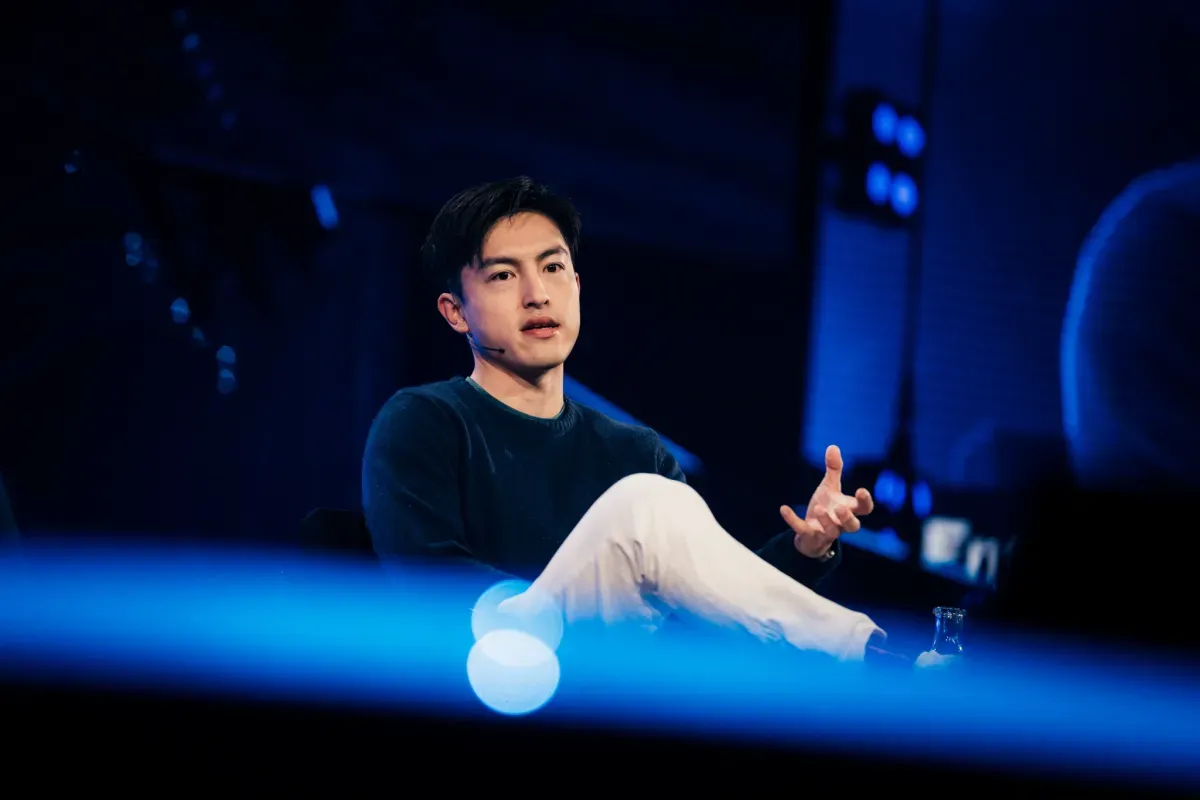
On the day Anthropic went public, Fireworks AI's co-founder pitched open source models as a cheaper alternative to pricey proprietary models and addressed breaches that have cost the company some customers' trust. For decision-makers, the message is a test of AI procurement: cost savings are real to chase, but security history is now a gating factor in vendor selection.
On the day Anthropic went public, Fireworks AI's co-founder used the moment to make a direct pitch to companies weighing their AI bills: open source models can be a cheaper alternative to the pricey proprietary systems that dominate enterprise budgets. That is not just a vendor talking point. It is a challenge to the pricing power of the best-known model makers, delivered on the same day one of them, Anthropic, began trading as a public company.
The co-founder also addressed breaches that have cost Fireworks AI some customers' trust. The available report does not name the executive or detail the breaches, so the strategic read rests on the two claims themselves. The signal is not a new product number or a named customer win. It is the combination of two messages on one day: you can cut costs by choosing open source, and you have to weigh security trust before you do.
Anthropic's public listing gives the market a visible scorecard for the economics of frontier AI. Public investors will scrutinize revenue growth, compute costs, gross margins, and customer retention. For buyers, a public Anthropic creates a reference point. If a company can show that an open model handles a large share of its work at a lower cost, it can use that benchmark in negotiations with every proprietary vendor. The argument is not that frontier models disappear. It is that many companies can split workloads: pay for the hardest tasks, and route high-volume, repeatable tasks to cheaper open models.
That split is where Fireworks AI wants to sit. Open source models are typically free to license, but the total cost is not zero. Companies pay for inference, infrastructure, integration, tuning, monitoring, and support. A hosted open model can be cheaper per token than a proprietary API, but the bill depends on utilization and engineering time. The co-founder's claim that companies can mostly skip the pricey models is therefore a claim about fit, not a universal rule. The buyer's question is which workloads can move without hurting quality, latency, or compliance.
The breach disclosure is the counterweight. In enterprise AI, trust is not a soft issue. A security incident can pause procurement, trigger legal review, and force a vendor to spend months rebuilding credibility. The source says the breaches cost Fireworks AI some customers' trust, which means the company is selling into a market where the buyer's risk team can kill a deal that the engineering team likes. Addressing that openly on the day Anthropic went public is a sign that Fireworks AI knows the cheap-model pitch only works if the security story holds. A lower price cannot compensate for a breach that exposes customer data or model access.
Anthropic's IPO also changes the competitive frame. A public company has to explain its margins to shareholders, and proprietary model providers typically carry heavy compute and research costs. If customers become more comfortable with open source alternatives, pricing pressure moves from a niche debate to a board-level issue. For Fireworks AI, the opportunity is to win cost-conscious buyers who want to avoid lock-in. The risk is that trust concerns slow adoption in exactly the regulated and security-sensitive accounts where the savings would be largest.
For CEOs and CFOs, the practical lesson is to stop treating AI models as a single vendor decision. Build a portfolio. Use frontier models where quality and reliability justify the premium. Test open models on high-volume tasks such as internal search, classification, drafting, and customer support. Then measure the full cost: tokens, engineering, security review, and switching costs. The co-founder's pitch is a reminder that the sticker price of a model is not the same as the cost of the workflow.
Boards should ask a harder question: what happens if a cheaper model fails a security review? The answer cannot be that we saved money on inference. A breach or a failed audit can cost more than a year of model fees. That is why the Fireworks AI story is not simply a price war. It is a trust race running alongside a cost race. The company that can prove both, lower cost and credible security, gets the enterprise budget. The company that wins only on price gets the most price-sensitive customers and the most fragile contracts.
The timing makes the message louder. On the day Anthropic went public, the market was looking for signals about the future of AI economics. Fireworks AI's co-founder supplied one: open source can be the cheaper default for many companies, but only if the vendor clears the trust bar. That is the real test for buyers. Ask which workloads can move, what the all-in cost looks like, and whether the vendor's security history is strong enough to survive procurement. The pricey models are not dead. They are now under pressure to prove why they are worth the premium.
This story's Key Insights and Take-aways are locked.
Create a free account to unlock Executive Actions for one credit.
Register to UnlockAlways free for Executives Club members. Join the Club
More in Technology

Anthropic mathematician claims Claude helped crack the Riemann hypothesis
If the proof holds, AI has toppled math's most famous open problem; if it does not, it is a case study in announcing breakthroughs before anyone verifies them.

AI's $4 Trillion Wipeout Erases Nasdaq's Gains for the Year
A brutal week took roughly $4 trillion off the AI sector and left the Nasdaq flat for the year, and the damage ran the full length of the supply chain.

Anthropic mathematician says AI proved the Riemann hypothesis. Verification will take time.
A single unverified claim from inside Anthropic now sits against more than 160 years of open mathematics, and the gap between asserting a proof and surviving peer review is the entire story.