

Anthropic's $1.4T Debut Sinks 9% as 'Panic Selling' Erases Nasdaq's 2026 Gains
BNP Paribas flags 'panic selling,' chipmakers are down 12% to 14%, and the Fed meets Dec. 9 with a hike nearly priced in, so here is what the Street's own correction data says comes next.
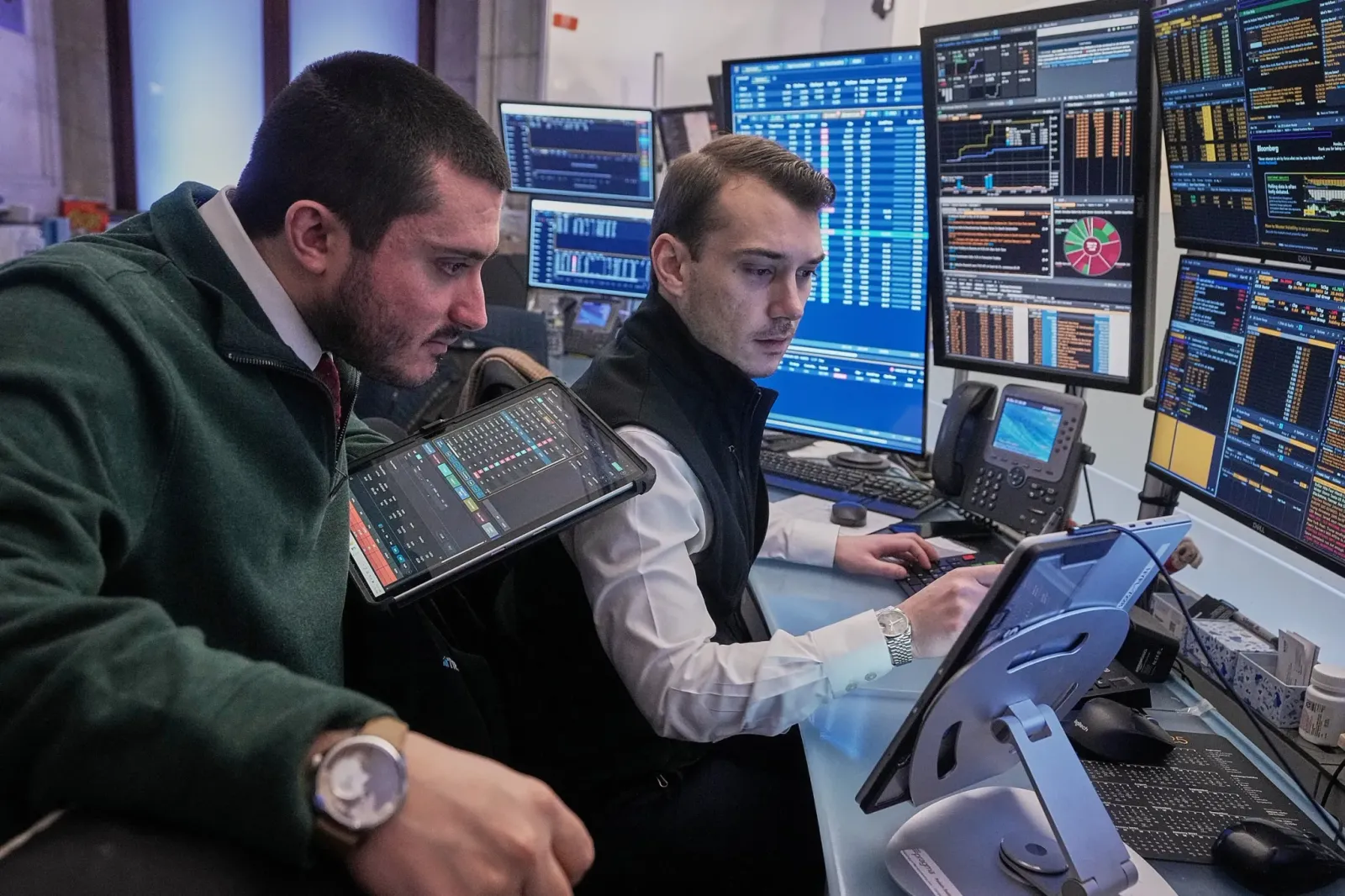
Anthropic raised $81.34 billion in an IPO at a $1.414 trillion valuation and then fell about 9% on its second day of trading, as the S&P 500 closed 3.59% lower at 6,918.45, more than 10% below its October record. For CFOs and boards, the read-through is that AI financing costs are rising, Nvidia is being run by an interim CEO, and a December rate hike is nearly priced in.
Anthropic raised $81.34 billion in its IPO at a $1.414 trillion valuation. By Friday, its second day of trading, the Claude maker's stock had fallen about 9%, giving back much of Thursday's 17% pop. That reversal was the loudest sound in a market-wide rout: the S&P 500 slid 3.59% to 6,918.45 and closed more than 10% below its Oct. 6 record close, which is the textbook definition of a correction. The Dow finished in correction territory too, and the Nasdaq Composite handed back every gain it had made in 2026.
It was the S&P's seventh straight losing session, its longest losing streak since February 2020. Benedicte Lowe, an equity derivatives strategist at BNP Paribas, told CNBC that investors were "panic selling" as they tried to judge whether enthusiasm for AI had peaked. The damage was broad and global. Chipmakers took the worst of it, with Micron, Broadcom, Nvidia and AMD down between roughly 12% and 14%. The VIX, Wall Street's fear gauge, topped 30 for the first time since March, CNBC reported. Taiwan's stock index fell 5.65% Friday, capping its steepest weekly drop since October 1997, according to LSEG data cited by CNBC. Japan's Nikkei and South Korea's Kospi each fell about 5%.
Several forces converged. Reuters cited worries about slower data-center expansion, higher borrowing costs and Jensen Huang's departure as Nvidia CEO. Huang resigned on Nov. 12, and CFO Colette Kress is serving as interim CEO, a leadership handoff that lands in the middle of one of the most consequential capital cycles in the company's history. Washington added fuel: President Donald Trump threatened a "tremendous tax" on U.S. companies that build data centers abroad, CNBC reported. Layer on a central bank that may be tightening rather than easing, and the AI trade stopped looking like a one-way bet.
Most of the Street still called it a passing storm. "Given the solid economic and fundamental backdrop, the move appears to be highly sentiment driven," Chris Larkin, head of trading at E*Trade from Morgan Stanley, said in commentary sent to Fortune. He noted that "only five of the past 15 corrections from all-time highs since 1983" turned into bear markets. Deutsche Bank's Binky Chadha called the market "very oversold" and said growth and earnings remained strong, according to CNBC. JPMorgan Asset Management chief global strategist David Kelly told Seeking Alpha that markets were overdue for a tech correction. Chuck Carlson, CEO of Horizon Investment Services, told Reuters the market may be in a correction within a bull market.
ETrade's own research is less soothing. A March 2025 ETRADE study examined the 14 times since 1983 that the S&P 500 first closed 10% or more below a record. Five of those became bear markets. But the index fell another 10% or more after closing in correction in six of the 14 episodes, and in 1990 and 1998 it came within a point of bear territory. The median total drop from the record was 19.9%. In plain English: the historical base rate for a benign outcome here is roughly one in three, and the typical correction has room left to run.
Watch credit markets, not just the tape. SpaceX had to raise the yield on its $32 billion debt sale to 8.3%, which independent tech analyst Luke Lango, editor of the Innovation Investor newsletter, read as the "capital spigot" closing for weaker AI borrowers such as CoreWeave and Nebius. In a note at 12:59 p.m., Lango argued the rotation was real but contained: "Money is leaving tech, not the market," he wrote, pointing out that the Dow and the equal-weight S&P were higher at the time. His advice was to avoid AI stocks "while they're being combative teenagers."
The macro backdrop makes the timing awkward. Philadelphia Fed President Anna Paulson said Thursday that the central bank will need to raise rates again because inflation is too high, Futures put the odds of a December hike at about 95%, according to CME FedWatch, with the 10-year Treasury yield near 5%. The Fed meets Dec. 9. Households are already feeling it: in the University of Michigan's November survey, which ran through Nov. 16, respondents with the largest stockholdings reported a decline in personal finances, "consistent with continued AI-related agitation in stock markets," survey director Joanne Hsu said.
The strategic stakes for boards are immediate and concrete. Anthropic's $1.414 trillion valuation and 9% day-two drop show that public markets will price AI execution and AI narrative in the same tick, with no grace period. Nvidia's interim CEO transition removes a founder-level storyteller at exactly the moment investors want one. Rising long-end yields, plus an 8.3% coupon demanded of SpaceX, set a higher bar for every capital-hungry AI borrower, from CoreWeave to Nebius. And if futures are right about December, the discount rate applied to long-dated AI cash flows is heading up, not down. Friday's question, panic or just early, gets answered on Dec. 9.
This story's Key Insights and Take-aways are locked.
Create a free account to unlock Executive Actions for one credit.
Register to UnlockAlways free for Executives Club members. Join the Club
More in Business

S&P 500 Enters Correction, Down 10% From Its High on AI Worries
The index's slide past the 10 percent line is a symbolic verdict on investor mood, and the AI trade that powered the rally is now the thing testing it.

Dow and S&P 500 enter correction as Nasdaq logs worst week since 2020
All 11 S&P 500 sectors fell more than 1% in the same week for the first time since April 2025, a breadth signal that matters more than any single index level.

Chip stocks lose $2.3 trillion in a week, worst run in 25 years
A $2.3 trillion weekly wipeout in semiconductors is forcing every board with an AI story to ask whether it owns a thesis or just a crowded trade.