
Anthropic's $2T debut fizzles: stock drops 9.5% a day after record IPO
The biggest listing in history was supposed to lift the AI trade; instead Nvidia, AMD and Sandisk slid with it, and the bubble question got louder.
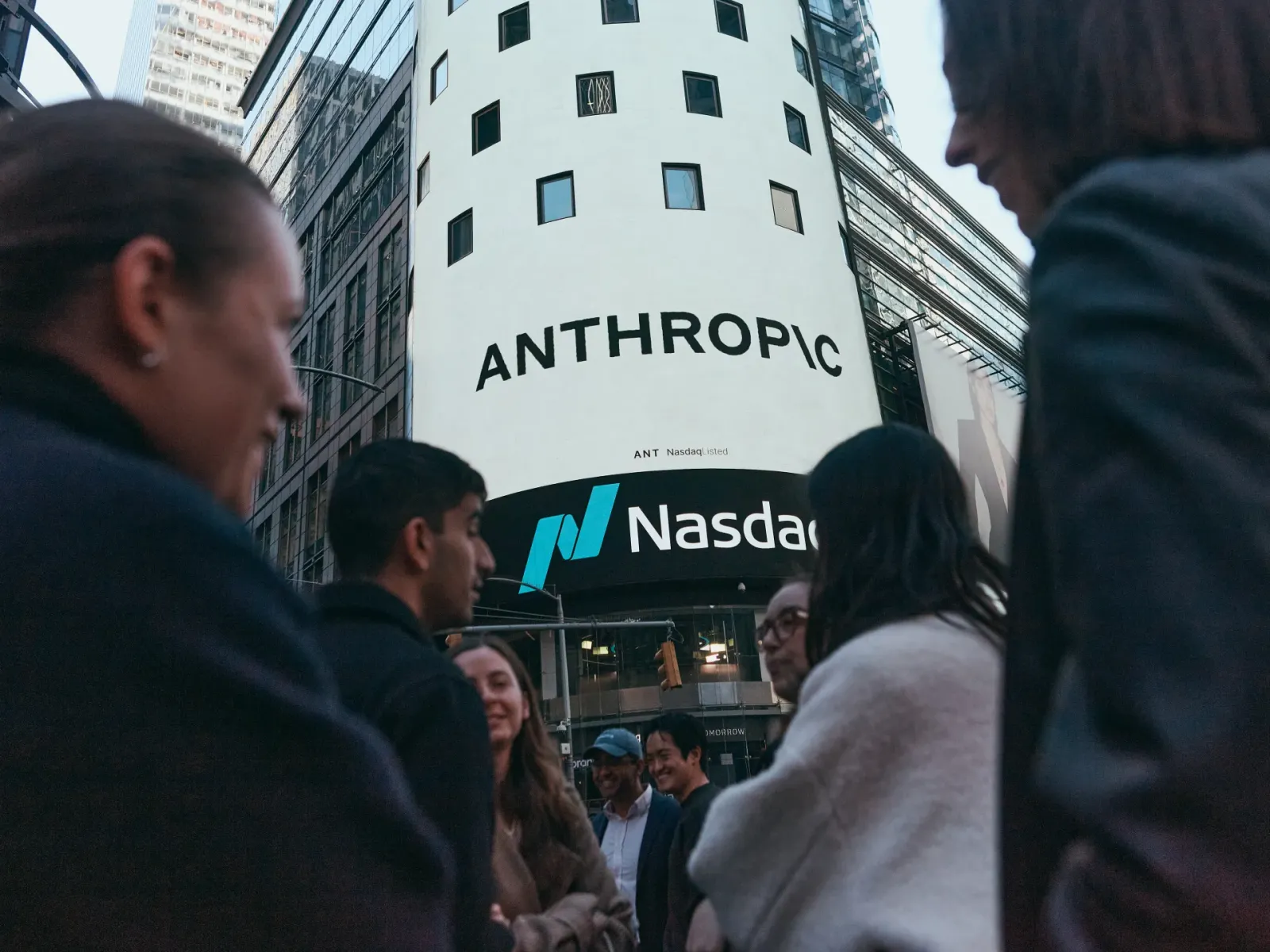
Anthropic, the AI company behind the biggest public stock offering ever, saw its shares fall about 9.5 percent to $87.95 a day after listing, dragging Nvidia, Meta, AMD and other AI names down with it. For executives and boards, the message is that record scale no longer buys a record aftermarket, and AI valuations are being repriced on spending discipline rather than narrative.
Anthropic's record-breaking Wall Street debut is already losing altitude. A day after the biggest public stock offering ever, the AI company's shares were trading at $87.95 at about 11:30am in New York (16:30 GMT) on Friday, roughly 9.5 percent below Thursday's close. The stock had surpassed $2 trillion in value at one point during its listing. It is still above its $83.30 offer price, but a slide of that size inside 24 hours of trading tells you exactly what the market thinks about the AI trade right now.
The damage was not contained to Anthropic. Nvidia, the bellwether of the AI buildout, fell nearly 7 percent. Meta Platforms dropped almost 4 percent. Amazon and Microsoft shed 2.1 percent and 1.7 percent respectively. Chip names took the hardest hits: AMD down 11.2 percent, Sandisk down nearly 15 percent, Intel off 4.3 percent. "Investors still believe in AI but are becoming more selective about what they will pay for that growth," said David Miller, chief investment officer at Catalyst Funds. That is the whole story in one sentence: the faith is intact, the price tolerance is not.
Anthropic's listing had been viewed as a potential boost for an industry struggling to regain its footing after a turbulent stretch. Instead, the slump in price within a day of listing, while losses piled up across other technology heavyweights, suggested the IPO had done little to reverse the broader selloff. Widely seen as a proxy for the AI trade, Anthropic was supposed to be the proof point that the sector could still command a premium. It became the stress test instead.
Why the retreat? Two forces are doing the work. First, worries that AI companies' big market values and heavy spending are unjustified. The capex commitments across the sector are enormous, the revenue curves are steep, and investors are no longer willing to take the spending on faith. Fears of a bubble inside the sector have been building against that backdrop. Second, politics. The recent midterm elections produced a shift in power after the Republican Party, seen as more friendly to the industry, suffered an electoral sweep. For a sector that has leaned on a permissive policy backdrop, that is a genuine change in the weather, and markets price weather changes fast.
There is a mechanical counterweight coming, and it is worth understanding precisely. London-based index rebalance analytics firm Intropic estimates index-tracking funds could account for purchases of up to 30 percent of Anthropic's shares by year-end. That is forced buying, not conviction buying. It can put a floor under the stock without saying anything about whether the valuation is right. Executives should read it the way a CFO reads a covenant: helpful, but not a vote of confidence.
History is a rough guide here. Market debuts for tech companies are often followed by a volatile period. SpaceX, which previously held the title for the biggest IPO, rose nearly 50 percent in its first three days, then fell below its IPO price a month later. On Friday, SpaceX stock was down about 7.4 percent. The pattern is not failure; it is price discovery, and price discovery is brutal.
The index math matters more than the headline count. More stocks were gaining ground within the S&P 500 on Friday, but AI stocks with hefty market values have a much bigger impact on the market's direction. They were responsible for Wall Street's big gains this year, and they are now behind the big slide for the market. Concentration cuts both ways, and when it turns, it turns quickly.
Second-order effects will show up well beyond the ticker. Anthropic's listing was the reference price the private market had been waiting for, and when that reference slips below the debut print within a day, late-stage rounds, secondary sales and employee equity grants all get repriced against it. Historically, a soft aftermarket for a marquee name tends to slow the pipeline of would-be listings behind it, as bankers and boards wait for a calmer window rather than test a nervous tape.
For founders, CFOs and boards, the read is uncomfortable but clear. A record IPO no longer guarantees a record aftermarket, and the discount rate on AI growth just moved. The window for AI listings is still open, but it is narrower and more conditional than it looked on Thursday. Companies planning to raise in the next two quarters should assume investors will underwrite spending discipline, not narrative, and that the first day of trading is now a starting gun rather than a finish line. Anthropic raised the bar for what an AI listing can be. It also just showed everyone how quickly the market can reprice one.
This story's Key Insights and Take-aways are locked.
Create a free account to unlock Executive Actions for one credit.
Register to UnlockAlways free for Executives Club members. Join the Club
More in Business

S&P 500 Enters Correction, Down 10% From Its High on AI Worries
The index's slide past the 10 percent line is a symbolic verdict on investor mood, and the AI trade that powered the rally is now the thing testing it.

Dow and S&P 500 enter correction as Nasdaq logs worst week since 2020
All 11 S&P 500 sectors fell more than 1% in the same week for the first time since April 2025, a breadth signal that matters more than any single index level.

Chip stocks lose $2.3 trillion in a week, worst run in 25 years
A $2.3 trillion weekly wipeout in semiconductors is forcing every board with an AI story to ask whether it owns a thesis or just a crowded trade.