
Anthropic's ANT debuts on Nasdaq at $1.8 trillion, a landmark for AI
The Claude maker's listing hands public markets their first pure-play frontier AI giant and gives every rival board a $1.8 trillion benchmark to answer to.
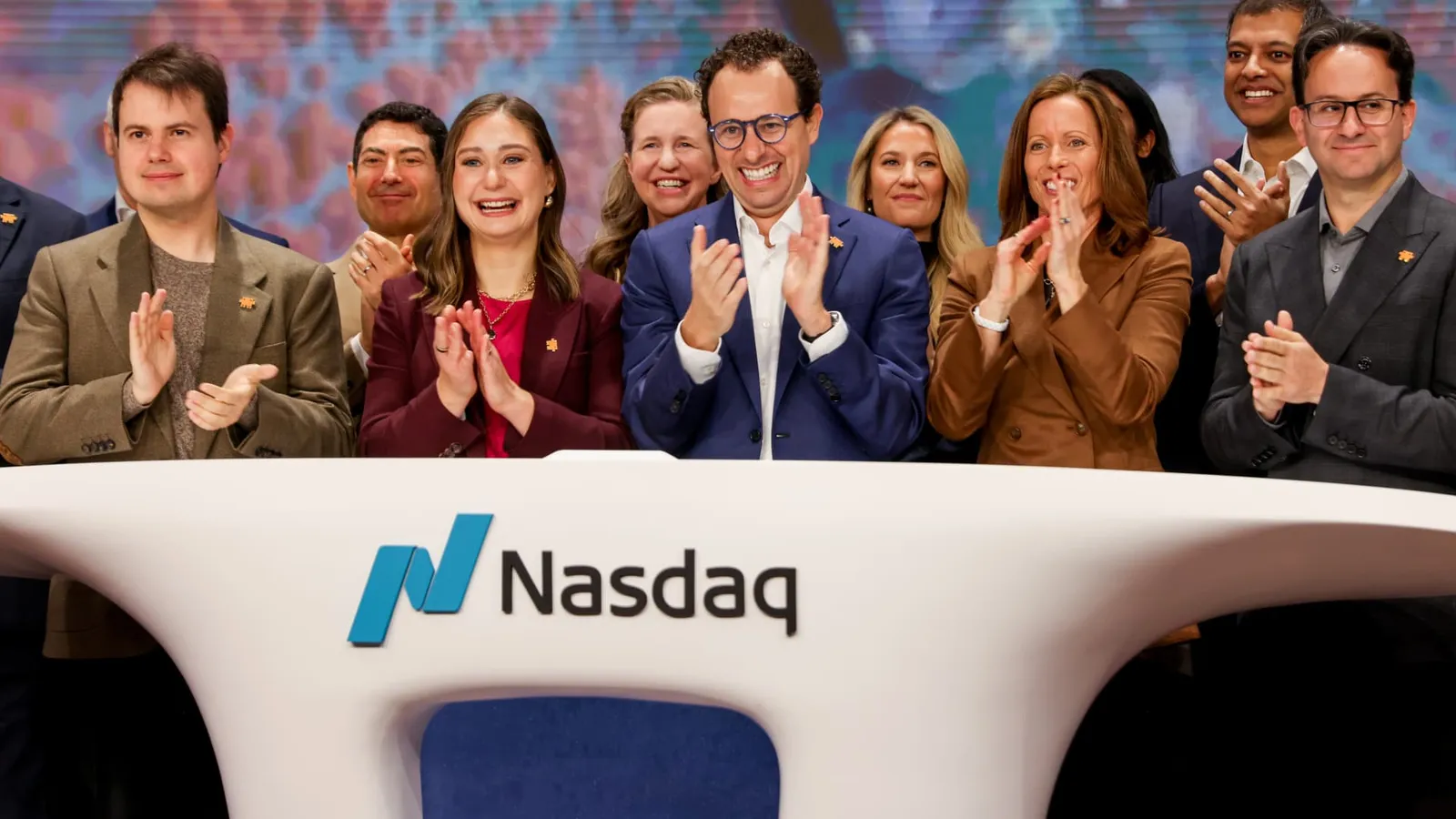
Anthropic, the maker of the Claude AI models, began trading on the Nasdaq under the ticker ANT with a $1.8 trillion market capitalization, according to CNBC's live coverage of the debut. The listing gives public investors direct exposure to a frontier AI lab at that scale for the first time, and hands every rival lab, customer and regulator a live valuation benchmark to react to.
Anthropic is now a public company, and it skipped the small-cap phase entirely. Shares of the Claude maker began trading on the Nasdaq under the ticker ANT with a market capitalization of $1.8 trillion, per CNBC's live coverage of the debut, a valuation that puts the AI lab in the top tier of US-listed companies on its first day. CNBC tracked the opening share price, the valuation and investor reaction in real time as the stock found its level. The number to sit with is $1.8 trillion: only a handful of American companies have ever traded above the $1 trillion mark, and none of them were pure-play AI model developers.
For anyone who has watched Anthropic grow from a research shop into a household name in enterprise AI, the listing marks the moment the frontier model business stopped being a private-market story. Until now, the biggest AI labs were valued mostly through private rounds, secondary sales and the occasional tender offer, with the numbers known mainly to employees, investors and the reporters who chase them. A Nasdaq listing changes the audience. The valuation is now marked every second the market is open, and every competitor, customer and regulator can watch it move.
Anthropic built its reputation on Claude, the model family that turned the company into a serious challenger in enterprise AI, and on a public emphasis on safety research that has shaped how it talks about its own products. The company was founded by former OpenAI researchers and has been backed by large cloud and technology players, which gave it the compute and distribution it needed to train and serve frontier models. Historically, that combination of safety branding and deep-pocketed backers made Anthropic the lab enterprises felt comfortable naming in a procurement review. Going public tests whether that comfort survives quarterly reporting.
The mechanics of a debut like this are worth understanding, because they explain why the first print matters less than it looks. In a typical IPO, bankers build a book of demand, set a price, allocate shares and then let the market take over. The first trade is often volatile, driven by allocation and by how much stock was held back. What matters more is where ANT settles after the first few sessions, and whether the $1.8 trillion figure holds as a floor or turns out to be a peak. CNBC's live coverage followed exactly those markers: opening price, valuation, and how investors responded.
The second-order effects land on everyone else building AI. A public Anthropic gives the entire sector a daily scoreboard. Private labs, including the ones that have raised at enormous valuations without a ticker, now have a comparable that investors can buy and sell in seconds. That cuts both ways: it makes fundraising conversations easier when the comp is strong, and much harder when it is not. It also gives employees at every AI company a live reference price for their own equity, which historically changes how people think about staying or leaving.
There is also a governance shift that comes with the listing. Public companies file quarterly, disclose material risks, answer to a broader shareholder base and attract a different kind of scrutiny from Washington. For a company whose pitch has included responsible development of powerful models, that means its safety claims, its compute spending and its customer concentration all become disclosure questions rather than marketing lines. Regulators who have been circling AI now have a public filing to point at, and politicians get a valuation they can cite in a hearing.
For executives and boards, the practical question is what to do with the number. If you run an AI-adjacent business, your next financing, your M&A math and your compensation benchmarks just got repriced against a $1.8 trillion reference. If you sit on a board weighing an AI strategy, the debut is evidence that public markets will pay for frontier model exposure at a scale that would have sounded absurd a few years ago. What to watch next: where ANT closes its first session, how the stock trades once the initial allocation churn clears, and what the first earnings report reveals about revenue and costs. The landmark is the listing. The verdict comes later.
This story's Key Insights and Take-aways are locked.
Create a free account to unlock Executive Actions for one credit.
Register to UnlockAlways free for Executives Club members. Join the Club
More in Business

S&P 500 Enters Correction, Down 10% From Its High on AI Worries
The index's slide past the 10 percent line is a symbolic verdict on investor mood, and the AI trade that powered the rally is now the thing testing it.

Dow and S&P 500 enter correction as Nasdaq logs worst week since 2020
All 11 S&P 500 sectors fell more than 1% in the same week for the first time since April 2025, a breadth signal that matters more than any single index level.

Chip stocks lose $2.3 trillion in a week, worst run in 25 years
A $2.3 trillion weekly wipeout in semiconductors is forcing every board with an AI story to ask whether it owns a thesis or just a crowded trade.