
Anthropic's blockbuster US listing fails to lift Hang Seng off 19-month low
The Hang Seng's 1.9% fall to 22,410.80 and a 3.8% tech slide show investors are pricing doubt into the data-centre buildout, not the AI story itself.
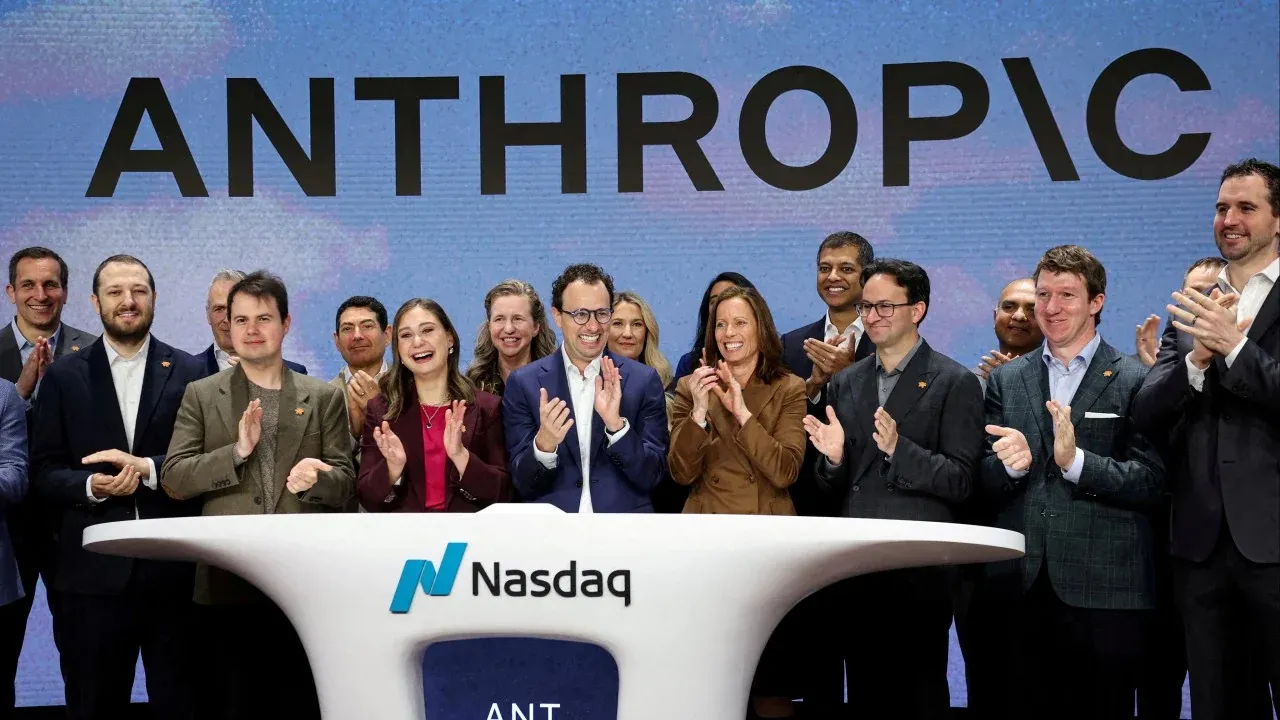
Anthropic, the AI frontier lab, completed a blockbuster listing in the United States, yet Hong Kong's Hang Seng Index still fell 1.9 per cent to 22,410.80, a roughly 19-month low, with the Hang Seng Tech Index sliding 3.8 per cent. For decision-makers, the signal is that public markets are now questioning whether enormous data centre spending can generate comparable returns, which raises the cost of capital for anyone funding AI infrastructure.
Hong Kong's benchmark stock gauge closed at a roughly 19-month low on Friday, and the reason is more interesting than the number. The Hang Seng Index dropped 1.9 per cent to 22,410.80, its weakest close since April 30 last year. The Hang Seng Tech Index fell harder, sliding 3.8 per cent. What did not happen is the story: Anthropic's blockbuster listing in the United States, the kind of marquee AI event that typically pulls the whole sector up with it, failed to revive confidence in technology stocks.
That gap between a hot listing and a cold tape is the signal. A frontier AI lab going public at scale should be the sector's best advertisement: it prices the technology, validates the demand and hands public-market investors a clean way to own the theme. Instead, Hong Kong sold off. The read from the desks is that investors have stopped debating whether AI is real and started debating whether the enormous sums going into data centres can generate comparable returns. That is a harder question, and no listing prospectus answers it.
Context matters here. The Hang Seng Index is Hong Kong's headline benchmark, the gauge global allocators watch for exposure to Hong Kong-listed companies and, by extension, to greater China. The Hang Seng Tech Index is the narrower, more volatile read on the technology names that dominate the city's new-economy listings. When the tech gauge falls roughly twice as far as the benchmark, the pain is concentrated in exactly the corner of the market that AI enthusiasm is supposed to lift. Historically, that index has been highly sensitive to global risk appetite, US rate expectations and mainland policy signals, which makes it a fast-reacting proxy for sentiment rather than a slow-moving value measure. A 3.8 per cent slide in a single session is the kind of move that shows up in risk models before it shows up in earnings.
The data centre debate is an arithmetic problem dressed up as a narrative one. AI infrastructure is capital-hungry and front-loaded: land, power, cooling, chips and the financing to carry all of it land on the balance sheet years before the revenue shows up, while depreciation starts on day one. Historically, large infrastructure buildouts, from rail to fibre to cloud, have paid off, but on a lag that tests public-market patience. Investors are now asking whether the returns from this wave will look comparable to the spending behind it. When that doubt spreads, it does not stay contained to the companies doing the building. It moves into every supplier, landlord, chipmaker and lender with exposure to the same theme.
The second-order effects are what should worry operators. A weak Hong Kong tape makes follow-on offerings, block trades and new listings harder to price, which raises the cost of capital for the very companies that need scale to compete. It also narrows the exit window for private AI companies and their backers, who were counting on public markets to provide liquidity. And it feeds a reflexive loop: lower prices invite more questions about returns, and more questions about returns push prices lower. Hong Kong, as a listing venue, feels that loop first because sentiment there moves quickly in both directions, and it is often read as an early proxy for how global investors feel about greater China technology exposure.
What would break the loop? Concrete evidence, not another headline listing. Capex guidance that comes with utilization or revenue disclosure attached. Visibility on power costs and chip supply. Financing conditions that make the buildout cheaper to carry. Any of those data points would let investors test the return question directly instead of pricing their uncertainty into the whole sector. Until then, expect every AI milestone, including the big ones, to be graded less on what it proves about the technology and more on what it says about the payback. The bar has moved, and it has moved toward math.
The strategic stakes land on boards and finance chiefs. If public markets are now discounting AI infrastructure spend rather than rewarding it, the cost of funding the next phase of buildout goes up, and the discipline around it has to tighten. That means harder internal questions about which capacity is contracted, which is speculative, and how the depreciation schedule looks against realistic demand rather than projected demand. It also means treating sentiment in venues like Hong Kong as a live input to capital planning, not a lagging indicator to review after the fact. The Anthropic listing was supposed to be the moment AI got its public-market stamp of approval. In Hong Kong, it landed as a reminder that the market is no longer buying the story. It is waiting for the math.
This story's Key Insights and Take-aways are locked.
Create a free account to unlock Executive Actions for one credit.
Register to UnlockAlways free for Executives Club members. Join the Club
More in Technology

Anthropic mathematician claims Claude helped crack the Riemann hypothesis
If the proof holds, AI has toppled math's most famous open problem; if it does not, it is a case study in announcing breakthroughs before anyone verifies them.

AI's $4 Trillion Wipeout Erases Nasdaq's Gains for the Year
A brutal week took roughly $4 trillion off the AI sector and left the Nasdaq flat for the year, and the damage ran the full length of the supply chain.

Anthropic mathematician says AI proved the Riemann hypothesis. Verification will take time.
A single unverified claim from inside Anthropic now sits against more than 160 years of open mathematics, and the gap between asserting a proof and surviving peer review is the entire story.