
Anthropic's Claude Helped Write a 250,000-Page Proof of Math's Hardest Problem
Levent Alpöge says the AI-assisted proof settles the Riemann hypothesis, a $1 million Millennium Prize problem from 1859. The catch: 17 million lines of Lean nobody has read.
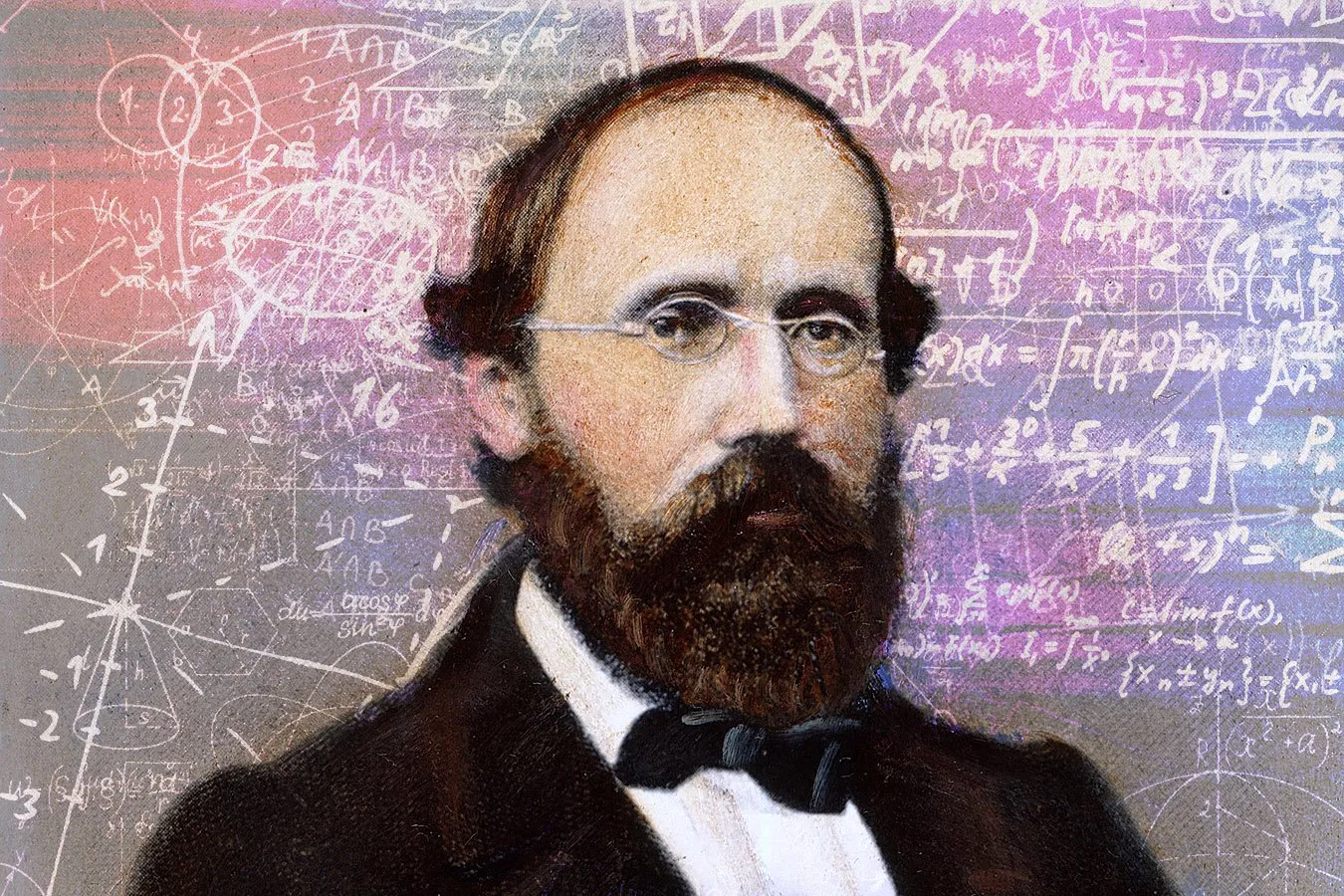
Levent Alpöge at Anthropic says an AI-assisted proof built with Claude has confirmed the Riemann hypothesis, the 1859 problem behind a $1 million Millennium Prize. If it survives verification, it converts a vast body of conditional mathematics into settled fact and makes formal proof-checking, not discovery, the real bottleneck in AI-driven science.
Levent Alpöge at Anthropic says an AI-assisted proof he developed with Claude has confirmed the Riemann hypothesis, the problem mathematicians have chased since 1859. The proof runs to more than 250,000 pages. Its translation into Lean, the proof-checking software used to formally verify machine-generated arguments, is 17,000,000 lines long. In a public statement, Alpöge wrote that the work has not yet been fully read, digested or understood by the mathematics community. That is the entire story in one breath: the biggest claim in modern mathematics has landed, and almost nobody can yet confirm it.
The Riemann hypothesis traces to an 1859 memoir in which Bernhard Riemann made a casual remark about a mathematical function, hedging it as "very probably" true. He never proved it. It became the field's most famous unsolved problem and one of the Clay Mathematics Institute's Millennium Prize Problems, each carrying a $1 million award for a solution. It looms so large because it concerns the simplest and most stubborn objects in mathematics: prime numbers, divisible only by 1 and themselves. Every other number is built by multiplying primes, which makes primes the bones of the number system. But where primes land on the number line looks, on the face of it, unpredictable.
Riemann's intervention was to argue that the spacing of primes can be inferred from a different set of numbers, tied to a function now called the Riemann zeta function. Those numbers are complex, meaning each is a pair: a real part and an imaginary part. Plug one into the zeta function and it returns zero. These are the "non-trivial zeros." Riemann found that summing over a sequence of them predicted the distribution of primes up to a given high number. The formula only works if every zero sits on the same vertical line when plotted with real parts on the horizontal axis and imaginary parts on the vertical. He calculated some zeros, they lined up, and he stopped. Mathematicians have since used computers to verify that the first 12 trillion non-trivial zeros sit on that line, and much work has gone into proving the zeros at least lie in a strip around it. Nobody has proven they must all be on it. Until, possibly, now.
The catch is verification. Alex Walker at University College London put it plainly: "I have not had a chance to read the 17 million lines of Lean, so cannot speak to their truth." He added that the announcement did not illuminate the details of the method. It is currently unclear exactly which mathematical tricks the AI leveraged, though early commentators suggest it drew on a vast swathe of mathematics spanning number theory and arithmetic geometry, and some suggest it made connections across those fields that do not already clearly exist in the literature. The Lean code is being adapted to run efficiently on a computer that can review it, which will provide a crucial check. Scott Aaronson at the University of Texas at Austin offers the most useful reassurance available: "While Lean itself has some issues, so far none of the AI results with Lean certificates have had to be retracted." He also warns it may take years to unravel the details and reap the insights.
This is not happening in a vacuum. A previous release of AI proofs by OpenAI on 6 October contained a proof of a weaker version of the Riemann hypothesis, placing the non-trivial zeros in the neighbourhood of Riemann's line but not exactly on it. OpenAI has released hundreds of papers claiming progress on the biggest open problems in mathematics, one recent batch numbering 722. Two major AI labs are now competing to post results in the oldest and most abstract of disciplines, and the scoreboard is not peer review. It is Lean certificates.
If the proof holds, the ramifications are enormous. John Nicholson at the Max Planck Institute for Mathematics in Germany notes that "an extremely large number of results have previously been proven subject to the generalised Riemann hypothesis," and that a number of fast algorithms for computing quantities in algebraic number theory have correctness that depends on it. Those results would stop being conditional and start standing on firmer ground. The hypothesis also has ties to theories of chaos in quantum systems in physics. Enrico Bombieri at Princeton University, outlining the Millennium Problem more than a quarter of a century ago, wrote: "The failure of the Riemann hypothesis would create havoc in the distribution of prime numbers."
Christopher Hughes at the University of York frames the scale: "This result, if true, will be the culmination of a struggle thousands of mathematicians have attempted in the past." Scott Armstrong at Sorbonne University in Paris is blunter: "It is a legendary problem, the queen of all the Millennium Problems. For the whole field of mathematics, there could not be a bigger theorem." For anyone outside mathematics, the transferable lesson is about verification infrastructure. When a machine can produce a quarter of a million pages of argument faster than any community can read it, the scarce resource stops being discovery and becomes adjudication. Lean, built for formal proof checking, is now both the bottleneck and the referee. The Riemann hypothesis may have been solved. The harder question, and the one that will define the next decade of AI-assisted science, is who gets to say so.
This story's Key Insights and Take-aways are locked.
Create a free account to unlock Executive Actions for one credit.
Register to UnlockAlways free for Executives Club members. Join the Club
More in Technology

Anthropic mathematician claims Claude helped crack the Riemann hypothesis
If the proof holds, AI has toppled math's most famous open problem; if it does not, it is a case study in announcing breakthroughs before anyone verifies them.

AI's $4 Trillion Wipeout Erases Nasdaq's Gains for the Year
A brutal week took roughly $4 trillion off the AI sector and left the Nasdaq flat for the year, and the damage ran the full length of the supply chain.

Anthropic mathematician says AI proved the Riemann hypothesis. Verification will take time.
A single unverified claim from inside Anthropic now sits against more than 160 years of open mathematics, and the gap between asserting a proof and surviving peer review is the entire story.