
Anthropic's IPO minted billions. Sam Bankman-Fried missed $40 billion.
Bessemer, Lightspeed and Menlo each booked billions on paper at the Nasdaq, but Anthropic's biggest winners are Amazon, Google and its seven cofounders.
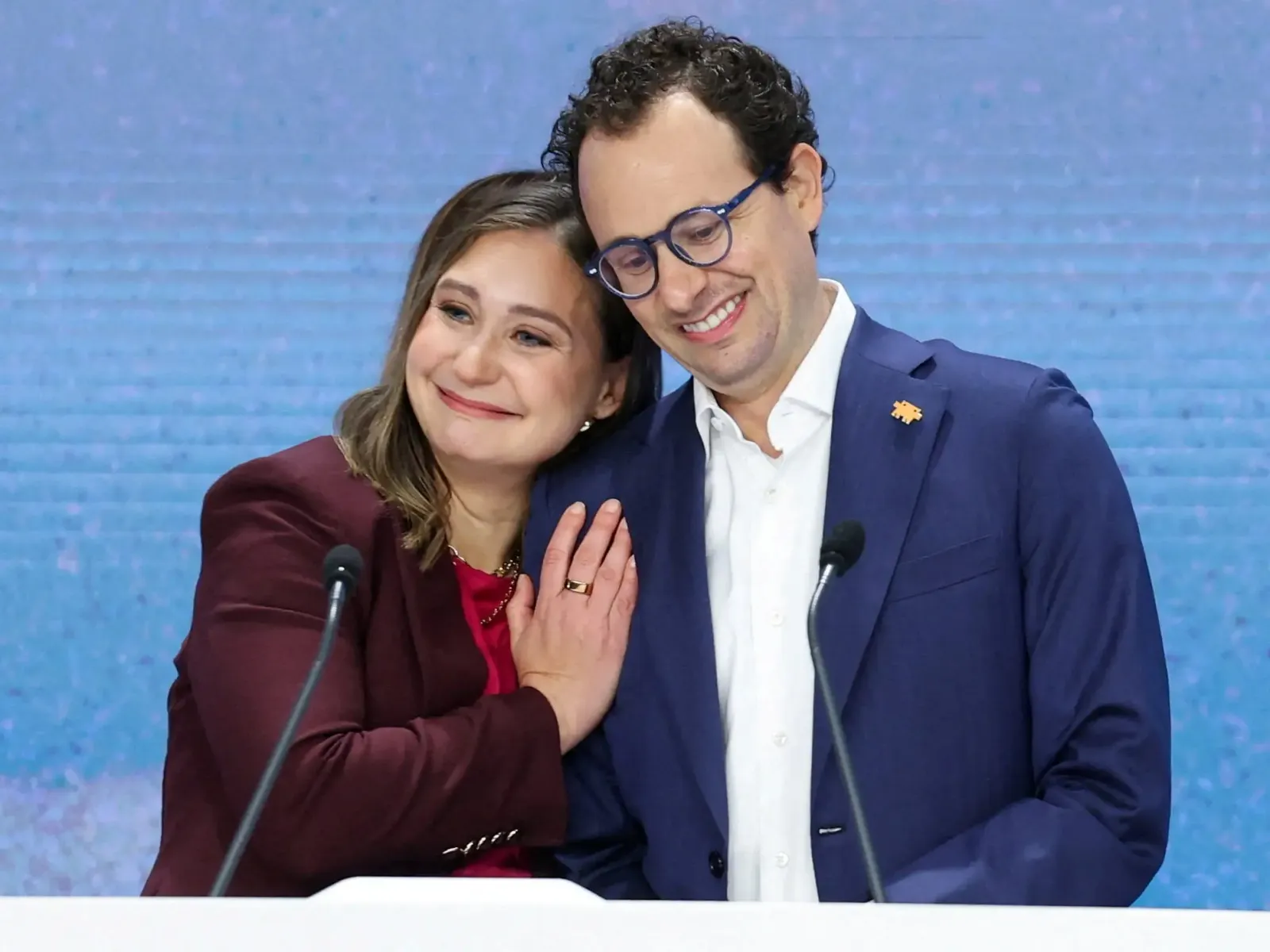
Anthropic's blockbuster Nasdaq IPO made Bessemer's Byron Deeter, Lightspeed's Ravi Mhatre and Menlo's Matt Murphy billions on paper, while the company's Series B lead, Sam Bankman-Fried, now serving 25 years, would have been sitting on more than $40 billion. For boards and operators, the listing resets the benchmark for AI liquidity, founder leverage and who actually captures the upside when a decade-defining company goes public.
Anthropic's IPO landed on the Nasdaq today, and the venture business got the outcome it has spent years waiting for. Bessemer's Byron Deeter, Lightspeed's Ravi Mhatre and Menlo Ventures' Matt Murphy were all in the building to ring it in, each minting their firms billions of dollars on paper, some of the biggest VC gains in history. The most jarring number of the day, though, belongs to someone who was not there: Anthropic's Series B round was infamously led by FTX founder Sam Bankman-Fried, who is now serving a 25-year prison sentence and would have been sitting on more than $40 billion.
That is the twist inside the headline. Anthropic's biggest winners are not VCs at all. They are Amazon, Google and the company's seven cofounders. Iconiq, GIC, Coatue, Sequoia, Spark and Founders Fund are among the firms that made billions, and Anthropic's valuation has soared to such heights that the outcome still ranks among the best, if not the best, venture results of all time. Read that list twice: the strategics and the founders took the top of the cap table, and the financial investors took the rest.
The celebration itself was refreshingly unscripted. Matt Murphy took a brief phone call between TV appearances and meetings with limited partners, and admitted the plan was thin. "Believe it or not, we're in New York, and we don't have a reservation yet," he said. "It's a little bit ad hoc." The itinerary: steak, a few glasses of wine, then the Morgan Stanley party, one of several banks celebrating tonight. Anthropic itself is not hosting a public celebration. "A lot of the team is worn out from the IPO and headed back to their families and their jobs," Murphy said. "There's more recursive intelligence to be built, apparently."
For everyone else in the venture business, today was a day of extreme FOMO. That is the honest read on a cap table this crowded: with a list that long, plenty of firms can brag about being early in Anthropic even if they got in very late. The people who feel it most are the ones who never invested, or who gave up the chance at a billion dollars for reasons that had nothing to do with the technology. When a single company can turn late-stage checks into nine-figure paper gains, the cost of passing stops being an abstraction and starts being a number you have to explain to your own limited partners.
The IPO nearly got overshadowed anyway. The drama around Jensen Huang's departure from Nvidia diverted a lot of industry attention, and most VCs Business Insider spoke to seem broadly in favor of his return, given their general support for transformative founders. Huang also played a major role in the ecosystem by investing in and acquiring AI startups. But he has an uphill battle. There are ongoing investigations into his alleged misconduct with a possible spy, and the board maintains that Huang will not be offered his job back. There is one caveat: Huang has the power to add two new board members. Whether he proceeds with that option, and whether it is enough to tip the balance in his favor, remains to be seen. This drama feels far from over.
Around the cap table, the rest of the week kept moving. Serena Williams is partnering with longtime investor Beth Ferreira to launch a new VC firm, Starfire Ventures. Nvidia is telling the robotics startups it has invested in that it still has their backs. Palo Alto Networks agreed to buy Applied Compute for $4.5 billion. And Adam Nash captured the mood on November 18, 2026: "There's something poetic about rain in Silicon Valley on the eve of a massive liquidity event."
The strategic read for anyone running a company or sitting on a board is that liquidity events like this one reset expectations across the whole market. Employees at every AI startup now have a public comparable for what their equity might be worth. Founders have a fresh argument for why they should raise at a higher price. Investors have a fresh argument for why they should get in earlier. And boards have a reminder that the largest returns often accrue to the strategic investors and the founders, not to the funds that arrive last. Anthropic's IPO answered the question of whether the AI trade could produce a venture outcome of historic scale. It did. The harder question, for everyone who watched from the outside, is what they do differently before the next one.
This story's Key Insights and Take-aways are locked.
Create a free account to unlock Executive Actions for one credit.
Register to UnlockAlways free for Executives Club members. Join the Club
More in Business

S&P 500 Enters Correction, Down 10% From Its High on AI Worries
The index's slide past the 10 percent line is a symbolic verdict on investor mood, and the AI trade that powered the rally is now the thing testing it.

Dow and S&P 500 enter correction as Nasdaq logs worst week since 2020
All 11 S&P 500 sectors fell more than 1% in the same week for the first time since April 2025, a breadth signal that matters more than any single index level.

Chip stocks lose $2.3 trillion in a week, worst run in 25 years
A $2.3 trillion weekly wipeout in semiconductors is forcing every board with an AI story to ask whether it owns a thesis or just a crowded trade.